Temperature20 – 27 °C
Natural range
- Ayeyarwady Delta area
- Myanmar area
Cyprinids
Other scientific names: Microrasbora nana
Microdevario nana, known as the Green Dwarf Danio, belongs to the family Cyprinidae. Until 2009, this fish was classified as a Rasbora, being called the Green Dwarf Rasbora. However, further research led to the reclassification of the species into the Danio genus. Despite this, both names remain in active use and are considered interchangeable in common parlance.
- Required aquarium volume
- 40 L
- Size in aquarium
- 1.5 – 2 cm
- Temperature
- 20 – 27 °C
- Temperament
- Peaceful, active/mobile
Parameters
Water pHSlightly acidic (6) – Neutral (7.5)
Water dHVery soft (3) – Hard (13)
Water salinityno salt (freshwater)
Size in aquarium1.5 – 2 cm
Lifespan3 years
TemperamentPeaceful, active/mobile
Toward small fishnot a predator
Required aquarium volume40 L
Lightingdimmed or moderate
Substratefine sand
Water flowweak
FeedingMixed diet (meat + plant-based)
CareSchooling (usually from 5–6 individuals and more)
Description
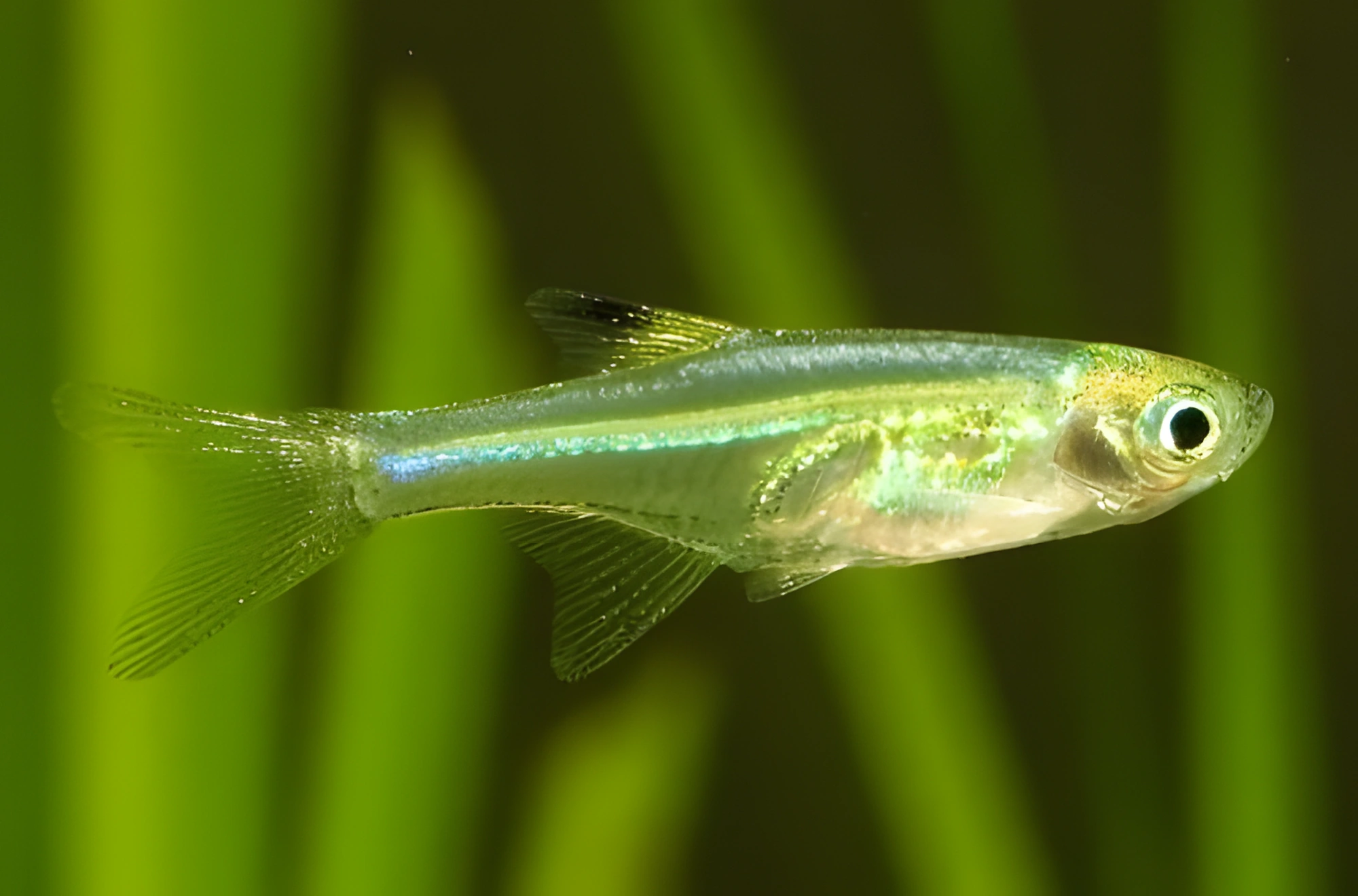
Outwardly, the Green Dwarf Danio resembles its close relatives, such as Danio kyathit and Microdevario kubotai, but differs from them in its smaller size, reaching only about 1.5 cm. Another characteristic feature is a dark spot on the dorsal fin. The fish's coloration is predominantly silvery with greenish iridescence. Sexual dimorphism in this species is not pronounced, making it quite difficult to distinguish males from females.
Habitat
This species originates from Southeast Asia, specifically from the southern regions of Myanmar (Burma), where it can be found primarily in the Irrawaddy River delta. Its natural habitats are characterized by abundant vegetation and murky water containing a significant amount of silt, as well as many overgrown channels and swampy areas. As a result of human economic activity, rice fields have appeared in vast areas of the region, which have become a new habitat for the Green Dwarf Danio.
Behavior and Compatibility
These peaceful, schooling fish feel comfortable in groups of at least 8–10 individuals. They coexist well with other species of comparable size. However, proximity to larger fish should be avoided, as they pose a potential danger to the Green Dwarf Danio.
Care and Maintenance
An aquarium of 40 L or more is suitable for these miniature creatures. The setup should include plenty of aquatic plants, both rooted and floating. Floating plants will provide the necessary shading, which will help to more effectively bring out the emerald hues of the Green Dwarf Danio. Lighting should be subdued. Since the fish tolerate neither strong nor moderate currents well, it is important to carefully choose a filter, which is the main source of water movement in the aquarium. If the number of inhabitants is small, an airlift filter with a sponge as a filter element may be an optimal choice. It provides gentle water movement, effectively cleans it, and saturates it with oxygen. However, its low performance and insufficient effectiveness for aquariums with many large fish should be considered. With a significant number of live plants, additional aerator diffusers may be required to prevent oxygen starvation at night. This is because photosynthesis stops at night, and plants begin to actively release carbon dioxide absorbed during the day. Aquarium maintenance includes standard procedures: weekly partial water changes, removal of organic debris and buildup, equipment prophylaxis, and regular monitoring and maintenance of stable pH and dGH values.
Diet
These fish readily accept all popular foods intended for aquarium inhabitants of appropriate size. Their daily diet can consist of dry flakes or granules, supplemented with live or frozen foods such as Artemia, Daphnia, or finely chopped bloodworms.
Breeding and Reproduction
At the time of writing this article, there is no reliable data on the successful breeding of this species in home aquariums. Nevertheless, given its close relationship to Microdevario kubotai, it can be assumed that their breeding characteristics may be similar. Under favorable conditions, spawning can occur regularly throughout the year. The fish scatter their eggs among dense vegetation, showing no parental care and may eat their own eggs. Although fry may appear in the main aquarium, their survival to adulthood will be extremely low if they are not transferred to a separate tank.
Diseases
In a balanced aquarium ecosystem that meets the needs of this species, diseases are rare. Most often, ailments are provoked by deteriorating environmental conditions, contact with already sick fish, or mechanical damage. If the fish shows clear signs of illness, medicinal treatment should be applied. More detailed information on symptoms and therapy methods can be found in the “Aquarium Fish Diseases” section.
How to choose
When purchasing, choose active individuals that stay in the water column and show no signs of sluggishness or apathy. It is important to carefully inspect the fish for damage to scales, fins, and the absence of white film or ulcers on the body. Since this species is very small, it is worth ensuring that the store does not have emaciated specimens, as recovery after prolonged starvation is extremely difficult for fry and miniature fish.
- avoid fish with sunken bellies or abnormally bloated abdomens
- prefer individuals with clean, transparent fins without signs of rot
- purchase a group of 8–10 individuals at once, as single fish in a store are often under severe stress
Frequently asked questions
The essentials: size, tank volume, water parameters and care
How big does Dwarf Danio get?
An adult reaches 1.5–2 cm in length. Plan the tank around the maximum size: the fish quickly outgrows a cramped setup.
What size aquarium does Dwarf Danio need?
The minimum recommended volume is 40 L. A smaller tank speeds up nitrate build-up and raises stress levels.
What water parameters does Dwarf Danio need?
Temperature 20–27 °C, pH 6–7.5, hardness 3–13 dGH. Stability matters more than exact values: sudden swings are harder on the fish than a small deviation from the ideal.
How long does Dwarf Danio live?
Around 3 years when kept properly. Lifespan depends directly on tank volume, water quality and a varied diet.
Is Dwarf Danio aggressive?
Temperament: peaceful, active/mobile. Keep this in mind when choosing tank mates.
How many Dwarf Danio should be kept together?
Recommended setup: schooling (usually from 5–6 individuals and more). Ignoring this is a common cause of stress and disease.
What does Dwarf Danio eat?
Diet type: mixed diet (meat + plant-based). Feed small portions that are finished within a couple of minutes — overfeeding does more harm than underfeeding.
What is the scientific name of Dwarf Danio?
The scientific name of the species is Microdevario nana, family Cyprinids (Cyprinidae). It also appears in the literature as: Microrasbora nana.