Temperature22 – 27 °C
Natural range
- Southeast China area
- Vietnam area
LoachesConservation status: Least concern LC
Other scientific names: Micronemacheilus cruciatus, Micronemacheilus curciatus, Nemacheilus cruciatus
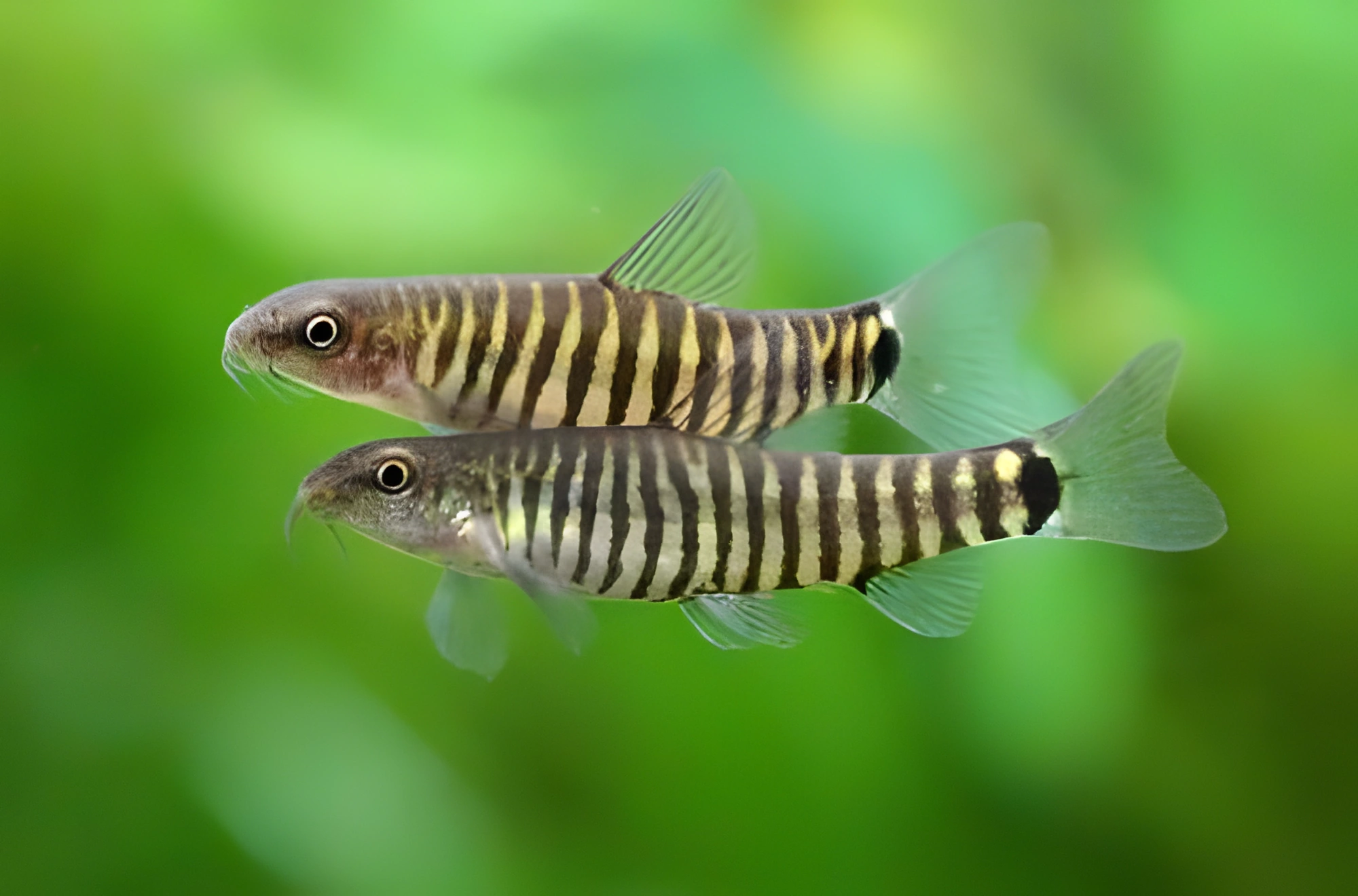
The Dwarf Striped Loach, also known as the Vietnamese Striped Loach, has the scientific name Yunnanilus Cruciatus and belongs to the family Nemacheilidae. The fish gets its name from its distinctive body pattern and relatively modest size. Among loaches kept in home aquariums, this species stands out for its particularly small dimensions.
- Required aquarium volume
- 80 L
- Size in aquarium
- 3 – 4 cm
- Temperature
- 22 – 27 °C
- Temperament
- Peaceful (regular)
Parameters
Water pHSlightly acidic (6) – Neutral (7.5)
Water dHVery soft (2) – Hard (12)
Water salinityno salt (freshwater)
Size in aquarium3 – 4 cm
Lifespan5 years
TemperamentPeaceful (regular)
Toward small fishnot a predator
Required aquarium volume80 L
Lightingdimmed
Substrateany (no restrictions)
Water flowweak or moderate
FeedingPlant-based with meat additives
CareGroup (8–10 individuals)
Description
Adults reach approximately 3–4 cm in length. A distinctive feature of the species is rows of vertical black stripes, intersected by a wider dark stripe that runs along the lateral line (its prominence may vary). The fins and tail of this fish are translucent and colorless. Sexual dimorphism is weakly expressed: females are generally slightly larger than males and have a more rounded abdomen.
Habitat
Its origins lie in East Asia, where it is found in the southeastern regions of China and adjacent provinces of Vietnam. These fish prefer to inhabit sections of rivers with moderate currents, as well as swamps and lakes. They feel most comfortable in shallow waters, in bottom layers, among dense thickets of aquatic vegetation.
Behavior and Compatibility
This peaceful and modest fish needs the company of its own kind, so it is recommended to acquire them in groups of 8–10 individuals. The Dwarf Striped Loach can easily be startled in the presence of large or overly active fish. When choosing tank mates, preference should be given to species of comparable size, such as Rasboras, Danios, Cardinal Tetras, and small characins.
Care and Maintenance
The optimal aquarium volume for a school of Vietnamese Striped Loaches starts from 80 liters. The aquarium setup should include an abundant amount of plants and natural decor, such as driftwood, as well as leaves and bark from certain trees. It is crucial to ensure good aeration and prevent the accumulation of organic waste — food remnants and excrement. Water purity is easy to maintain with an efficient filtration system and regular weekly maintenance.
Diet
They readily accept a variety of common foods, both live, frozen, and dry. It is recommended that the diet include foods with plant-based components.
Breeding and Reproduction
Breeding this species is considered straightforward. In a balanced aquarium ecosystem, fry will appear regularly. The Dwarf Striped Loach lays its eggs among plant thickets. Since the fish do not exhibit parental care for their offspring, the survival rate of fry in a community tank will be low. If the goal is to preserve the brood, young individuals will need to be caught promptly and transferred to a separate tank. They should be fed specialized powdered foods, Artemia nauplii, and similar products.
Diseases
The Dwarf Striped Loach is sensitive to water quality and prone to diseases when kept in biologically immature aquariums. A key preventative factor is maintaining stable environmental parameters and avoiding sharp fluctuations in water chemistry. The fish are susceptible to typical freshwater infections, including bacterial skin and fin lesions, as well as ectoparasite infestations if their immune system is weakened due to stress or improper keeping conditions.
- fin rot and bacterial ulcers with poor aquarium hygiene
- ichthyophthiriasis with sudden temperature changes or after transportation
- fungal infections, often occurring as secondary lesions following injuries or damage to the mucous membrane
How to choose
When purchasing, choose active fish with a clear, contrasting stripe pattern. Avoid individuals with signs of emaciation, sunken bellies, or skin damage. It is important to remember that under stress, the fish's coloration may temporarily fade, but persistent dullness or an abnormally dark color often indicates poor health or the presence of hidden diseases.
- check the integrity of all fins and the absence of whitish plaque or ulcers on them
- observe their behavior: healthy individuals should swim actively, without chaotic movements
- avoid buying fish that have just arrived at the store, as they are under severe stress and more vulnerable to infections
Frequently asked questions
The essentials: size, tank volume, water parameters and care
How big does Dwarf Striped Loach get?
An adult reaches 3–4 cm in length. Plan the tank around the maximum size: the fish quickly outgrows a cramped setup.
What size aquarium does Dwarf Striped Loach need?
The minimum recommended volume is 80 L. A smaller tank speeds up nitrate build-up and raises stress levels.
What water parameters does Dwarf Striped Loach need?
Temperature 22–27 °C, pH 6–7.5, hardness 2–12 dGH. Stability matters more than exact values: sudden swings are harder on the fish than a small deviation from the ideal.
How long does Dwarf Striped Loach live?
Around 5 years when kept properly. Lifespan depends directly on tank volume, water quality and a varied diet.
Is Dwarf Striped Loach aggressive?
Temperament: peaceful (regular). Keep this in mind when choosing tank mates.
How many Dwarf Striped Loach should be kept together?
Recommended setup: group (8–10 individuals). Ignoring this is a common cause of stress and disease.
What does Dwarf Striped Loach eat?
Diet type: plant-based with meat additives. Feed small portions that are finished within a couple of minutes — overfeeding does more harm than underfeeding.
What is the scientific name of Dwarf Striped Loach?
The scientific name of the species is Yunnanilus Cruciatus, family River Loaches (Nemacheilidae). It also appears in the literature as: Micronemacheilus cruciatus, Micronemacheilus curciatus, Nemacheilus cruciatus.