Temperature23 – 28 °C
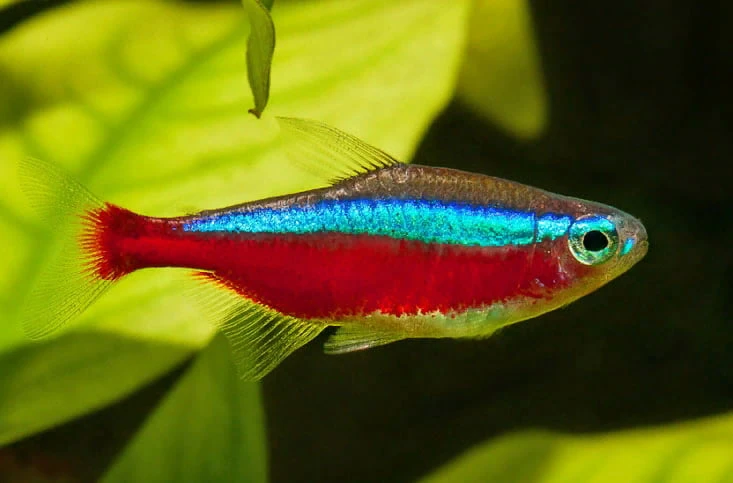
Other scientific names: Cheirodon axelrodi, Hyphessobrycon cardinalis
The Cardinal Tetra, or Red Neon (scientific name Paracheirodon axelrodi), belongs to the Acestrorhamphidae family. This fish is one of the most beloved and widely available among aquarists. It captivates with its beauty, unpretentious care, and peaceful nature, making it an ideal choice even for beginners. The Red Neon is a close relative of the Black Neon, with the only differences between them being the coloration of the stripes on their bodies.
The Cardinal Tetra has a slender, small body, with adult fish rarely exceeding 5 cm in length. The fish's coloration is defined by two main colors: red and blue, which appear as broad parallel stripes running from the head to the tail. The scales have high reflectivity, creating a striking neon glow.
These fish are found in many river basins of South America, especially in the Rio Negro and Orinoco. Their natural habitat consists of slow-moving forest streams and secluded backwaters that meander through tropical forests. They prefer shallow waters, where their diet consists of small zooplankton. It is important to note that most specimens offered in European and Asian markets have been bred in artificial conditions, which allows them to adapt easily to home aquariums. When keeping these fish, certain requirements and conditions must be taken into account.
Red Neons get along well with most peaceful fish of similar size or slightly larger. However, caution should be exercised with larger predatory fish, especially those from South America: they may perceive neons as prey, as cardinals often become part of the food chain in nature. It is recommended to keep them in schools of at least 8–10 individuals. They pair excellently with the Black Neon, their closest relative.
It is extremely important to maintain optimal water composition and purity, as these fish tolerate high hardness poorly. In such conditions, calcium salt deposits can form in the fish's kidneys, quickly leading to their demise. To maintain stable water quality, it is recommended to perform regular partial water changes (25–50% of the volume) every two weeks, and to ensure an effective filtration system. Among other equipment, an aerator, heater, and lighting system will be useful. Dim light best brings out the fish's coloration. An aquarium setup combining open spaces with dense plant thickets will create the most comfortable conditions for the fish. River sand as substrate, as well as decorative elements like snags, intertwined roots, and various shelters, help create a natural environment. Dry leaves can further mimic natural conditions, giving the water a characteristic tint (they should be replaced every two weeks).
Like many other members of the Tetra genus, the Red Neon is omnivorous. It eagerly consumes both dry commercial foods and live foods. The best dietary balance is achieved with a ratio of 75% dry food (flakes, granules) and 25% live food (bloodworms, daphnia).
Differences between males and females are quite subtle, making their identification difficult. Breeding cardinals at home presents certain challenges. Firstly, not all fish are compatible for reproduction, so a large group is needed for successful pairing. Secondly, spawning only occurs within a very narrow range of pH and GH values. Thirdly, the fry are born very small, and their feeding requires significant effort.
This species demonstrates high resistance to most diseases if water parameters remain stable. However, any fluctuations can trigger health problems. "Neon disease" poses a particular danger – it is a practically incurable and highly contagious disease.
When purchasing, choose active fish that stay in a school and show no signs of apathy or a desire to isolate themselves. Carefully inspect the scales and fins: there should be no white film, sores, spots, or damage on the body, and the fins should be spread out and free of torn edges. Avoid individuals with an unnaturally swollen abdomen or, conversely, those that are excessively emaciated. In the store, the fish should appear brightly colored; if the coloration is pale, it may be a result of stress or poor health. Observe their behavior: healthy neons are constantly in motion and actively respond to external stimuli.
The essentials: size, tank volume, water parameters and care
An adult reaches 4–5 cm in length. Plan the tank around the maximum size: the fish quickly outgrows a cramped setup.
The recommended volume is 60 L. A smaller tank speeds up nitrate build-up and raises stress levels.
Temperature 23–28 °C, pH 4–6, hardness 1–12 dGH. Stability matters more than exact values: sudden swings are harder on the fish than a small deviation from the ideal.
Around 5 years when kept properly. Lifespan depends directly on tank volume, water quality and a varied diet.
Temperament: peaceful (regular). Keep this in mind when choosing tank mates.
Recommended setup: schooling (usually from 5–6 individuals and more). Ignoring this is a common cause of stress and disease.
Diet type: any (universal). Feed small portions that are finished within a couple of minutes — overfeeding does more harm than underfeeding.
The scientific name of the species is Paracheirodon axelrodi, family Acestrorhamphidae. It also appears in the literature as: Cheirodon axelrodi, Hyphessobrycon cardinalis.
Matched by family, categories and overlapping keeping conditions
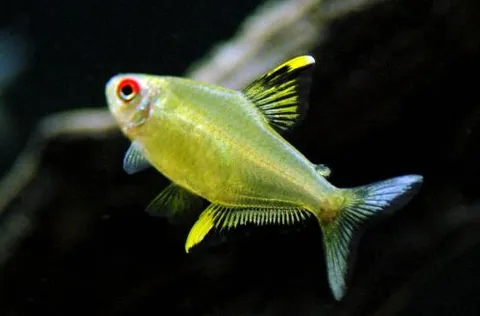
Hyphessobrycon pulchripinnis
The Lemon Tetra, or Hyphessobrycon pulchripinnis, is a representative of the Acestrorhamphidae family. This fish attracts attention with both its appearance and behavior. Its coloration, ranging from yellow to lemon,…
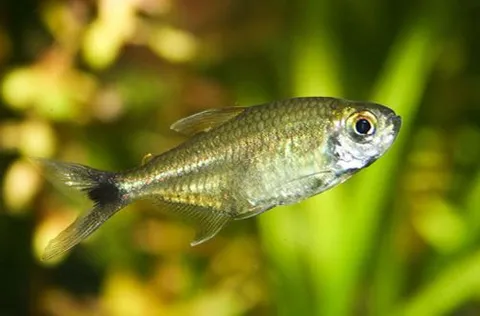
Hemigrammus rodwayi
The Golden Tetra, scientifically known as Hemigrammus rodwayi, belongs to the Acestrorhamphidae family. This fish gets its name from its bright golden scales. In reality, this "gilded" effect is due to the presence of…
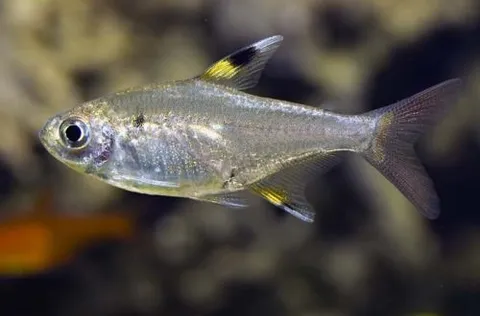
Pristella maxillaris
The Albino Pristella, also known as the Albino X-Ray Tetra, scientifically classified as Pristella maxillaris, belongs to the Acestrorhamphidae family. This species is considered one of the most common and accessible…
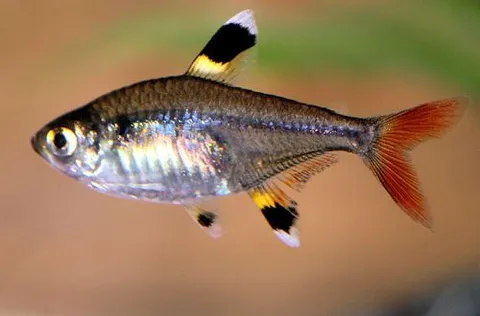
Pristella maxillaris
The Pristella Tetra, also known as the X-ray Tetra or Golden Pristella Tetra (scientific name Pristella maxillaris), belongs to the family Acestrorhamphidae. A distinguishing feature of this fish is its remarkable…