Temperature22 – 28 °C
Natural range
- Brazil area
CharacinsConservation status: Least concern LC
Other scientific names: Cheirodon eques, Chirodon eques, Hemigrammus melasopterus, Hemigrammus serpae, Hyphessobrycon callistus, Hyphessobrycon serpae
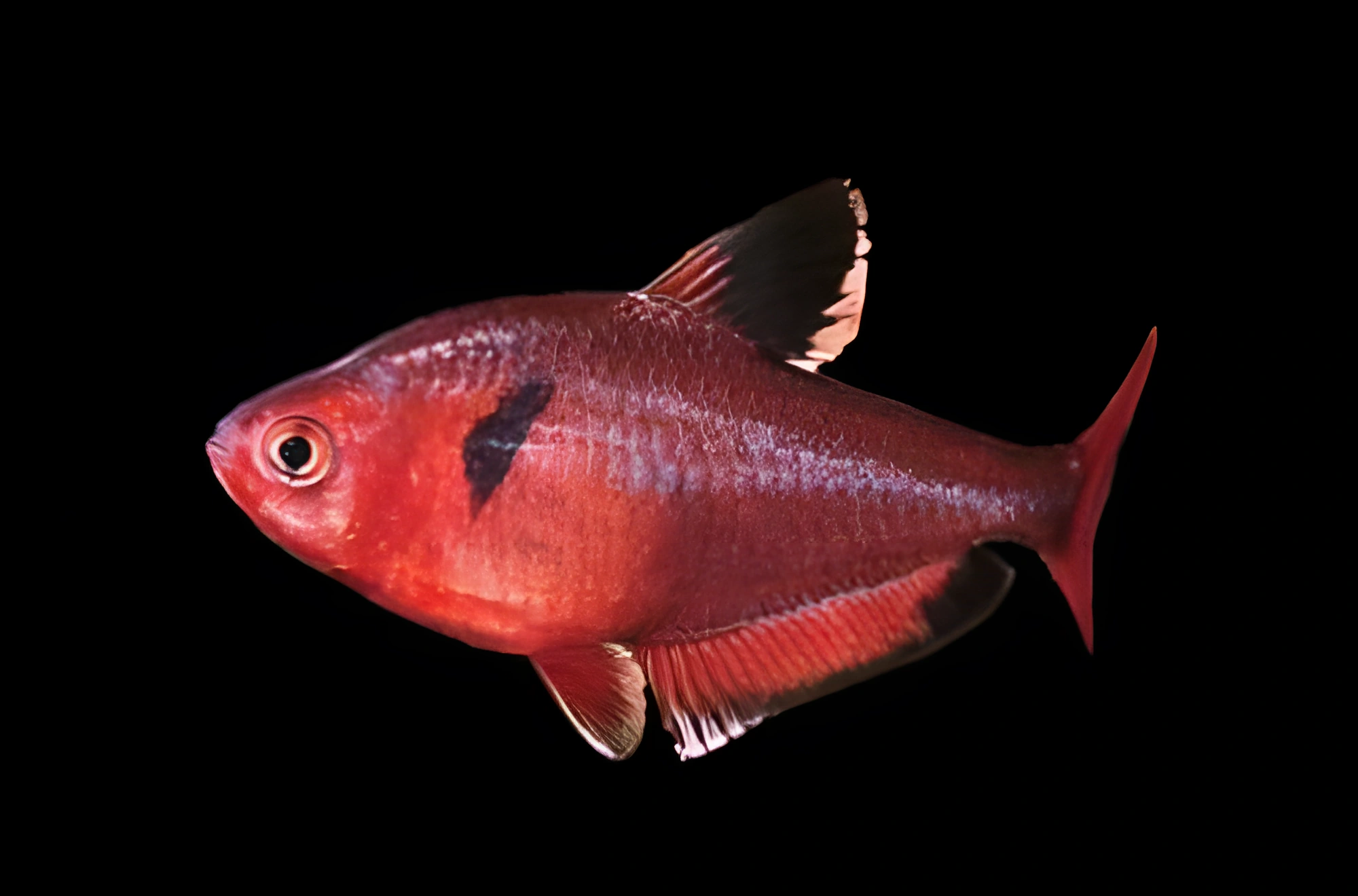
Hyphessobrycon eques, known as the Callistus or Minor Tetra, belongs to the family Characidae. This beautiful ornamental fish, with its bright and expressive coloration, can adorn any aquarium, even if it's just a small school. In addition to its external appeal, the Callistus demonstrates good hardiness, making it an excellent choice, including for beginner aquarists.
- Required aquarium volume
- 80 L
- Size in aquarium
- 4 cm
- Temperature
- 22 – 28 °C
- Temperament
- Peaceful, but may bite fins
Parameters
Water pHSlightly acidic (5) – Slightly alkaline (7.8)
Water dHMedium hardness (10) – Very hard (25)
Water salinityno salt (freshwater)
Size in aquarium4 cm
Lifespan7 years
TemperamentPeaceful, but may bite fins
Toward small fishnot a predator
Required aquarium volume80 L
Lightingdimmed
Substratesandy (regular, light)
Water flowweak
FeedingAny (universal)
CareSmall group (5–6 individuals)
Description
The fish's body has the typical elongated, slightly laterally compressed shape characteristic of the Tetra genus. Its coloration features a wide range of shades, from bright orange to deep red and even crimson. A dark spot or marking is noticeable directly behind the gill cover. Dark pigmentation is also present on the fins, but their edges remain white. It should be noted that several artificially bred selective forms exist, which may differ in fin length or coloration characteristics.
Males are distinguished by a more saturated and vibrant coloration; females appear paler in comparison. Additionally, females are usually larger than males and less graceful in their build.
Habitat
This species inhabits South America, primarily in the Madeira and Guaporé river systems, located in Brazil. It prefers to live in slow-moving or stagnant bodies of water with abundant vegetation, such as small lakes, ponds, river tributaries, and streams. These fish typically stay in the upper water layers, and their diet includes worms, crustaceans, various insects, and plant detritus.
Behavior and Compatibility
These are relatively peaceful fish that coexist well only with species of similar size; smaller individuals may be subject to persecution and aggression. It is recommended to keep Callistus in schools of at least 5–6 individuals. If there are several males in the school, skirmishes may occur between them, but they generally do not lead to serious injuries.
Care and Maintenance
Due to the fish's modest size, an aquarium up to 100 L will be suitable for keeping a school. The basis of successful keeping is maintaining proper water quality. It should be acidic or slightly acidic, which can be achieved with a filter containing peat filter material capable of acidifying the water. Adding dried leaves also contributes to this process, giving the water a light brown tint characteristic of their natural habitat. The fish do not like strong currents, so it is recommended to direct the filter outlets towards the aquarium wall to weaken the water flow. The lighting system should be set to low power, creating subdued light. Among other necessary equipment, a heater and an aerator should be noted. In the aquarium setup, dense plant thickets along the side and back walls are essential, and floating plants are also welcome. Sand is preferred as a substrate, supplemented with shelters made of driftwood, wood fragments, or roots.
Diet
These fish are undemanding in their diet and readily consume all types of dry commercial foods, such as flakes and granules. To diversify their diet, it is recommended to periodically include live foods, such as bloodworms or Daphnia. Given the small size of the fish, it is important that food particles are small enough for easy swallowing.
Breeding and Reproduction
The breeding process is quite simple. It will require a separate tank of 3–5 L, with only a heater as equipment. The spawning tank setup includes a sandy substrate and dense thickets of fine-leaved plants. The stimulus for spawning is enhanced feeding with meaty foods, such as bloodworms or Daphnia, included in the daily diet. It is also necessary to lower the water's acidity to 6.8 pH and set the hardness at about 10 dH. The water in the spawning aquarium should have a similar composition. Approximately one week after the diet and water parameters are changed, the pair is moved to a separate tank where spawning occurs. The female attaches the eggs in clusters to plant leaves, after which the male fertilizes them. The parents are then returned to the main aquarium. Fry appear the very next day and should be fed micro-food and Artemia.
Diseases
In an aquarium with proper hydrochemical water composition and an established biological system, health problems in fish usually do not arise. More detailed information on symptoms and treatment methods can be found in the section “Diseases of Aquarium Fish.”
How to choose
When selecting individuals, attention should be paid to their activity and the integrity of their fins. Healthy fish should show curiosity, have no visible damage, ulcers, white spots, or signs of emaciation. Avoid buying fish that appear sluggish, hide in corners, or have unnaturally clamped fins.
- Choose only active individuals that stay in a school.
- Inspect the fish for damage to scales and fins, as this species is prone to intraspecific aggression.
- Make sure there are no dead individuals in the aquarium with the fish, as this may indicate unsatisfactory keeping conditions or the presence of infections.
Frequently asked questions
The essentials: size, tank volume, water parameters and care
How big does Callistus get?
An adult reaches 4 cm in length. Plan the tank around the maximum size: the fish quickly outgrows a cramped setup.
What size aquarium does Callistus need?
The minimum recommended volume is 80 L. A smaller tank speeds up nitrate build-up and raises stress levels.
What water parameters does Callistus need?
Temperature 22–28 °C, pH 5–7.8, hardness 10–25 dGH. Stability matters more than exact values: sudden swings are harder on the fish than a small deviation from the ideal.
How long does Callistus live?
Around 7 years when kept properly. Lifespan depends directly on tank volume, water quality and a varied diet.
Is Callistus aggressive?
Temperament: peaceful, but may bite fins. Keep this in mind when choosing tank mates.
How many Callistus should be kept together?
Recommended setup: small group (5–6 individuals). Ignoring this is a common cause of stress and disease.
What does Callistus eat?
Diet type: any (universal). Feed small portions that are finished within a couple of minutes — overfeeding does more harm than underfeeding.
What is the scientific name of Callistus?
The scientific name of the species is Hyphessobrycon eques, family Characidae. It also appears in the literature as: Cheirodon eques, Chirodon eques, Hemigrammus melasopterus.