Temperature20 – 26 °C
Natural range
- Eastern Colombia area
- Western Venezuela area
CorydorasConservation status: Near threatened NT
Corydoras habrosus is the name of this elegant Corydoras, also known as the Venezuelan Pygmy Cory. It belongs to the family Callichthyidae, which includes armored or callichthyid catfish. The common name of the fish originates from the Latin word "habrosus," which translates to "elegant" or "delicate." In the trade, another name, Venezuelan Pygmy Cory, is often encountered.
- Required aquarium volume
- 50 L
- Size in aquarium
- 3 cm
- Temperature
- 20 – 26 °C
- Temperament
- Peaceful (regular)
Parameters
Water pHSlightly acidic (5.5) – Neutral (7)
Water dHVery soft (1) – Medium hardness (10)
Water salinityno salt (freshwater)
Size in aquarium3 cm
Lifespan5 years
TemperamentPeaceful (regular)
Toward small fishnot a predator
Required aquarium volume50 L
Lightingweak (low)
Substratesandy (regular, light)
Water flowweak or moderate
FeedingSinking (any)
CareSmall group (5–6 individuals)
Description
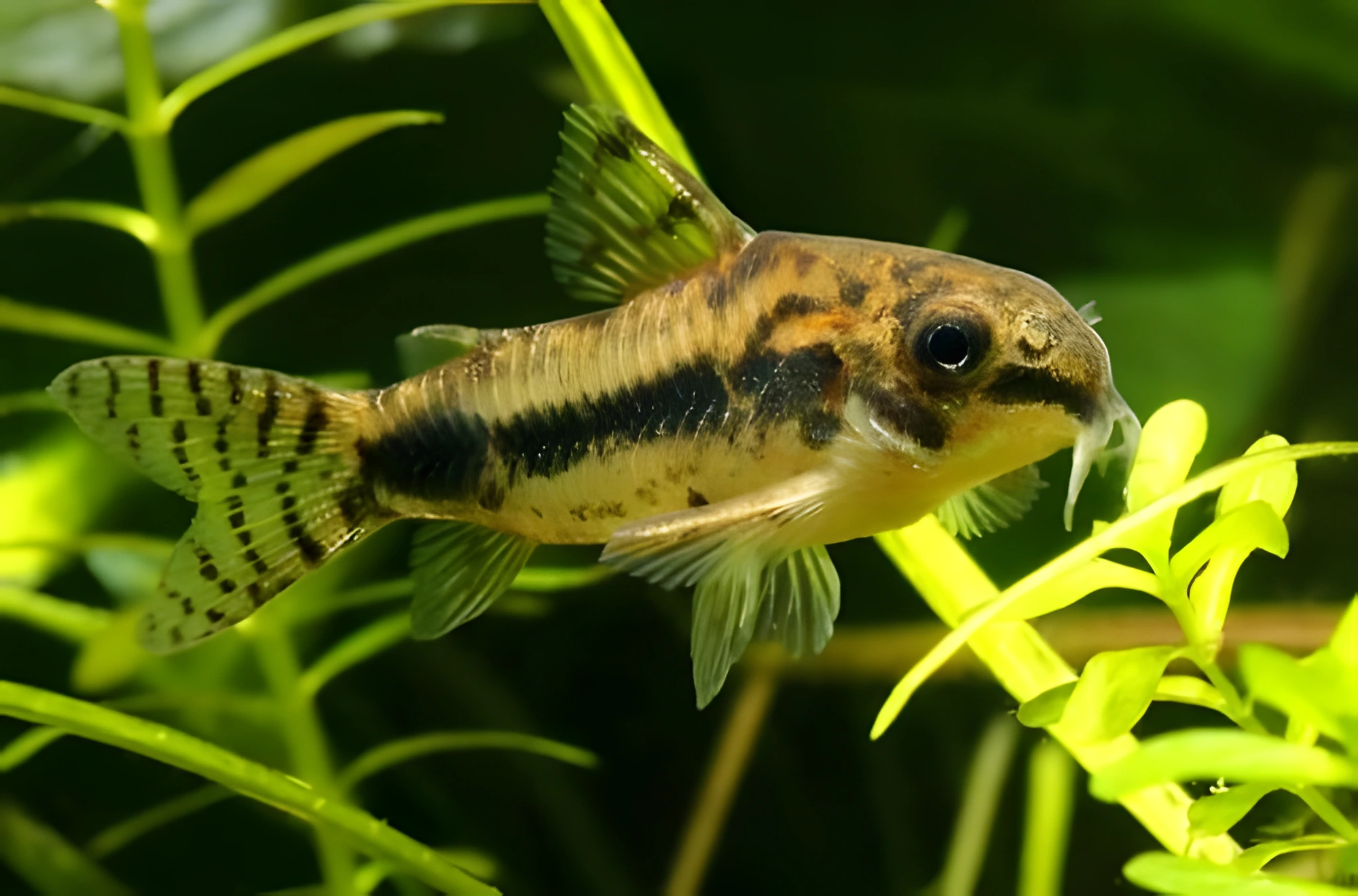
Adults grow to approximately 3 centimeters in length. The coloration of these fish is yellow or silvery, with black markings, but its palette can vary significantly due to different amounts and sizes of black pigment. This circumstance has even led some researchers to suggest the existence of several subspecies. Notable dark markings include a broad stripe running along the body (sometimes interrupted), as well as numerous speckles. The tail and fins are often adorned with contrasting stripes. Here is a brief overview of this fish:.
Habitat
The species inhabits the Orinoco River basin in eastern Colombia and western Venezuela. In nature, it populates shallow tributaries, backwaters, and areas subject to seasonal flooding, including floodplains and forested zones. It prefers places with abundant aquatic vegetation, fallen branches, and tree roots, where the water is characterized by softness and moderate acidity.
Behavior and Compatibility
A peaceful and active schooling fish, it shows the most comfort in groups of 8–10 individuals. In the aquarium, it primarily occupies the bottom layer, displaying curious behavior. It is compatible with any small and peaceful fish species, as well as with shrimp. Due to its small size, it needs protected areas where it can feel safe as part of a school.
Care and Maintenance
Despite its very modest size, this fish is not suitable for so-called "nano-aquariums." The recommended minimum tank volume for a group of 4–6 of these catfish starts from 50 liters. The aquarium setup can be arbitrary, but it is important to include sand substrate or fine gravel and provide several shelters. Natural elements such as driftwood and dense plant thickets, as well as other suitable aquarium decorations, can serve as shelters. For the successful keeping of the Elegant Corydoras, as well as for other aquarium inhabitants, maintaining water cleanliness, stable temperature, and appropriate hydrochemical composition is key. Maintaining such a stable environment directly depends on the uninterrupted operation of aquarium equipment and regular care, which includes partial water changes with fresh water, removal of organic waste, and other procedures. As for feeding, the catfish will accept most common foods of appropriate size. It is preferable to use sinking foods, as these fish spend most of their time at the bottom. In terms of behavior, the fish is peaceful and calm. Other Corydoras species, as well as any non-aggressive fish of comparable size, make good tank mates.
Diet
An omnivorous species, feeding in nature on small crustaceans, insects, and organic detritus. In the aquarium, it accepts most quality sinking foods: specialized tablets for bottom-dwelling fish, small bloodworms, Artemia, or cyclops. The food should be small enough for the fish to easily swallow, and when using live or frozen foods, it is recommended to chop them.
Breeding and Reproduction
Spawning is paired or group-based, often stimulated by water changes and a drop in temperature. The female lays eggs on plant leaves or aquarium glass; the total number of eggs can reach 40–100. Parents usually do not exhibit pronounced cannibalism, but to increase fry survival, it is recommended to use a separate breeding tank with aeration and the addition of antifungal agents such as methylene blue or tannins.
Diseases
The species is susceptible to typical Corydoras diseases if keeping conditions are violated, especially with the accumulation of organic matter in the substrate. They are sensitive to bacterial infections affecting the fins and skin, as well as to fungal infections of the eggs. Prevention includes regular substrate vacuuming, using a soft substrate without sharp corners to prevent injuries, and maintaining stable hydrochemical water parameters.
How to choose
When purchasing, choose active individuals with clean fins and no body damage. It is important to avoid fish with sunken bellies or signs of lethargy, as this may indicate exhaustion or disease. Since catfish have sensitive barbels, it is necessary to ensure they are not damaged, which often happens when kept on rough or dirty substrate in a retail aquarium.
Frequently asked questions
The essentials: size, tank volume, water parameters and care
How big does Elegant Corydoras get?
An adult reaches 3 cm in length. Plan the tank around the maximum size: the fish quickly outgrows a cramped setup.
What size aquarium does Elegant Corydoras need?
The minimum recommended volume is 50 L. A smaller tank speeds up nitrate build-up and raises stress levels.
What water parameters does Elegant Corydoras need?
Temperature 20–26 °C, pH 5.5–7, hardness 1–10 dGH. Stability matters more than exact values: sudden swings are harder on the fish than a small deviation from the ideal.
How long does Elegant Corydoras live?
Around 5 years when kept properly. Lifespan depends directly on tank volume, water quality and a varied diet.
Is Elegant Corydoras aggressive?
Temperament: peaceful (regular). Keep this in mind when choosing tank mates.
How many Elegant Corydoras should be kept together?
Recommended setup: small group (5–6 individuals). Ignoring this is a common cause of stress and disease.
What does Elegant Corydoras eat?
Diet type: sinking (any). Feed small portions that are finished within a couple of minutes — overfeeding does more harm than underfeeding.
What is the scientific name of Elegant Corydoras?
The scientific name of the species is Corydoras habrosus, family Armored Catfish (Callichthyidae).