Temperature22 – 27 °C
Natural range
- Malay Peninsula area
- Southern Thailand area
UnusualConservation status: Vulnerable VU
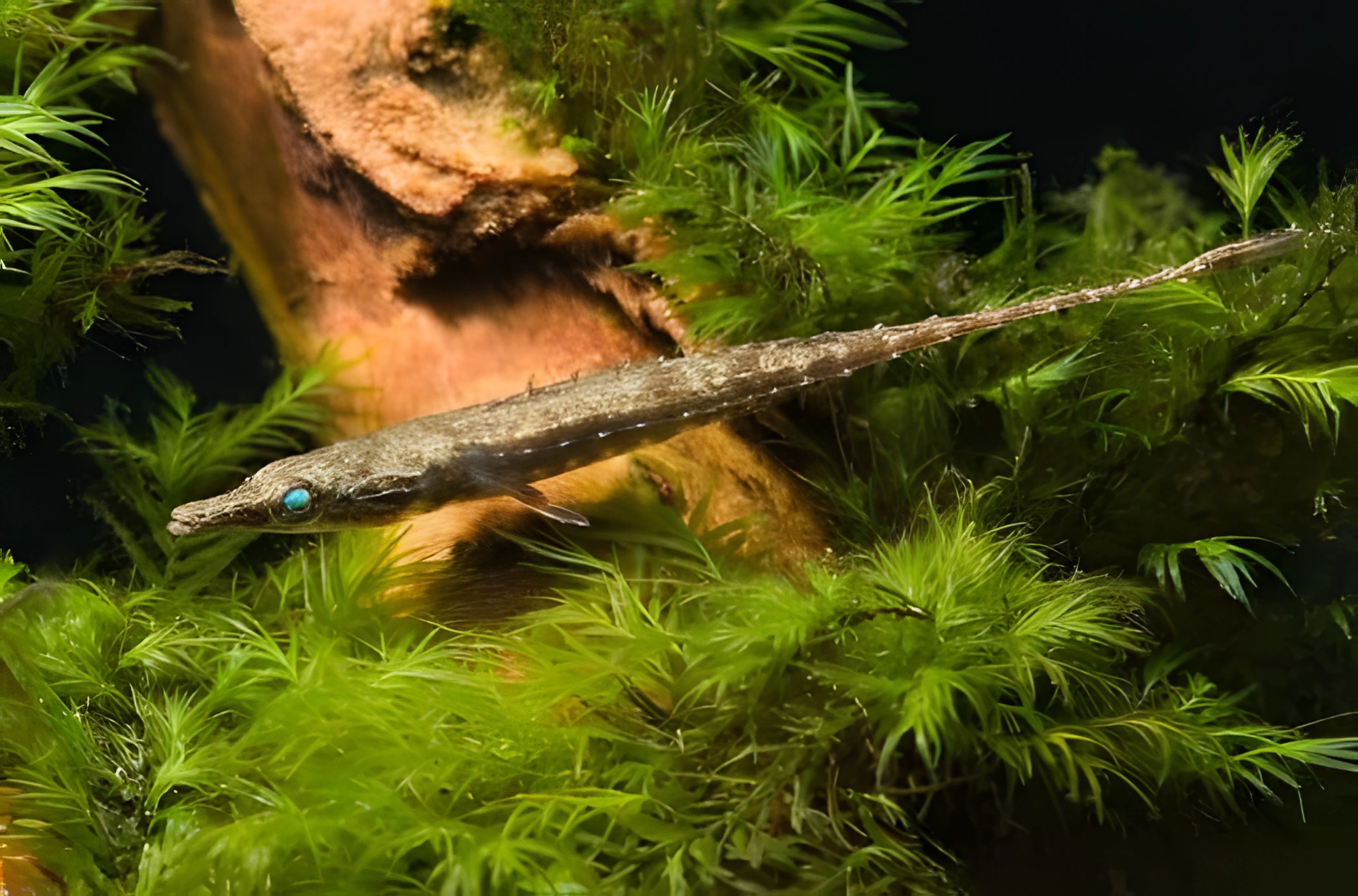
Indostomus crocodilus, or Indostomus, belongs to the Indostomidae family. Its unusual appearance is due to the practical necessity of camouflaging itself from potential predators. In a home aquarium, keeping this fish does not present particular difficulties, making it a suitable choice even for beginners in aquaristics.
- Required aquarium volume
- 40 L
- Size in aquarium
- 2.5 – 3 cm
- Temperature
- 22 – 27 °C
- Temperament
- Peaceful (regular)
Parameters
Water pHSlightly acidic (5) – Neutral (7)
Water dHVery soft (0) – Soft (5)
Water salinityno salt (freshwater)
Size in aquarium2.5 – 3 cm
Lifespan3 years
TemperamentPeaceful (regular)
Toward small fishnot a predator
Required aquarium volume40 L
Lightingdimmed
Substratesandy (regular, light)
Water flowmoderate
FeedingSmall / appropriate size / pieces
CareBoth solitary and in group (flexible)
Description
Adult Indostomus reach a maximum length of 3 cm. In males, the pelvic fins are elongated, and their outer rays have an inward curve. Females, on the other hand, have shorter and straighter fins. Due to the miniature size of the fish, these differences often remain almost imperceptible. Thanks to its elongated and slender body, resembling a small tree twig or shrub stem, the Indostomus possesses excellent camouflage. The brown hue of its integument enhances this effect.
Habitat
The natural habitat of these fish covers Southeast Asia, specifically the Malay Peninsula, including the southern regions of Thailand and the northern regions of Malaysia. They prefer to live in stagnant marginal waters and peat swamps. Their natural environment is typically characterized by fallen leaves, silty substrates, numerous snags, and dense aquatic vegetation.
Behavior and Compatibility
The Indostomus is a peaceful and calm fish that can be kept either in a group or individually. Care should be taken when selecting tank mates, as larger species may pose a threat due to the Indostomus' modest size. They are well compatible with cyprinids such as danios.
Care and Maintenance
This miniature fish does not require a significant volume of water; a nano-aquarium with a capacity of 20 to 40 liters will be quite suitable for it. The tank's decor should mimic its natural habitat: subdued lighting and dense thickets of shade-loving plants are recommended. Hiding places, such as snags or decorative elements, as well as a soft sandy substrate, are essential. An effective filtration system is necessary to maintain high water quality. Regular aquarium maintenance, including cleaning the substrate, decor elements, and partial water changes, is also extremely important. It should be remembered that Indostomus inhabit stagnant waters, so they tolerate strong currents poorly. When choosing a filter, it is important to consider this factor, as it is the main source of water movement in the aquarium.
Diet
In nature, the diet of Indostomus consists mainly of small crustaceans, insect larvae, worms, and other zooplankton. In aquarium conditions, they adapt well to dry, as well as fresh and live foods. Their daily diet can include flakes and granules, supplemented with Artemia or Daphnia.
Breeding and Reproduction
Breeding these fish is not difficult. At the beginning of the breeding season, males choose and prepare sites for future spawning – this can be a small cave, grotto, or even a section of hollow PVC pipe. The male actively guards his territory from conspecifics, although serious skirmishes usually do not occur. After the female chooses a partner, they retreat together into the shelter, where she lays up to 50 eggs, after which she leaves the spawning site. The care of the offspring falls entirely on the male, who remains with the clutch throughout the incubation period. After the fry hatch, the parental instinct in the male weakens. To preserve the young, they are usually transferred to a separate aquarium with similar conditions.
Diseases
In a stable and balanced aquarium ecosystem, health problems in Indostomus are rare. Diseases most often manifest when keeping conditions significantly deteriorate, when the fish's immune system is weakened and unable to resist pathogenic microorganisms constantly present in the aquarium. More detailed information on symptoms and treatment methods can be found in the "Diseases of Aquarium Fish" section.
How to choose
When choosing Indostomus, their narrow dietary specialization and secretive lifestyle should be considered. A healthy individual should be active, without visible skin damage and signs of emaciation. Avoid buying fish with sunken bellies, as this may indicate prolonged starvation or internal parasites, which is critical for this species due to their metabolism.
Since Indostomus are micro-predators and adapt poorly to dry foods, it is important to clarify at the store what the fish are being fed and if they show interest in food. It is recommended to purchase a group of 4–6 individuals, as fish feel more confident and exhibit more natural behavior in the company of conspecifics. When purchasing, carefully inspect the aquarium for dead individuals, as poor keeping conditions at the point of sale can lead to rapid death of the fish after relocation.
Frequently asked questions
The essentials: size, tank volume, water parameters and care
How big does Indostomus get?
An adult reaches 2.5–3 cm in length. Plan the tank around the maximum size: the fish quickly outgrows a cramped setup.
What size aquarium does Indostomus need?
The minimum recommended volume is 40 L. A smaller tank speeds up nitrate build-up and raises stress levels.
What water parameters does Indostomus need?
Temperature 22–27 °C, pH 5–7, hardness 0–5 dGH. Stability matters more than exact values: sudden swings are harder on the fish than a small deviation from the ideal.
How long does Indostomus live?
Around 3 years when kept properly. Lifespan depends directly on tank volume, water quality and a varied diet.
Is Indostomus aggressive?
Temperament: peaceful (regular). Keep this in mind when choosing tank mates.
How many Indostomus should be kept together?
Recommended setup: both solitary and in group (flexible). Ignoring this is a common cause of stress and disease.
What does Indostomus eat?
Diet type: small / appropriate size / pieces. Feed small portions that are finished within a couple of minutes — overfeeding does more harm than underfeeding.
What is the scientific name of Indostomus?
The scientific name of the species is Indostomus crocodilus, family Indostomidae.