Temperature15 – 35 °C
Natural range
- Northern Australia area
- Eastern Australia area
UnusualConservation status: Least concern LC
Other scientific names: Eleotris compressus
The Empire Gudgeon, also known as Hypseleotris compressa, is a member of the Eleotridae family. This vibrant, undemanding fish coexists well with other aquarium inhabitants. The main challenge in its keeping arises from its specific requirements for a brackish water environment, which must be recreated.
- Required aquarium volume
- 80 L
- Size in aquarium
- 10 – 12 cm
- Temperature
- 15 – 35 °C
- Temperament
- Peaceful (regular)
Parameters
Water pHSlightly acidic (5) – Alkaline (9)
Water dHVery soft (2) – Very hard (26)
Water salinitymoderate (5–10 g/L)
Size in aquarium10 – 12 cm
Lifespan5 years
TemperamentPeaceful (regular)
Toward small fishnot a predator
Required aquarium volume80 L
Lightingany
Substrateany (no restrictions)
Water flowweak
FeedingAny (universal)
CareSchooling (usually from 5–6 individuals and more)
Description
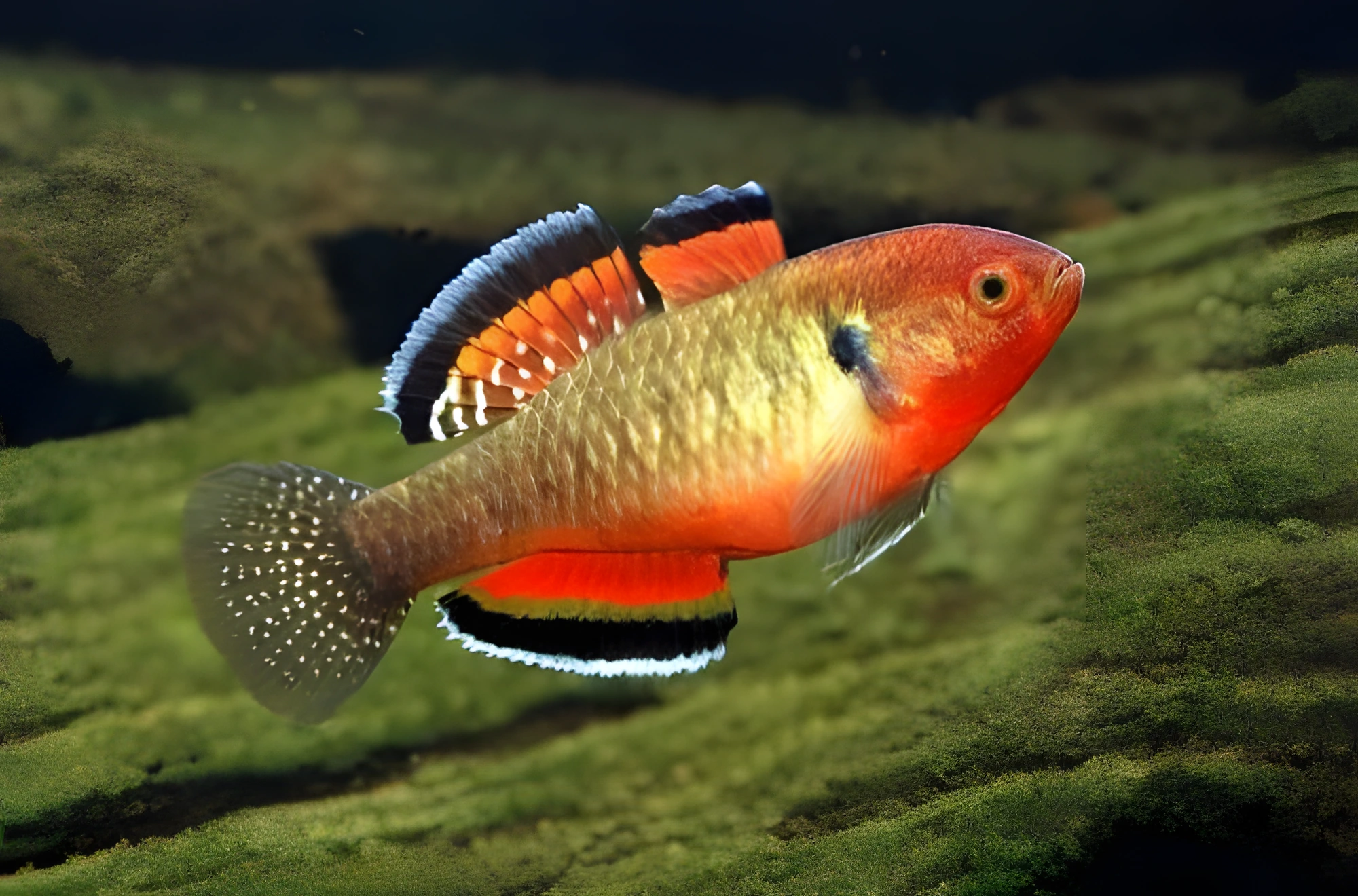
In natural conditions, adult individuals can reach 10–12 cm in length, but in aquarium conditions, their size is usually limited to 4–5 cm. A characteristic feature common to many Australian fish is a bifurcated dorsal fin. Pronounced sexual dimorphism is also typical for this species. Males are usually larger and have bright, variegated coloration, which becomes especially intense during the breeding season, with a predominance of yellow-red hues. Their fins are adorned with black and white edging. Females, in contrast, are smaller and have a more modest gray coloration.
Habitat
The natural range of this species is Australia, where the Empire Gudgeon is found in the lower reaches and estuaries of rivers – where they flow into the sea. It inhabits the northern and eastern coasts of the continent, predominantly where areas of humid tropical forests are preserved. In addition, wild populations of these fish have been found on the neighboring island of New Guinea. They prefer bodies of water with calm water and abundant dense aquatic plants.
Behavior and Compatibility
During the breeding season, males compete with each other for the attention of females, but this rivalry does not escalate into aggressive skirmishes, which allows for keeping a mixed group in one aquarium. They get along well with other fish species of comparable size, provided they can inhabit similar brackish conditions.
Care and Maintenance
For a small group of these fish, an aquarium of at least 80 liters is considered optimal. Successful and long-term keeping of the Empire Gudgeon is possible only in brackish water, where the salt concentration is approximately 5–10 grams per liter. Otherwise, this species is quite undemanding, successfully adapting to a wide range of temperatures and hydrochemical parameters. Since the water salinity is relatively low, there is no need to install equipment designed for marine aquariums. To maintain high water quality, an adequate filtration system and regular mandatory care procedures, such as weekly partial water changes with fresh water and timely removal of organic waste, are sufficient. In small aquariums containing a pair of fish, a regular air-lift filter with a sponge is sufficient. The aquarium decor can be arbitrary, but one of the important conditions is the presence of shelters, which can be created by plant thickets, snags, or other decorative elements.
Diet
In their natural environment, their diet consists of small crustaceans, aquatic insects and their larvae, as well as algae and detritus. In a home aquarium, the Empire Gudgeon readily accepts most common types of food, whether dry flakes, granules, frozen, or live foods. The key condition is to provide a varied diet, combining different products. For example, it is advisable to combine dry foods with additions of Artemia, bloodworms, Daphnia, and others.
Breeding and Reproduction
In nature, spawning occurs year-round. Adults migrate from estuaries upstream into fresh waters. After choosing a suitable spot, usually a flat stone or a piece of wood on the bottom, the pair lays over 3000 tiny eggs. After spawning, the female swims away, leaving the male to guard the clutch. However, his care lasts only a short time – about 24 hours, until the fry emerge. The young are then carried back to the river mouth, where they spend the initial stage of their lives, being a component of coastal zooplankton. As they mature, the grown fry return to fresh waters, and upon reaching sexual maturity, they undertake a reverse migration to the estuaries. Recreating such a complex life cycle in a home aquarium is a very challenging task. At the time of writing this article, the authors have found only a few mentions of successful breeding of the Empire Gudgeon in an artificial environment.
Diseases
This fish demonstrates unpretentiousness and resilience provided suitable water parameters are maintained, a balanced diet is provided, and there is no aggression from tank mates. If you notice any deviations in the behavior or appearance of your pets, you should first check the water quality and composition, the expiration date of the food, and pay attention to the tank mates. Some species can become aggressive during spawning or as they mature. As a rule, eliminating external causes contributes to recovery. In more advanced cases, medication may be required. More detailed information on symptoms and treatment methods can be found in the "Diseases of Aquarium Fish" section.
How to choose
When purchasing Empire Gudgeons, choose active individuals that show curiosity and have no visible damage. A healthy fish has clean scales without spots, film, or ulcers, and clear, non-cloudy eyes. It is important to avoid specimens that constantly stay at the water surface, breathe heavily, or have an unnaturally bloated abdomen, which may indicate problems with internal organs or the water quality in the seller's aquarium.
Since young individuals are most often available for sale, their coloration may be less pronounced than that of adult fish. When choosing a group, pay attention to their behavior: healthy fish stay in a shoal or actively explore the bottom and decorations. If the fish in the store look sluggish, hide in corners, or show signs of exhaustion, it is better to refrain from purchasing, as the adaptation of such individuals to new conditions may be difficult.
Frequently asked questions
The essentials: size, tank volume, water parameters and care
How big does Empire Gudgeon get?
An adult reaches 10–12 cm in length. Plan the tank around the maximum size: the fish quickly outgrows a cramped setup.
What size aquarium does Empire Gudgeon need?
The minimum recommended volume is 80 L. A smaller tank speeds up nitrate build-up and raises stress levels.
What water parameters does Empire Gudgeon need?
Temperature 15–35 °C, pH 5–9, hardness 2–26 dGH. Stability matters more than exact values: sudden swings are harder on the fish than a small deviation from the ideal.
How long does Empire Gudgeon live?
Around 5 years when kept properly. Lifespan depends directly on tank volume, water quality and a varied diet.
Is Empire Gudgeon aggressive?
Temperament: peaceful (regular). Keep this in mind when choosing tank mates.
How many Empire Gudgeon should be kept together?
Recommended setup: schooling (usually from 5–6 individuals and more). Ignoring this is a common cause of stress and disease.
What does Empire Gudgeon eat?
Diet type: any (universal). Feed small portions that are finished within a couple of minutes — overfeeding does more harm than underfeeding.
What is the scientific name of Empire Gudgeon?
The scientific name of the species is Hypseleotris compressa, family Sleepers (Eleotridae). It also appears in the literature as: Eleotris compressus.