Temperature23 – 28 °C
Natural range
- Tanintharyi Region
- Myanmar area
LoachesConservation status: Data deficient DD
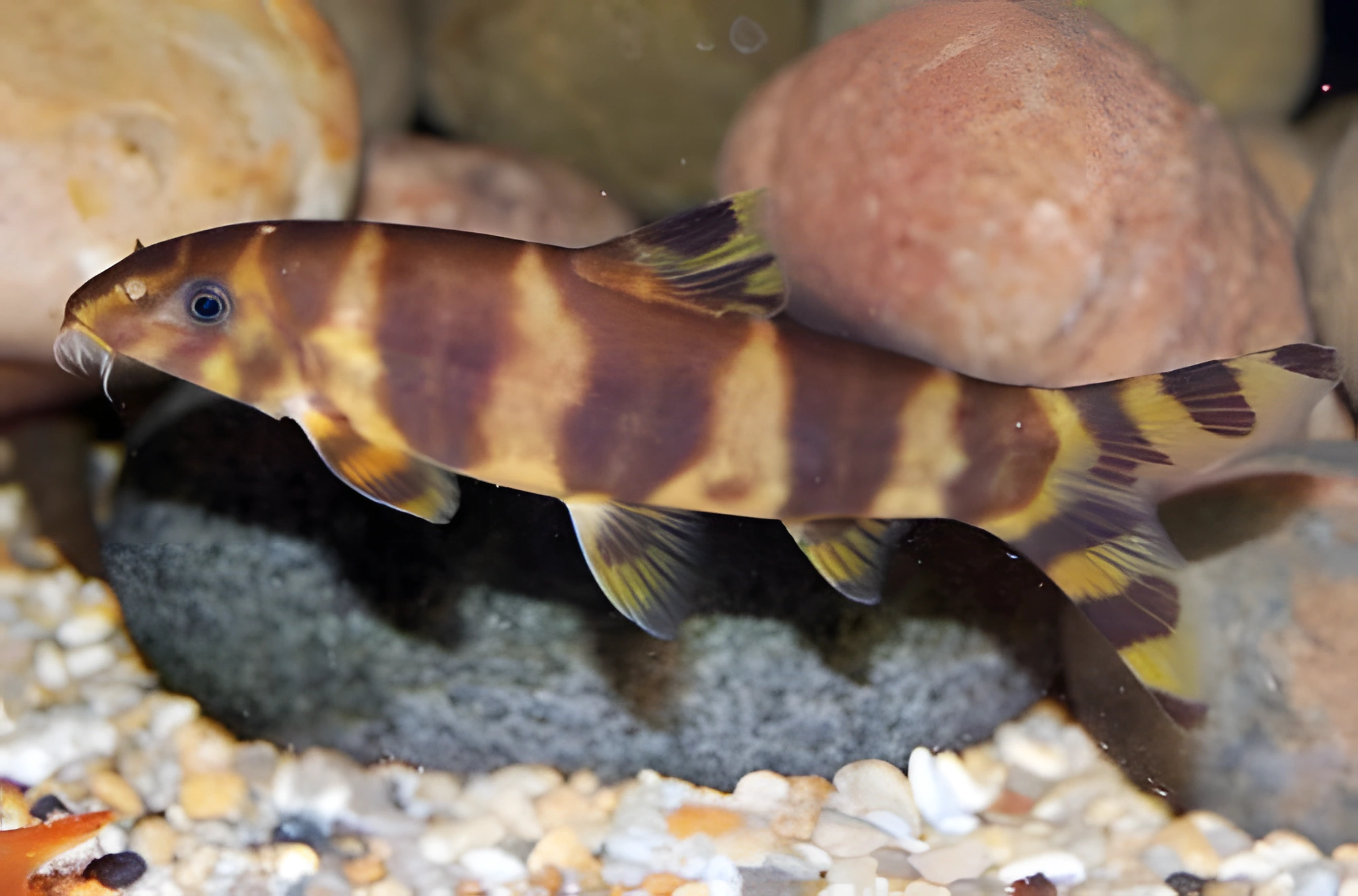
The scientific name Botia udomritthiruji belongs to the Emperor Botia, which is part of the Cobitidae family (Loaches). This species adapts well to aquarium conditions and does not cause much trouble. The fish is distinguished by a peculiar and easily recognizable body pattern, which at the same time has a noticeable similarity to the coloration of its closest relatives – Botia histrionica and Botia kubotai. Due to its uncomplicated nature, the Emperor Botia coexists perfectly with other non-aggressive species and can be recommended even to beginner aquarists.
- Required aquarium volume
- 240 L
- Size in aquarium
- 13 – 15 cm
- Temperature
- 23 – 28 °C
- Temperament
- Peaceful (regular)
Parameters
Water pHSlightly acidic (6) – Neutral (7.5)
Water dHVery soft (2) – Medium hardness (9)
Water salinityno salt (freshwater)
Size in aquarium13 – 15 cm
Lifespan10 years
TemperamentPeaceful (regular)
Toward small fishnot a predator
Required aquarium volume240 L
Lightingweak or moderate
Substraterocky (rock formations, boulders, etc.)
Water flowweak or moderate
FeedingAny (universal)
CareSmall group (5–6 individuals)
Description
Adult Emperor Botia reach a length of 13 to 15 cm. Sexual dimorphism is weakly expressed, although females are usually slightly larger than males. The fish's body is adorned with five wide dark stripes on a yellowish background with an orange tint. Over time, the stripes may become less distinct, blending with the overall background, and the fish's coloration generally darkens.
Habitat
This species originates from Southeast Asia, specifically Myanmar. It can be found exclusively in the Tanintharyi region, in the basin of the river of the same name, which flows into the Andaman Sea. Characteristic features of its natural habitat include sand and gravel substrates, rich in snags. Extensive shoals and sandy islands are found in the riverbed, and aquatic vegetation, though sparse, is predominantly distributed along the banks. The water in these areas is usually turbid.
Behavior and Compatibility
Active phases in the behavior of the Emperor Botia alternate with prolonged periods of rest, when the fish prefers to hide in shelters. It is often observed wedging itself into narrow crevices or spaces, for example, between the aquarium wall and the filter — this is a perfectly normal phenomenon and no cause for concern. These fish prefer to live in groups of 5–6 individuals. In smaller numbers, they may exhibit excessive anxiety and even cause inconvenience to other species, especially if they are smaller. In general, the Emperor Botia is compatible with many common aquarium fish, but it is advisable to avoid cohabitation with species that have long, flowing fins, as there is a high probability of damage to them.
Care and Maintenance
For comfortable keeping of a group of 5–6 individuals, an aquarium of at least 240 liters is recommended. The keeping conditions are quite simple. It is important to maintain high water quality, which is achieved by installing an effective filtration system and regular weekly replacement of 25–35% of the water volume with fresh water. It is also necessary to regularly clean the substrate of organic debris and remove plaque from the glass. For aquarium decoration, a rocky or sandy substrate is suitable, as well as several snags that will serve as shelters. Lighting should be subdued, preferring shade-loving plants. Mosses and ferns, which attach wonderfully to snags, are ideal. Otherwise, the decoration can be arbitrary.
Diet
This species is omnivorous. Botia readily accept a variety of aquarium foods: both dry, live, or frozen. The most important condition is the mandatory inclusion of plant components in their diet if they are not present in the composition of ready-made foods. For this, chopped vegetables and fruits such as cucumbers, melons, apples, and others can be used. A lack of plant food can lead to the fish damaging delicate aquarium plants.
Breeding and Reproduction
To date, there have been no recorded successful cases of breeding Emperor Botia in home aquariums. However, on a commercial basis, they are actively bred in specialized fish farms, using hormones to stimulate spawning.
Diseases
Non-ornamental fish species that have retained a close resemblance to their wild relatives usually exhibit high endurance, strong immunity, and resistance to various diseases. The occurrence of health problems most often indicates unsuitable keeping conditions. Therefore, before proceeding with treatment, it is strongly recommended to check the water quality and parameters. Only after all indicators have been brought back to normal should treatment begin, if it is still necessary. Detailed information on diseases, their symptoms, and therapy methods can be found in the “Aquarium Fish Diseases” section.
How to choose
When choosing an Emperor Botia, attention should be paid to the general state of health and the absence of signs of emaciation, characteristic of many loaches imported from nature. A healthy fish should show activity, have clean scales without ulcers or spots, and undamaged fins. It is important to avoid individuals with signs of so-called wasting disease, in which severe thinness and a sunken abdomen are observed, even with an appetite.
- check for cloudy eyes and rapid breathing, which may indicate infections or stress
- observe their behavior: in the store, fish should show interest in their surroundings, not constantly hide in a corner
- consider the presence of sharp suborbital spines, due to which fish can get tangled in nets, which often leads to skin damage during capture
Frequently asked questions
The essentials: size, tank volume, water parameters and care
How big does Emperor Botia get?
An adult reaches 13–15 cm in length. Plan the tank around the maximum size: the fish quickly outgrows a cramped setup.
What size aquarium does Emperor Botia need?
The minimum recommended volume is 240 L. A smaller tank speeds up nitrate build-up and raises stress levels.
What water parameters does Emperor Botia need?
Temperature 23–28 °C, pH 6–7.5, hardness 2–9 dGH. Stability matters more than exact values: sudden swings are harder on the fish than a small deviation from the ideal.
How long does Emperor Botia live?
Around 10 years when kept properly. Lifespan depends directly on tank volume, water quality and a varied diet.
Is Emperor Botia aggressive?
Temperament: peaceful (regular). Keep this in mind when choosing tank mates.
How many Emperor Botia should be kept together?
Recommended setup: small group (5–6 individuals). Ignoring this is a common cause of stress and disease.
What does Emperor Botia eat?
Diet type: any (universal). Feed small portions that are finished within a couple of minutes — overfeeding does more harm than underfeeding.
What is the scientific name of Emperor Botia?
The scientific name of the species is Botia udomritthiruji, family True Loaches (Cobitidae).