Temperature20 – 26 °C
Natural range
- South America area
UnusualConservation status: Least concern LC
Other scientific names: Cheilichthys asellus, Chelichthys asellus
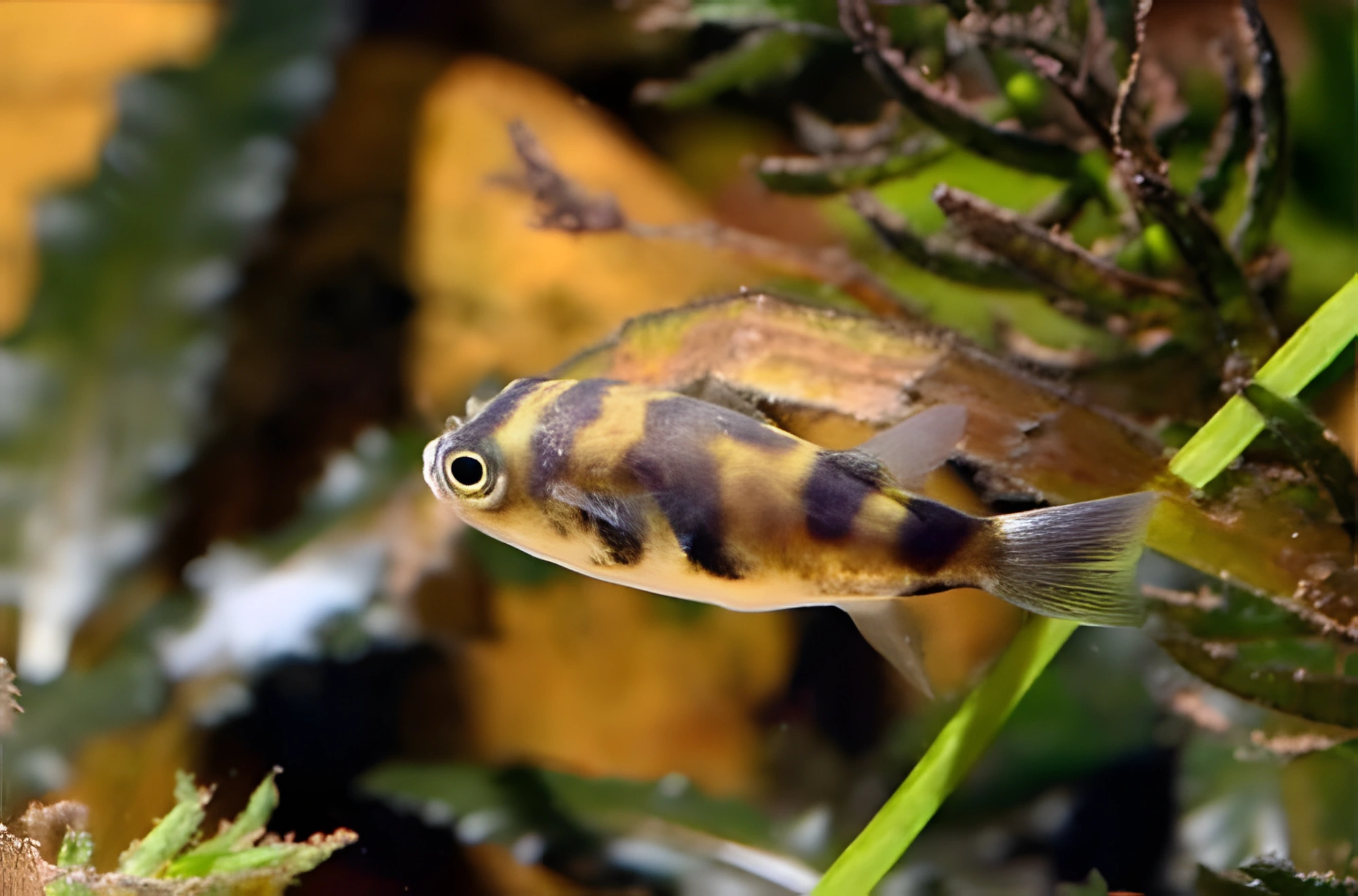
Colomesus asellus, known in the aquarium hobby as the Amazon puffer, Amazonian puffer, or donkey puffer, belongs to the family Tetraodontiformes. A distinctive feature of this fish is its unique defense mechanism: when threatened, it can instantly inflate with water and swell into a ball covered with sharp spines. This original ability attracts many aquarium enthusiasts.
- Required aquarium volume
- 100 L
- Size in aquarium
- 7 – 8 cm
- Temperature
- 20 – 26 °C
- Temperament
- Peaceful (regular)
Parameters
Water pHSlightly acidic (5.5) – Slightly alkaline (8)
Water dHVery soft (2) – Hard (15)
Water salinityno salt (freshwater)
Size in aquarium7 – 8 cm
Lifespan10 years
TemperamentPeaceful (regular)
Toward small fishnot a predator
Required aquarium volume100 L
Lightingdimmed or moderate
Substrateany (no restrictions)
Water flowweak or moderate
FeedingMeat / protein (live, frozen, fresh)
CareBoth solitary and in group (flexible)
Description
Adults of this fish reach a length of 7–8 cm. Their normal appearance may seem angular, but this changes when frightened: the puffer inflates, turning into a spiny ball, significantly increasing its size. This technique is an effective defense against predators, making it extremely difficult for them to swallow such prey. Additionally, these fish are venomous. Their body coloration is golden, with a contrasting white belly, complemented by black streaks of arbitrary shape.
Habitat
Its natural habitat is the vast Amazon River basin in South America. Despite its wide distribution, the puffer prefers specific biotopes. It is most often found in the middle or lower reaches of rivers, where the current is moderate, as well as in shallows and floodplain lakes. Below is a brief overview of the species.
Behavior and Compatibility
Despite its non-aggressive nature, the Amazon puffer is not ideal for a community tank. Overly active tankmates can frighten it, causing it to inflate. In such a state, it can pose a danger upon contact. Although solitary keeping is permissible, puffers feel more comfortable and exhibit natural behavior in a group.
Care and Maintenance
For a small group of Amazon puffers, the minimum aquarium volume is 100 liters. The aquascape is not a strict requirement, as puffers adapt well to various conditions. However, the presence of floating plants and several snags for hiding places will improve their well-being. Critically important keeping conditions are high water quality and an adequate level of dissolved oxygen. In addition to a productive filtration system, regular weekly water changes (30–50% of the total volume) and thorough removal of organic waste are necessary. An aerator may also be required.
Diet
The fish's mouth has an unusual structure, resembling a beak, consisting of hard bony plates. These plates continue to grow throughout the fish's life, but their size remains moderate due to constant wear. In the wild, their diet includes crustaceans, snails, bivalve mollusks, and other small creatures with hard shells. They can also scrape algae from various surfaces, such as rocks and snags. To maintain health in a home aquarium, it is important to provide a similar diet containing food that allows them to wear down their "beak." The use of dry foods, such as flakes or pellets, is not recommended. Of soft foods, only live or frozen bloodworms and brine shrimp are acceptable.
Breeding and Reproduction
To date, reliable data on the successful breeding of this species in captivity have not been recorded. In nature, their reproductive strategy is similar to that of marine puffers. Unlike most freshwater puffers, which are highly prolific, the Amazon puffer lays a relatively small number of eggs. Spawning occurs during the rainy season, when flooded areas of tropical forests become spawning grounds. Parental instincts are weakly expressed, and after spawning, the eggs are left unattended. The fry develop in these flooded areas, where they find safety and abundant food. As the water recedes, the juveniles move into the main river channel.
Diseases
Newly imported fish are often susceptible to ichthyophthiriasis and require prolonged acclimatization. Fortunately, in Eastern Europe, fish raised on commercial farms in artificial conditions are more common. In a favorable habitat, health problems usually do not arise. However, creating such conditions requires effort, and the risks remain quite high. This is especially true for nutrition: a lack of hard-shelled foods in the diet, such as shrimp, or shelled foods, like snails, can lead to deformation of the bony plates of the "beak." Detailed information on symptoms and treatment methods can be found in the "Diseases of Aquarium Fish" section.
How to choose
Amazon puffers are exclusively wild-caught, so when purchasing, it is important to carefully assess the condition of each individual. Healthy fish should be active and show curiosity about their surroundings. Avoid specimens with a concave belly, as this is a primary sign of severe emaciation or internal parasites, which will be extremely difficult to cure. Also, carefully inspect the body for white spots, indicating an infection with ichthyophthiriasis, to which this species is highly susceptible.
Since fish often arrive at stores weakened, it is advisable to ask the seller how long they have been in stock and if they have undergone a deworming course. If possible, choose individuals that have already started showing interest in offered food. After purchase, it is highly desirable to place the fish in a separate quarantine tank for observation and prophylactic treatment to eliminate the risk of infecting other inhabitants of your aquarium.
Frequently asked questions
The essentials: size, tank volume, water parameters and care
How big does Amazon Puffer get?
An adult reaches 7–8 cm in length. Plan the tank around the maximum size: the fish quickly outgrows a cramped setup.
What size aquarium does Amazon Puffer need?
The minimum recommended volume is 100 L. A smaller tank speeds up nitrate build-up and raises stress levels.
What water parameters does Amazon Puffer need?
Temperature 20–26 °C, pH 5.5–8, hardness 2–15 dGH. Stability matters more than exact values: sudden swings are harder on the fish than a small deviation from the ideal.
How long does Amazon Puffer live?
Around 10 years when kept properly. Lifespan depends directly on tank volume, water quality and a varied diet.
Is Amazon Puffer aggressive?
Temperament: peaceful (regular). Keep this in mind when choosing tank mates.
How many Amazon Puffer should be kept together?
Recommended setup: both solitary and in group (flexible). Ignoring this is a common cause of stress and disease.
What does Amazon Puffer eat?
Diet type: meat / protein (live, frozen, fresh). Feed small portions that are finished within a couple of minutes — overfeeding does more harm than underfeeding.
What is the scientific name of Amazon Puffer?
The scientific name of the species is Colomesus asellus, family Pufferfish (Tetraodontidae). It also appears in the literature as: Cheilichthys asellus, Chelichthys asellus.