Temperature20 – 26 °C
Natural range
- South America area
CatfishConservation status: Least concern LC
Other scientific names: Callichthys pectoralis, Hoplosternum pectorale
The Magdalena Catfish, scientifically known as Lepthoplosternum pectorale, belongs to the family Callichthyidae, commonly known as armored or callichthyid catfishes. Until 1996, this catfish was known as Hoplosternum pectorale. However, Brazilian ichthyologist Roberto E. Reis revised the classification of the family, leading to the introduction of the new genus Lepthoplosternum in scientific literature.
- Required aquarium volume
- 70 L
- Size in aquarium
- 6 cm
- Temperature
- 20 – 26 °C
- Temperament
- Semi-peaceful (including aggression during spawning / intraspecific conflicts)
Parameters
Water pHSlightly acidic (5.8) – Slightly alkaline (7.8)
Water dHSoft (5) – Very hard (25)
Water salinityno salt (freshwater)
Size in aquarium6 cm
Lifespan5 years
TemperamentSemi-peaceful (including aggression during spawning / intraspecific conflicts)
Toward small fishnot a predator
Required aquarium volume70 L
Lightingdimmed
Substratesandy (regular, light)
Water flowweak
FeedingSinking (any)
CareBoth solitary and in group (flexible)
Description
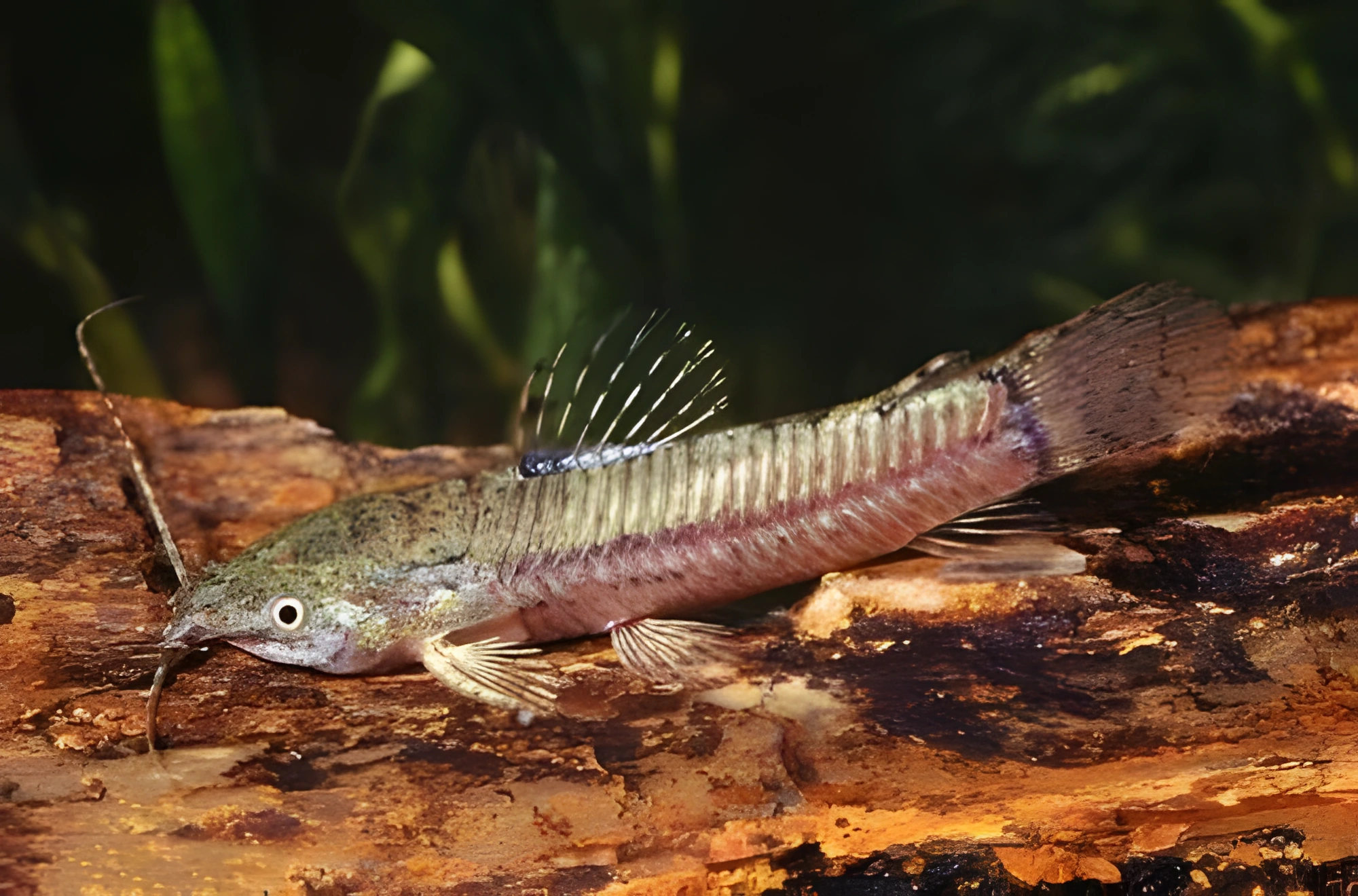
Adults grow to approximately 6 cm in length. Their body is elongated, covered with an "armor" of bony plates, which serves as protection against small predators. The mouth is equipped with two pairs of barbels. The coloration is predominantly gray or dark brown, adorned with numerous black speckles. It should be noted that the genus includes several very similar species. A distinctive feature of the Magdalena Catfish is the rounded shape of the caudal fin margin.
Habitat
The natural habitat of this fish is in South America, within the Paraguay River system. It can be found almost everywhere in marshy areas of rivers characterized by slow currents. The catfish prefers to stay near the bottom, finding shelter among snags, dense aquatic vegetation, and a layer of organic debris such as fallen leaves and branches.
Behavior and Compatibility
This fish has a peaceful and calm disposition, coexisting well with both its own kind and other non-aggressive fish of comparable size. However, during the breeding season, males may exhibit competitive behavior, striving to attract females, and also show territoriality, guarding their section of the aquarium. At this time, their behavior may become less friendly. It is recommended to choose fish that inhabit the upper and middle water layers as tank mates, while avoiding incompatible bottom-dwelling species.
Care and Maintenance
Given their small size and sedentary lifestyle, a minimum aquarium volume of 60–70 liters is required for 2–3 fish. The length of the tank is more significant than its height. The aquarium setup should provide a sufficient number of shelters. These can be dense plant thickets, snags, fallen leaves of certain trees, or other elements of natural or artificial decor. Lighting should be kept subdued, which can be aided by floating plants creating natural shading. Keeping these fish is not particularly difficult; they successfully adapt to a wide range of pH and dGH values. Relatively cool water (20–26°C) is preferred compared to most other tropical species. They are omnivorous and readily accept most sinking commercial foods, such as flakes and pellets.
Diet
The Magdalena Catfish is an omnivorous species that will readily accept most commercial sinking foods, including flakes and pellets.
Breeding and Reproduction
Breeding takes place in a separate spawning tank. The male builds a nest of air bubbles and saliva, often attaching it under broad plant leaves. An increase in water temperature to 26–28°C and a decrease in hardness stimulate spawning. During spawning, the female collects eggs in a "pouch" formed by her pelvic fins and transfers them to the male for placement in the nest. After the process is complete, the female should be removed, as the male shows pronounced parental care and actively guards the clutch. The incubation period lasts 4–5 days. Fry are fed with Artemia nauplii and specialized dry foods for juveniles.
Diseases
The species has a strong immune system when kept under proper conditions. The main dangers are bacterial and fungal infections, which develop due to poor water quality and the accumulation of organic matter in the substrate. Characteristic symptoms include damage to barbels, fin rot, or the appearance of ulcers on the body. Prevention involves maintaining aquarium cleanliness, regular water changes, and ensuring quality filtration. Fish are sensitive to abrupt changes in hydrochemical parameters, so acclimatization should be done gradually.
How to choose
When purchasing, choose active fish with clean skin without visible damage, spots, or film. It is important to check the integrity of the barbels, as their absence or deformation often indicates improper keeping conditions in the store. A healthy individual should show interest in foraging for food in the substrate. It is recommended to avoid specimens with signs of emaciation or an unnaturally bloated abdomen, as well as fish that constantly stay near the water surface, unless it is related to feeding.
Frequently asked questions
The essentials: size, tank volume, water parameters and care
How big does Magdalena Catfish get?
An adult reaches 6 cm in length. Plan the tank around the maximum size: the fish quickly outgrows a cramped setup.
What size aquarium does Magdalena Catfish need?
The minimum recommended volume is 70 L. A smaller tank speeds up nitrate build-up and raises stress levels.
What water parameters does Magdalena Catfish need?
Temperature 20–26 °C, pH 5.8–7.8, hardness 5–25 dGH. Stability matters more than exact values: sudden swings are harder on the fish than a small deviation from the ideal.
How long does Magdalena Catfish live?
Around 5 years when kept properly. Lifespan depends directly on tank volume, water quality and a varied diet.
Is Magdalena Catfish aggressive?
Temperament: semi-peaceful (including aggression during spawning / intraspecific conflicts). Keep this in mind when choosing tank mates.
How many Magdalena Catfish should be kept together?
Recommended setup: both solitary and in group (flexible). Ignoring this is a common cause of stress and disease.
What does Magdalena Catfish eat?
Diet type: sinking (any). Feed small portions that are finished within a couple of minutes — overfeeding does more harm than underfeeding.
What is the scientific name of Magdalena Catfish?
The scientific name of the species is Lepthoplosternum pectorale, family Callichthyidae. It also appears in the literature as: Callichthys pectoralis, Hoplosternum pectorale.