Temperature20 – 25 °C
Natural range
- Mekong River Basin
- Chao Phraya River Basin
- Thailand area
- Laos area
Loaches
Other scientific names: Homaloptera lineata, Homaloptera smithi
Homalopteroides smithi, known as Smith's Homaloptera, belongs to the family Balitoridae, or river loaches. This fish was named after the ichthyologist Hugh Smith (1865–1941), who discovered many tropical fish in Siam, now Thailand. Keeping this species is not difficult: the fish is peaceful and gets along well with other aquarium inhabitants. Its only drawback can be considered its unremarkable coloration.
- Required aquarium volume
- 50 L
- Size in aquarium
- 5 – 6 cm
- Temperature
- 20 – 25 °C
- Temperament
- Peaceful (regular)
Parameters
Water pHSlightly acidic (6) – Neutral (7.5)
Water dHVery soft (2) – Hard (12)
Water salinityno salt (freshwater)
Size in aquarium5 – 6 cm
Lifespan5 years
TemperamentPeaceful (regular)
Toward small fishnot a predator
Required aquarium volume50 L
Lightingweak (low)
Substraterocky (rock formations, boulders, etc.)
Water flowmoderate or strong
FeedingSinking (any)
CareSmall group (5–6 individuals)
Description
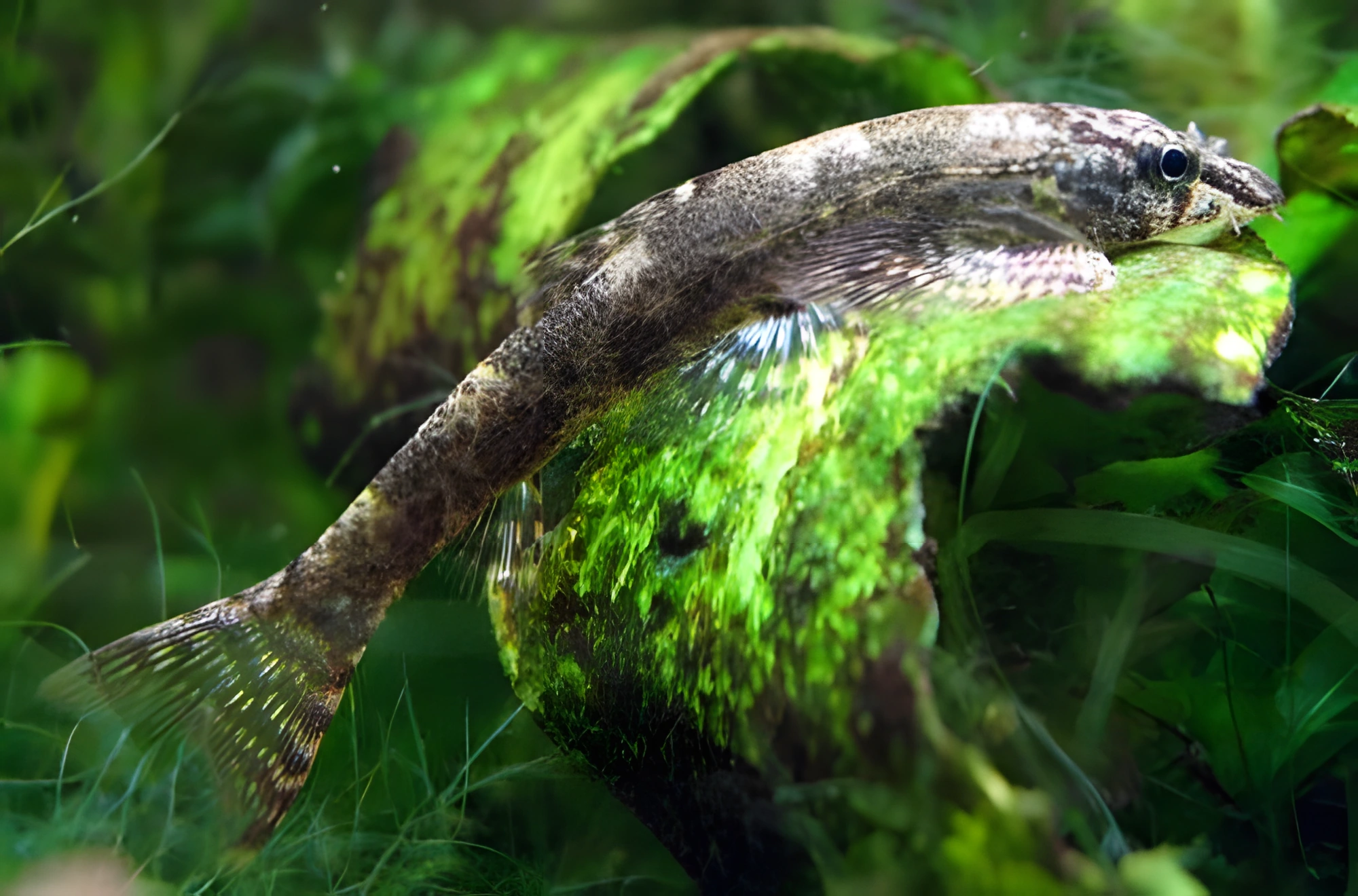
Adults of this species reach a length of 5–6 cm. Smith's Homaloptera is externally very similar to its close relative, Tweedie's Homaloptera, which often leads to confusion between them. The fish has an elongated body, and its pectoral and pelvic fins are significantly enlarged, resembling miniature, horizontally oriented fans. These fins allow it to cling firmly to rocky surfaces, effectively resisting strong currents. The fish's coloration is gray, with 5–6 dark markings, most noticeable when viewed from above. However, the body pattern is not always clearly visible.
Habitat
The natural habitat of this species extends across Southeast Asia, covering the vast basins of the Mekong and Chao Phraya rivers, flowing through Thailand, Laos, Cambodia, and Vietnam. The fish is found predominantly in the headwaters of rivers originating in mountains and hills, as well as in areas with strong currents, despite the enormous scale of its distribution. A typical habitat consists of shallow, fast-flowing waterways with numerous rapids and cascades. The substrate here usually consists of rocks and boulders, among which are snags of various sizes, from small branches to fallen tree trunks. Aquatic vegetation is mainly concentrated along the shoreline.
Behavior and Compatibility
This is a peaceful and calm fish that prefers the company of its own kind and other non-aggressive species of comparable size that can comfortably exist in similar conditions. Given a moderate current, it coexists well with many cyprinids (rasboras, barbs, danios), as well as with other non-territorial loaches.
Care and Maintenance
For a group of six Smith's Homaloptera, the optimal aquarium volume starts from fifty to sixty liters. The most important aspect in keeping these fish is maintaining high water quality, saturated with dissolved oxygen. Creating an internal current that mimics the dynamics of a mountain river is welcome. Although a powerful filtration system will help solve a number of tasks related to maintaining cleanliness, one should not neglect mandatory procedures for maintaining biological balance. These include weekly partial water changes and systematic removal of organic residues, such as uneaten food and excrement. When choosing decor elements, their ability to withstand moderate or even strong currents should be taken into account. Pebble substrate, rocks, and snags are excellent as a basis for decor. Artificial plants and some undemanding species of live vegetation, such as Anubias, some aquatic mosses, and ferns, are also appropriate.
Diet
In natural conditions, the diet of these fish consists mainly of small crustaceans, insect larvae, and other invertebrates. When kept in an aquarium, the daily menu can include dry, as well as frozen sinking foods. Live foods such as bloodworms, Artemia, and large Daphnia will be an excellent addition.
Breeding and Reproduction
At the time of preparing this article, the authors were unable to find reliable information about successful breeding of Smith's Homaloptera in home aquarium conditions.
Diseases
Health problems usually arise only as a result of injuries or keeping in unsuitable conditions, which leads to a weakening of the immune system and, as a rule, provokes the development of various diseases. At the first signs of illness, the primary task is to check the water parameters for excesses or dangerous concentrations of toxic substances (nitrates, nitrites, ammonia, etc.). After bringing all indicators back to normal, treatment can begin. More detailed information on symptoms and treatment methods is presented in the "Aquarium Fish Diseases" section.
How to choose
When choosing Smith's Homaloptera, special care should be taken, as this species often goes on sale in a state of severe emaciation. A healthy fish should have a rounded abdomen, not sunken or concave, which is a critical indicator of overall physical condition. Avoid individuals with signs of apathy, fin damage, or body ulcers.
Before purchasing, it is recommended to observe the fish for some time. It is important to ensure that they show interest in food: ask the seller to feed them. Refusal to eat or lack of activity may indicate health problems or adaptation issues. It is also worth clarifying how long the fish has been in the store, as freshly imported specimens require a long period of observation and quarantine.
Frequently asked questions
The essentials: size, tank volume, water parameters and care
How big does Homaloptera Smithi get?
An adult reaches 5–6 cm in length. Plan the tank around the maximum size: the fish quickly outgrows a cramped setup.
What size aquarium does Homaloptera Smithi need?
The minimum recommended volume is 50 L. A smaller tank speeds up nitrate build-up and raises stress levels.
What water parameters does Homaloptera Smithi need?
Temperature 20–25 °C, pH 6–7.5, hardness 2–12 dGH. Stability matters more than exact values: sudden swings are harder on the fish than a small deviation from the ideal.
How long does Homaloptera Smithi live?
Around 5 years when kept properly. Lifespan depends directly on tank volume, water quality and a varied diet.
Is Homaloptera Smithi aggressive?
Temperament: peaceful (regular). Keep this in mind when choosing tank mates.
How many Homaloptera Smithi should be kept together?
Recommended setup: small group (5–6 individuals). Ignoring this is a common cause of stress and disease.
What does Homaloptera Smithi eat?
Diet type: sinking (any). Feed small portions that are finished within a couple of minutes — overfeeding does more harm than underfeeding.
What is the scientific name of Homaloptera Smithi?
The scientific name of the species is Homalopteroides smithi, family Balitoridae. It also appears in the literature as: Homaloptera lineata, Homaloptera smithi.