Temperature20 – 26 °C
Natural range
- Peninsular Malaysia area
- Southern Thailand area
LoachesConservation status: Least concern LC
Other scientific names: Balitoropsis leonardi, Homaloptera leonardi
The fish, scientifically known as Pseudohomaloptera leonardi, belongs to the family Balitoridae, or river loaches. It was named in honor of Mr. G. R. Leonard, who, during the reign of King George V in colonial Malaysia, headed the Kuala Tahan National Park.
- Required aquarium volume
- 80 L
- Size in aquarium
- 6 – 7 cm
- Temperature
- 20 – 26 °C
- Temperament
- Peaceful (regular)
Parameters
Water pHSlightly acidic (6) – Neutral (7.5)
Water dHVery soft (1) – Medium hardness (10)
Water salinityno salt (freshwater)
Size in aquarium6 – 7 cm
Lifespan8 years
TemperamentPeaceful (regular)
Toward small fishnot a predator
Required aquarium volume80 L
Lightingmoderate (regular)
Substraterocky (rock formations, boulders, etc.)
Water flowmoderate or strong
FeedingSinking (any)
CareBoth solitary and in group (flexible)
Description
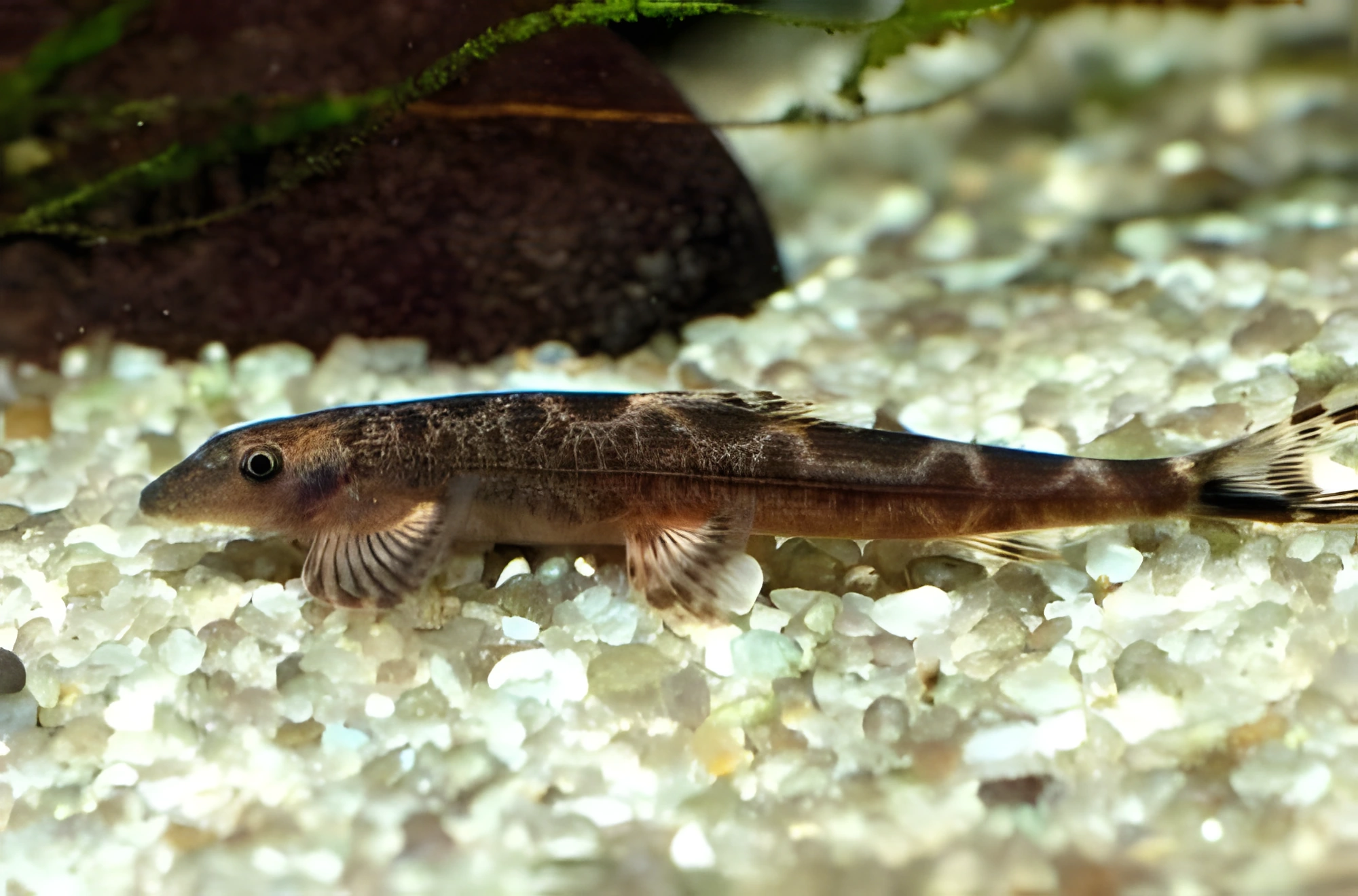
Adults reach a length of about 6–7 cm. Their body is elongated and slightly flattened dorsally. Pseudohomaloptera have large, fan-shaped pectoral and pelvic fins positioned low, which helps the fish firmly attach to rocks, resisting strong currents. The fish's coloration is dark brown, adorned with a pattern of gray stripes and small speckles.
Habitat
The natural habitat of this species covers Southeast Asia, specifically peninsular Malaysia and the southern territories of Thailand. These fish prefer the headwaters of mountain rivers. Their typical environment consists of shallow streams and rivers with fast, sometimes turbulent currents. The bottom of such bodies of water is usually stony, and the water is clean and rich in oxygen. Vegetation is generally absent directly in the riverbed but is abundant along the banks.
Behavior and Compatibility
This fish is distinguished by its peaceful and calm disposition. It coexists well with other species that thrive in similar conditions. In an aquarium, good tankmates can include Danios, Rasboras, Akysis catfishes, Corydoras, and other compatible species.
Care and Maintenance
For keeping 1–3 fish, an aquarium with a volume of 80–100 liters will be optimal. It is very important not only to maintain water cleanliness and optimal temperature and hydrochemical parameters but also to provide a moderate current. It is recommended that the water in the aquarium be completely renewed 10–15 times per hour; this means that for a 100-liter tank, the performance of an internal filter or pump should be at least 1000 liters per hour. Given the need to create a strong current, only massive, stable elements such as large stones, rock fragments, or snags should be used as decorations.
Diet
In natural conditions, the diet of Pseudohomaloptera leonardi consists of algae, which they scrape from the surface of rocks, as well as small crustaceans, insect larvae, and other invertebrates. In a home aquarium, it is recommended to combine protein-rich foods with vegetable supplements.
Breeding and Reproduction
To date, there is no confirmed data on the successful breeding of Pseudohomaloptera leonardi in home aquariums.
Diseases
The best protection against diseases is to provide suitable living conditions, a balanced diet, and the absence of external stressors, such as aggression from tankmates. The appearance of disease symptoms may indicate problems with the living conditions. Often, normalizing the environment contributes to self-recovery, but if the fish's body is too weakened, medication may be required. More detailed information on symptoms and treatment methods can be found in the "Diseases of Aquarium Fish" section.
How to choose
When selecting specimens, attention should be paid to their physical condition, as representatives of this family often go on sale in an emaciated state, which is subsequently extremely difficult to correct. A healthy fish should be active, have clear eyes, and undamaged fins without signs of erosion or film. Avoid specimens with sunken bellies, signs of skin damage, or unusual behavior, such as apathy or constantly staying in a corner of the aquarium.
- Assess the fish's plumpness, as emaciation is a common problem for this species.
- Ensure there are no white spots, ulcers, or other damage on the body and fins.
- Observe their behavior: healthy individuals should show natural curiosity, not signs of stress or panic.
- If possible, visit the store during feeding to confirm the fish has a healthy appetite.
Frequently asked questions
The essentials: size, tank volume, water parameters and care
How big does Pseudohomaloptera leonardi get?
An adult reaches 6–7 cm in length. Plan the tank around the maximum size: the fish quickly outgrows a cramped setup.
What size aquarium does Pseudohomaloptera leonardi need?
The minimum recommended volume is 80 L. A smaller tank speeds up nitrate build-up and raises stress levels.
What water parameters does Pseudohomaloptera leonardi need?
Temperature 20–26 °C, pH 6–7.5, hardness 1–10 dGH. Stability matters more than exact values: sudden swings are harder on the fish than a small deviation from the ideal.
How long does Pseudohomaloptera leonardi live?
Around 8 years when kept properly. Lifespan depends directly on tank volume, water quality and a varied diet.
Is Pseudohomaloptera leonardi aggressive?
Temperament: peaceful (regular). Keep this in mind when choosing tank mates.
How many Pseudohomaloptera leonardi should be kept together?
Recommended setup: both solitary and in group (flexible). Ignoring this is a common cause of stress and disease.
What does Pseudohomaloptera leonardi eat?
Diet type: sinking (any). Feed small portions that are finished within a couple of minutes — overfeeding does more harm than underfeeding.
What is the scientific name of Pseudohomaloptera leonardi?
The scientific name of the species is Pseudohomaloptera leonardi, family River Loaches (Balitoridae). It also appears in the literature as: Balitoropsis leonardi, Homaloptera leonardi.