Temperature20 – 25 °C
Natural range
- Eastern Myanmar area
- Northwestern Thailand area
LoachesConservation status: Data deficient DD
Other scientific names: Nemacheilus serpentarius
Homaloptera bilineata, also known as the Two-lined Homaloptera, belongs to the family Balitoridae, or river loaches. Although this species is undemanding to keep and peaceful, its breeding in aquarium conditions presents certain difficulties, which somewhat limits its distribution among amateur aquarists.
- Required aquarium volume
- 100 L
- Size in aquarium
- 9 – 10 cm
- Temperature
- 20 – 25 °C
- Temperament
- Peaceful (regular)
Parameters
Water pHSlightly acidic (6) – Neutral (7.5)
Water dHVery soft (1) – Medium hardness (10)
Water salinityno salt (freshwater)
Size in aquarium9 – 10 cm
Lifespan5 years
TemperamentPeaceful (regular)
Toward small fishnot a predator
Required aquarium volume100 L
Lightingweak (low)
Substraterocky (rock formations, boulders, etc.)
Water flowmoderate or strong
FeedingSinking (plant-based)
CareMedium group (6–8 individuals)
Description
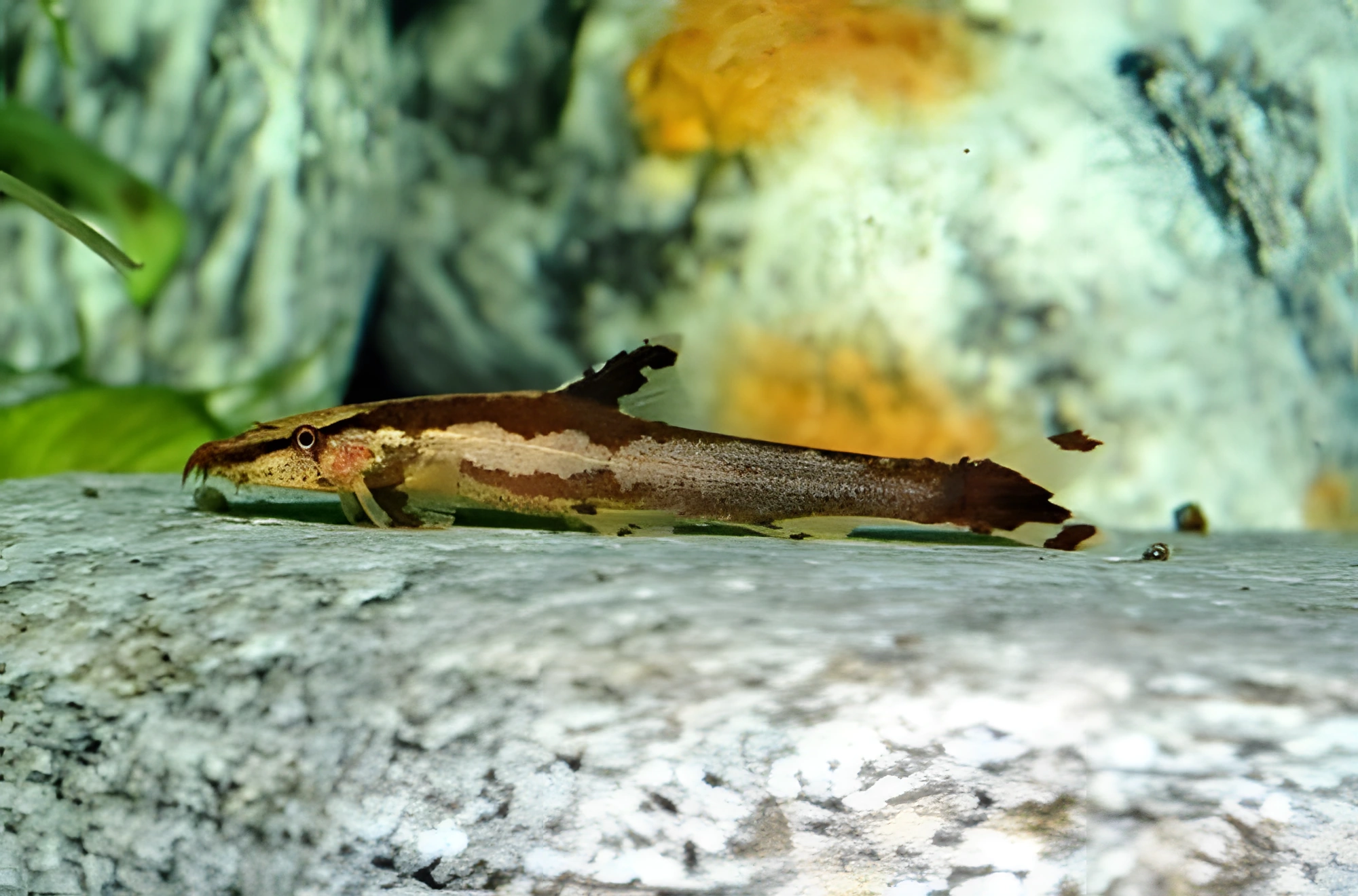
Adults of this fish can reach 9–10 cm in length. Their body is very elongated, and the head is extended and pointed. Three pairs of sensitive short barbels are located around the mouth. Paired fins are shifted towards the lower part of the body, resembling the "flippers" of aquatic mammals. Thanks to this structure, these fins allow the fish to firmly hold onto rocks, resisting strong currents, and also to cling to plant leaves and stems. The coloration is predominantly grayish, with two distinct irregular brown stripes running along the back and belly. Brown pigmentation is also noticeable on the dorsal fin and tail. Sexual dimorphism is weakly expressed, making visual distinction between males and females almost impossible.
Habitat
The natural habitat of this species covers Southeast Asia, specifically the eastern regions of Myanmar (Burma) and northwestern Thailand. The fish inhabits the basin of the Tanintharyi River (also known as Salween), which flows through hilly or mountainous terrain. The biotope typical for Homaloptera bilineata is characterized by shallow rivers with fast currents, where the water is always clean, clear, and rich in dissolved oxygen. The bottom of such water bodies is usually covered with gravel, rocks, and boulders, and the riparian zones are adorned with aquatic plants.
Behavior and Compatibility
This species prefers to live in groups. It is recommended to acquire at least 6 individuals. They get along well with other non-aggressive species of comparable size that are adapted to similar living conditions. These include other types of loaches, axis catfishes, and others.
Care and Maintenance
For keeping a group of 6 fish, the optimal aquarium volume should be at least 100 liters. It is preferable to choose a low tank, where a height of 30 cm will be quite sufficient. The main condition for successful keeping of Homaloptera bilineata is maintaining clean, oxygen-rich water within the permissible range of temperatures and hydrochemical parameters. The presence of current in the aquarium favorably affects the well-being of the fish. A powerful internal filter combined with an aeration system can partially solve this problem and, with excessive power, provide the necessary strong water movement. Maintaining high water quality requires not only good filtration but also regular aquarium maintenance: weekly partial water changes with fresh water and timely removal of organic residues (food remains, excrement). The aquarium setup is not critical. It is sufficient to use a layer of gravel or coarse sand, adding a few snags and stones. When choosing live plants, it is worth preferring species resistant to turbulent conditions, such as Anubias, aquatic mosses, and ferns.
Diet
In natural conditions, this fish feeds on algae and small invertebrates. In an aquarium, its diet should be balanced and include both plant and protein components. Dry sinking flakes or granules can be used, supplemented with live or frozen foods such as Artemia, Daphnia, and bloodworms. The composition of the food may vary depending on the keeping conditions. For example, in the presence of a strong current, where most ordinary foods would be carried away, polluting the water, it is recommended to use special gel-like or paste-like foods that can be placed in small portions directly on the bottom.
Breeding and Reproduction
At the time of preparing this material, the authors were unable to find reliable information about successful breeding of Homaloptera bilineata in amateur aquariums.
Diseases
Health problems usually arise only as a result of injuries or keeping in unsuitable conditions, which leads to a weakening of the immune system and, as a rule, provokes the development of various diseases. At the first signs of illness, the primary task is to check the water parameters for excesses or dangerous concentrations of toxic substances (nitrates, nitrites, ammonia, etc.). After bringing all indicators back to normal, treatment can begin. More detailed information on symptoms and treatment methods is presented in the "Aquarium Fish Diseases" section.
How to choose
When purchasing Homaloptera bilineata, caution should be exercised, as fish of this family often arrive in an emaciated state due to difficulties in adapting to aquarium conditions. It is important to avoid acquiring individuals with sunken bellies, which is a sign of prolonged starvation or serious health problems. Healthy fish should be active, have clean, undamaged scales, and clear eyes without signs of cloudiness or bulging.
When inspecting, pay attention to the following signs:
- absence of visible damage, ulcers, white film, or spots on the body and fins;
- fins should be spread out, without signs of splitting or erosion;
- gill covers should not be inflamed or excessively flared;
- behavior should be natural, without signs of apathy, chaotic movements, or attempts to constantly rub against decorations.
It is recommended to observe the fish during feeding if possible: healthy individuals show interest in food. Given that the species tolerates transportation poorly, it is advisable to ask the seller how long the fish has been received and whether it has started to feed independently in the aquarium.
Frequently asked questions
The essentials: size, tank volume, water parameters and care
How big does Homaloptera bilineata get?
An adult reaches 9–10 cm in length. Plan the tank around the maximum size: the fish quickly outgrows a cramped setup.
What size aquarium does Homaloptera bilineata need?
The minimum recommended volume is 100 L. A smaller tank speeds up nitrate build-up and raises stress levels.
What water parameters does Homaloptera bilineata need?
Temperature 20–25 °C, pH 6–7.5, hardness 1–10 dGH. Stability matters more than exact values: sudden swings are harder on the fish than a small deviation from the ideal.
How long does Homaloptera bilineata live?
Around 5 years when kept properly. Lifespan depends directly on tank volume, water quality and a varied diet.
Is Homaloptera bilineata aggressive?
Temperament: peaceful (regular). Keep this in mind when choosing tank mates.
How many Homaloptera bilineata should be kept together?
Recommended setup: medium group (6–8 individuals). Ignoring this is a common cause of stress and disease.
What does Homaloptera bilineata eat?
Diet type: sinking (plant-based). Feed small portions that are finished within a couple of minutes — overfeeding does more harm than underfeeding.
What is the scientific name of Homaloptera bilineata?
The scientific name of the species is Homaloptera bilineata, family River Loaches (Balitoridae). It also appears in the literature as: Nemacheilus serpentarius.