Temperature20 – 30 °C
Natural range
- Brazil area
KillifishConservation status: Vulnerable VU
Other scientific names: Simpsonichthys picturatus
Hypsolebias picturatus is the scientific name for this fish. This species belongs to the family Rivulidae and is found in the water bodies of the eastern states of Brazil, within the São Francisco River basin. Its habitat consists of annually drying swampy areas that form in the flooded zones of tropical forests during the rainy season.
- Required aquarium volume
- 40 L
- Size in aquarium
- 4 cm
- Temperature
- 20 – 30 °C
- Temperament
- Peaceful (regular)
Parameters
Water pHSlightly acidic (5) – Neutral (7)
Water dHSoft (4) – Medium hardness (9)
Water salinityno salt (freshwater)
Size in aquarium4 cm
Lifespan1 years
TemperamentPeaceful (regular)
Toward small fishnot a predator
Required aquarium volume40 L
Lightingdimmed
Substraterocky (rock formations, boulders, etc.)
Water flownone or stagnant (no flow)
FeedingMeat / protein (live, frozen, fresh)
CareSmall group (5–6 individuals)
Description
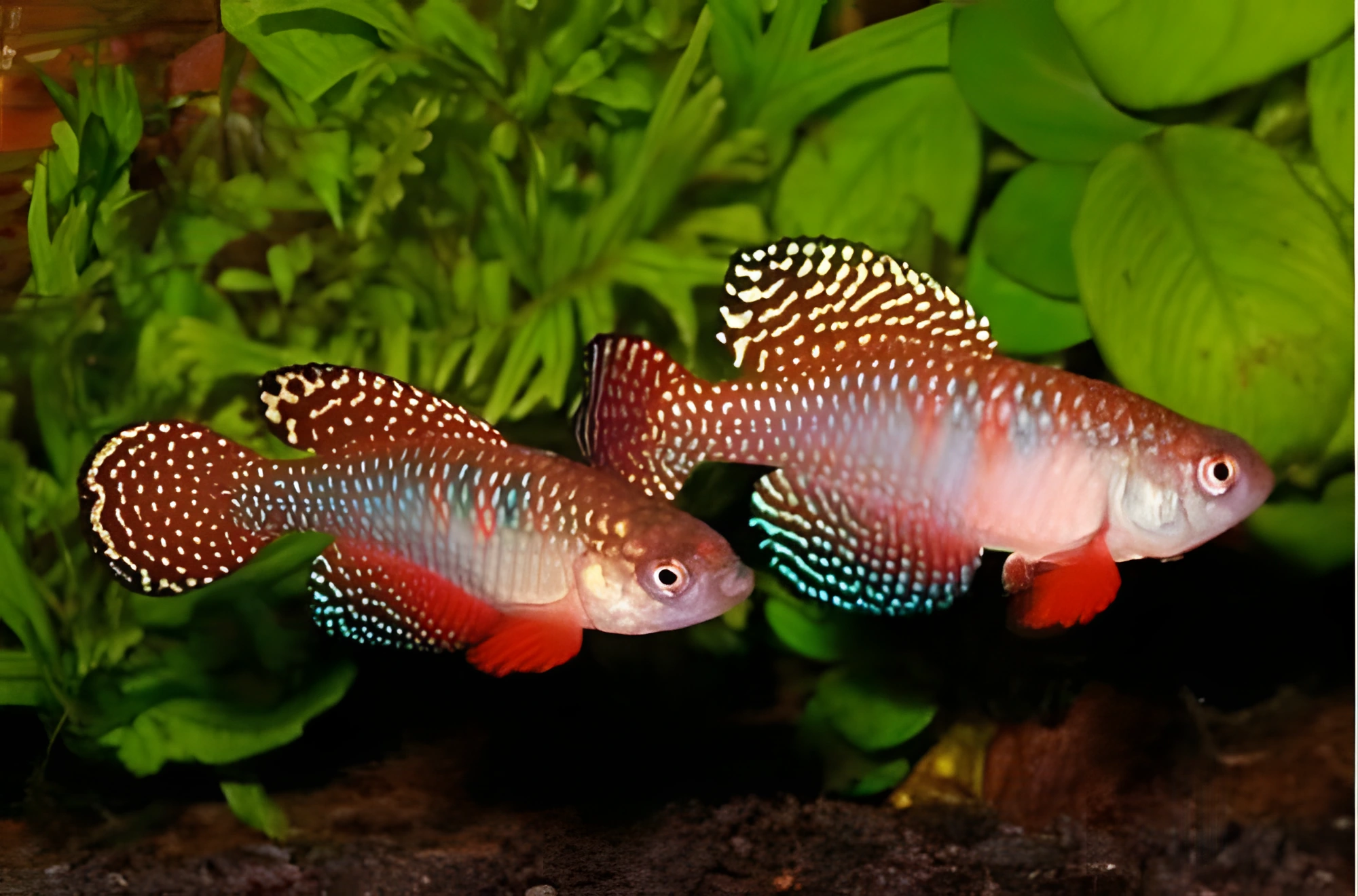
Pronounced sexual dimorphism is a characteristic feature of these fish. Males are larger than females and have more vibrant coloration; their length can reach up to 4 cm, and their pattern consists of turquoise speckles on a red background. The fins and tail of males are darker. Females, in contrast, grow up to 3 cm in length and have a gray coloration with a slight reddish tint, and their fins and tail are translucent. Both sexes have noticeable dark vertical stripes along the sides of their bodies.
Habitat
The species is endemic to Brazil, inhabiting the São Francisco River basin. In nature, it lives in temporary water bodies such as small swamps and ephemeral ponds, typical of tropical savannas. These habitats are seasonal, which is why the fish have an annual life cycle, adapting to the drying environment by laying eggs in the substrate.
Behavior and Compatibility
The primary purpose of this fish's short life is reproduction. Although males coexist peacefully with each other, there is high competition for the attention of females, which is mainly demonstrative. It is recommended to keep them in a species-specific aquarium. Coexistence with other species is limited; fish of a similar size would be suitable tank mates.
Care and Maintenance
For a group of 5–6 fish, an aquarium with a volume of 40–50 liters will be optimal. Keeping these inhabitants is not difficult. Hypsolebias picturatus requires soft, acidic water, the temperature of which should not exceed 28–30°C. A substrate of fallen leaves from various trees, as well as natural snags, is preferable. These natural elements will release tannins, giving the water a characteristic brownish tint, typical of swampy water bodies. When choosing plants, preference should be given to floating species, which will provide additional shading for the aquarium. Live foods such as brine shrimp, large daphnia, bloodworms, and similar are crucial for their diet. Due to their short lifespan, Hypsolebias picturatus do not have time to adapt to dry alternative foods.
Diet
These fish require live foods such as brine shrimp, large daphnia, bloodworms, and other similar items. Due to their short life cycle, Hypsolebias picturatus do not have time to get accustomed to dry alternative foods. Since reproduction of these fish is highly probable, a special spawning substrate should be provided in the aquarium setup. A substrate based on Sphagnum peat moss is recommended for this purpose. After spawning, the substrate with the eggs should be removed, placed in a separate container, and kept in a dark place at room temperature. After 3–5 months, the dried substrate is placed in water, and fry should emerge after some time.
Breeding and Reproduction
Given the high probability of these fish breeding, a special spawning substrate must be provided in the aquarium setup. A substrate based on Sphagnum peat moss is recommended. After spawning is complete, the substrate with the laid eggs is removed, transferred to a separate container, and left in a dark place at room temperature. After 3–5 months, the dried substrate is submerged in water, and fry can be expected to appear after some time.
Diseases
Like other members of the Rivulidae family, this species is highly sensitive to water quality and keeping conditions. Major health problems often arise from the accumulation of organic pollutants, which provokes bacterial infections and skin lesions. Prevention includes maintaining stable water parameters, regular water changes, and using high-quality live food. Fish are prone to oodiniosis with sudden temperature changes or stress.
How to choose
When purchasing, choose active individuals with bright coloration and clean fins without signs of damage or film. It is important to assess the fish's behavior: healthy individuals show curiosity and actively move through the water column. Avoid purchasing fish with sunken bellies or signs of apathy, as this may indicate emaciation or hidden diseases. Given their short life cycle, it is recommended to inquire about the age of the individuals from the seller.
Frequently asked questions
The essentials: size, tank volume, water parameters and care
How big does Hypsolebias picturatus get?
An adult reaches 4 cm in length. Plan the tank around the maximum size: the fish quickly outgrows a cramped setup.
What size aquarium does Hypsolebias picturatus need?
The minimum recommended volume is 40 L. A smaller tank speeds up nitrate build-up and raises stress levels.
What water parameters does Hypsolebias picturatus need?
Temperature 20–30 °C, pH 5–7, hardness 4–9 dGH. Stability matters more than exact values: sudden swings are harder on the fish than a small deviation from the ideal.
How long does Hypsolebias picturatus live?
Around 1 years when kept properly. Lifespan depends directly on tank volume, water quality and a varied diet.
Is Hypsolebias picturatus aggressive?
Temperament: peaceful (regular). Keep this in mind when choosing tank mates.
How many Hypsolebias picturatus should be kept together?
Recommended setup: small group (5–6 individuals). Ignoring this is a common cause of stress and disease.
What does Hypsolebias picturatus eat?
Diet type: meat / protein (live, frozen, fresh). Feed small portions that are finished within a couple of minutes — overfeeding does more harm than underfeeding.
What is the scientific name of Hypsolebias picturatus?
The scientific name of the species is Hypsolebias picturatus, family Rivulidae. It also appears in the literature as: Simpsonichthys picturatus.