Temperature24 – 28 °C
Natural range
- Orinoco River Basin
- Rio Negro Basin
- Brazil area
- Venezuela area
Predators CharacinsConservation status: Least concern LC
Other scientific names: Xiphostoma lateristriga
Boulengerella lateristriga, also known as the Striped Pike Characin or Pike Characin, belongs to the family Ctenoluciidae. This species is not difficult to keep, provided it is given a sufficiently spacious aquarium equipped with everything necessary. However, given the significant cost of such equipment, this fish is accessible to aquarists who are prepared for substantial financial investment.
- Required aquarium volume
- 1000 L
- Size in aquarium
- 25 cm
- Temperature
- 24 – 28 °C
- Temperament
- Predator (dangerous to small, incompatible)
Parameters
Water pHAcidic (4) – Neutral (7)
Water dHVery soft (1) – Medium hardness (10)
Water salinityno salt (freshwater)
Size in aquarium25 cm
Lifespan7 years
TemperamentPredator (dangerous to small, incompatible)
Toward small fishpredator
Required aquarium volume1000 L
Lightingdimmed
Substrateany (no restrictions)
Water flowweak or moderate
FeedingFor carnivores (live fish, insects, etc.)
CareBoth solitary and in group (flexible)
Description
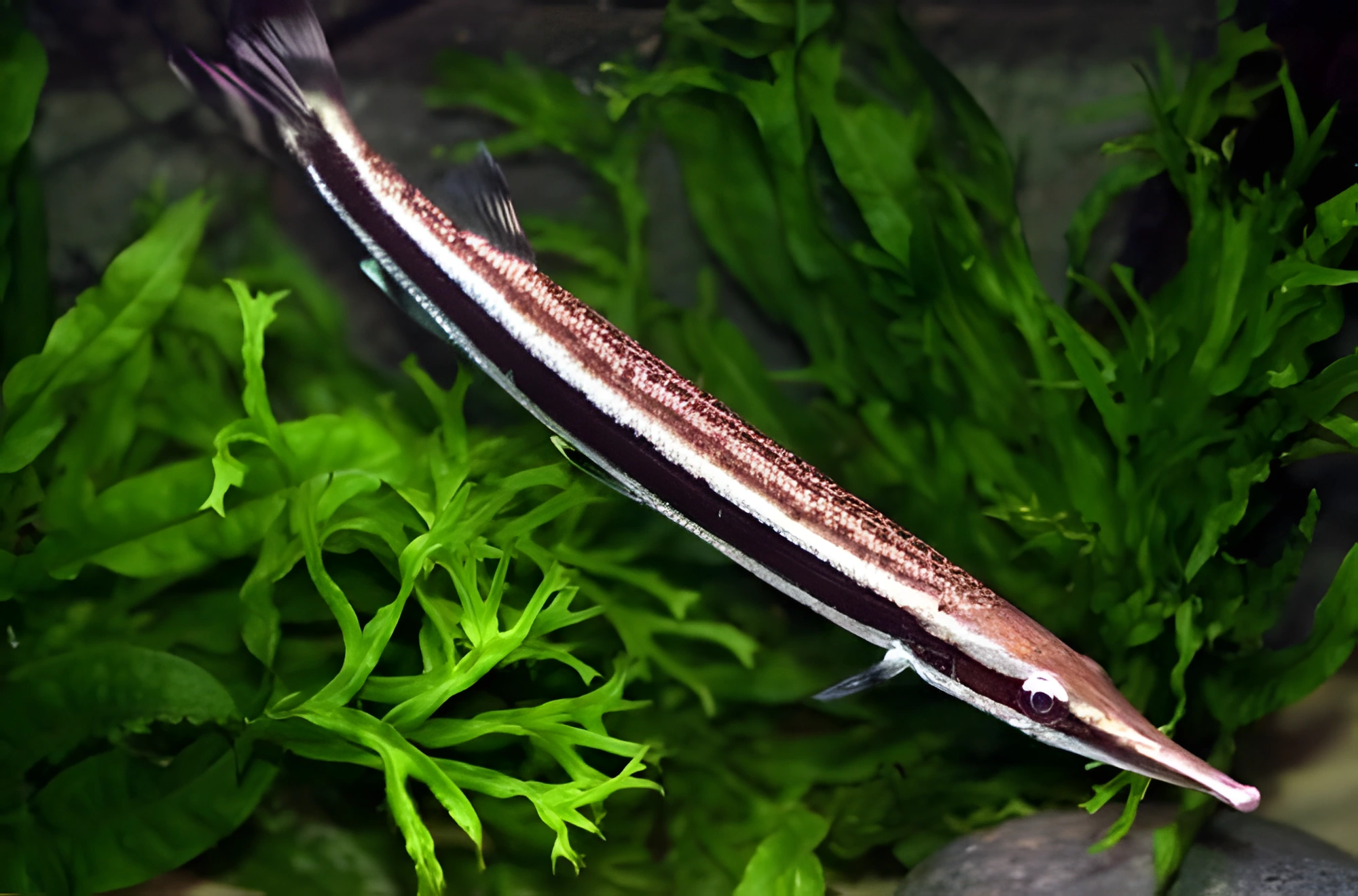
In terms of body shape, this species strongly resembles the common European pike but differs in coloration. Adult specimens can reach up to 25 cm in length. The fish has a large caudal fin, while the other fins are small and located closer to the tail. Its appearance is adorned with a pattern of alternating black and white stripes. Young fish appear more slender, while mature individuals become fuller-bodied.
Habitat
This species originates from South America, where it inhabits the Orinoco and Rio Negro river basins in Brazil and Venezuela. It is found both in the main river channels and in smaller tributaries flowing through dense tropical forests. The waters in its natural habitat are characterized by very low pH and dGH values, and they have a dark brown tint due to the high content of dissolved tannins, which are formed from the decomposition of plant organic matter.
Behavior and Compatibility
This is a peaceful and calm species which, despite its predatory nature, can coexist with other non-aggressive fish of comparable size. However, it should be noted that any small fish in an aquarium with a Striped Pike Characin will, over time, most likely become its prey.
Care and Maintenance
Despite its relatively small size, this fish requires a lot of free space. This is due to its hunting behavior: the Characin pike ambushes its prey with a swift lunge. In a small aquarium, the fish can simply hit the walls. Therefore, an aquarium volume of at least 1000 liters is recommended. The aquascape should include areas where the fish can find shelter, such as floating plants and driftwood. For successful long-term keeping, it is critically important to maintain water parameters as close to natural as possible. Maintaining pH and dGH within the permissible range, especially with such a large volume, will require the use of specialized equipment and monitoring systems. It is also advisable to automate routine aquarium maintenance procedures, such as water changes, glass cleaning, and the removal of organic waste. All of this indicates that keeping the Banded Pike Characin involves significant financial investment.
Diet
Boulengerella lateristriga is an ambush predator. In nature, its diet consists of small fish and insects. In an aquarium, it readily eats pieces of fish meat, mussels, freshwater shrimp, and other invertebrates. It is important to remember that it should not be fed animal products or poultry meat.
Breeding and Reproduction
Based on available sources, a separate block cannot be compiled: the data is insufficient or contradictory. The entry can be updated later when verified information becomes available.
Diseases
Under favorable conditions, fish usually do not experience health problems. Diseases are primarily caused by external factors. For example, in cramped spaces, with high concentrations of pollutants and poor water quality, the occurrence of diseases is inevitable. If all parameters are brought back to normal, the fish's well-being will improve. If signs of malaise persist, such as lethargy, behavioral changes, or dull coloration, medication may be required. More detailed information on symptoms and treatment methods can be found in the "Aquarium Fish Diseases" section.
How to choose
Caution should be exercised when purchasing, as this species is wild-caught and often arrives in a state of severe stress or with signs of emaciation. It is important to observe the fish in the store for some time to ensure its activity and the absence of transport-related injuries. A healthy specimen should show interest in food, and its behavior should not be apathetic or, conversely, excessively timid, leading to it hitting the aquarium walls.
- avoid specimens with damaged fins, cloudy eyes, or a film on their scales
- ask the seller if the fish has started accepting non-live foods in the aquarium
- check the integrity of the skin, as any wounds in this species are highly susceptible to secondary infections
Frequently asked questions
The essentials: size, tank volume, water parameters and care
How big does Pike Characin get?
An adult reaches 25 cm in length. Plan the tank around the maximum size: the fish quickly outgrows a cramped setup.
What size aquarium does Pike Characin need?
The minimum recommended volume is 1000 L. A smaller tank speeds up nitrate build-up and raises stress levels.
What water parameters does Pike Characin need?
Temperature 24–28 °C, pH 4–7, hardness 1–10 dGH. Stability matters more than exact values: sudden swings are harder on the fish than a small deviation from the ideal.
How long does Pike Characin live?
Around 7 years when kept properly. Lifespan depends directly on tank volume, water quality and a varied diet.
Is Pike Characin aggressive?
Temperament: predator (dangerous to small, incompatible). This is a predatory species — any fish small enough to fit in its mouth will eventually be eaten.
How many Pike Characin should be kept together?
Recommended setup: both solitary and in group (flexible). Ignoring this is a common cause of stress and disease.
What does Pike Characin eat?
Diet type: for carnivores (live fish, insects, etc.). Feed small portions that are finished within a couple of minutes — overfeeding does more harm than underfeeding.
What is the scientific name of Pike Characin?
The scientific name of the species is Boulengerella lateristriga, family Ctenoluciidae. It also appears in the literature as: Xiphostoma lateristriga.