Temperature24 – 28 °C
CichlidsConservation status: Least concern LC
Other scientific names: Astatotilapia livingstonii, Cyrtocara livingstonii, Haplochromis livingstoni, Hemichromis livingstonii, Paratilapia livingstonii
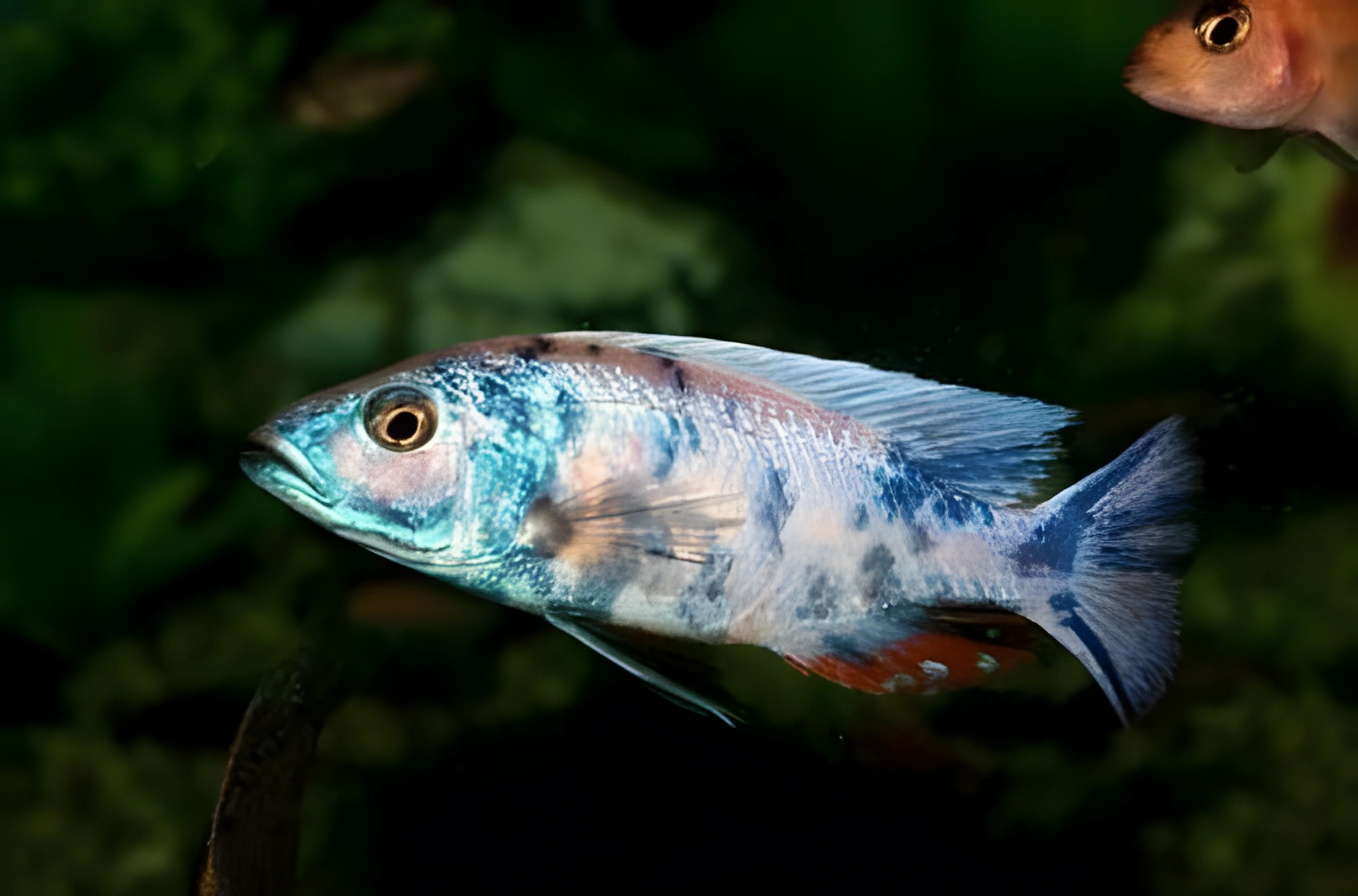
The Spotted Hap, also known by its trade name Electric Blue Hap OB, is not found in the wild. This species is a hybrid bred from the Electric Blue Hap and Aulonocara multicolor. Its artificial origin is clearly indicated by the abbreviation "OB" at the end of its trade name.
- Required aquarium volume
- 300 L
- Size in aquarium
- 19 cm
- Temperature
- 24 – 28 °C
- Temperament
- Semi-peaceful (including aggression during spawning / intraspecific conflicts)
Parameters
Water pHSlightly alkaline (7.6) – Alkaline (9)
Water dHMedium hardness (10) – Very hard (25)
Water salinityno salt (freshwater)
Size in aquarium19 cm
Lifespan10 years
TemperamentSemi-peaceful (including aggression during spawning / intraspecific conflicts)
Toward small fishnot a predator
Required aquarium volume300 L
Lightingmoderate (regular)
Substratesandy (regular, light)
Water flowweak
FeedingPlant-based (algae, vegetables)
CareHarem (1 male and several females)
Description
Although the maximum size of adult specimens can vary depending on the specific parent subspecies, in aquarium conditions these fish typically reach 18–19 cm. Males are distinguished by a bluish body with a dark blue speckled pattern. Females and juveniles look different: they are predominantly grey or silver in tone.
Habitat
The Spotted Hap (Nimbochromis livingstonii) is endemic to Lake Malawi in East Africa. These fish inhabit coastal areas with sandy or silty bottoms, often bordering rocky zones where they find shelter. In their natural habitat, they prefer warm, well-aerated waters with an alkaline reaction, where the water temperature typically ranges from 24 to 28 degrees Celsius, and the pH level is between 7.8 and 8.6.
Behavior and Compatibility
This fish has an active and temperamental character. During the breeding season, the male's courtship of females can be accompanied by rather aggressive behavior. To alleviate tension in an aquarium environment, it is recommended to form a "harem" group, where there are 3–4 females per male, which helps distribute his attention. The Spotted Hap coexists well with other Lake Malawi cichlids, such as Utaka and Aulonocara, that can thrive in an alkaline environment. In spacious aquariums, cohabitation with Mbuna group fish is even possible. However, it should be noted that very small fish may become targets of harassment or predation.
Care and Maintenance
The Spotted Hap inherited most of its genetic material from the Electric Blue Hap, so its care requirements are similar. The recommended aquarium volume for a group of 3–4 individuals is at least 300 liters. These fish need ample open space for swimming. For decoration, it is sufficient to arrange only the bottom level, where a layer of sandy substrate and several large stones are placed. The long-term well-being of the species largely depends on maintaining stable hydrochemical water parameters with high pH and dGH values. These indicators are influenced not only by the water preparation process but also by the regularity of aquarium maintenance and the uninterrupted operation of equipment, especially the filtration system.
Diet
The daily diet should be based on high-protein foods. These can be dry foods in the form of flakes and granules, as well as live or frozen foods, such as Artemia or bloodworms.
Breeding and Reproduction
Under favorable environmental conditions and with a balanced diet, spawning occurs regularly. At the beginning of the breeding season, the male takes a spot on the bottom and actively courts the female. When the female is ready to spawn, she responds to his attention, and egg-laying occurs. To protect the fertilized eggs, the female instinctively takes them into her mouth, where they remain throughout the incubation period. Fry appear after approximately 3 weeks. It is advisable to move the young to a separate aquarium where it will be easier to feed them. From the first days of life, fry are ready to accept crushed dry foods, Artemia nauplii, or special foods developed for aquarium fry.
Diseases
This species is susceptible to diseases typical of African cichlids, often arising from disrupted water parameters or an unbalanced diet. These include bloat, caused by improper feeding, and bacterial infections, manifesting as erosions on the body or fin damage. Prevention involves maintaining stable hardness and pH levels, regular water changes, and excluding foods from the diet that provoke obesity or digestive problems.
How to choose
When purchasing, choose active individuals with clear eyes and undamaged fins. It is important to look for the absence of signs of emaciation, sunken belly, or unnatural film on the scales. Healthy fish should show curiosity and react to movement near the glass. It is recommended to avoid individuals that constantly hide in the corner of the aquarium, appear lethargic, or show signs of injury, as this may indicate stress or hidden infections.
Frequently asked questions
The essentials: size, tank volume, water parameters and care
How big does Spotted Hap get?
An adult reaches 19 cm in length. Plan the tank around the maximum size: the fish quickly outgrows a cramped setup.
What size aquarium does Spotted Hap need?
The minimum recommended volume is 300 L. A smaller tank speeds up nitrate build-up and raises stress levels.
What water parameters does Spotted Hap need?
Temperature 24–28 °C, pH 7.6–9, hardness 10–25 dGH. Stability matters more than exact values: sudden swings are harder on the fish than a small deviation from the ideal.
How long does Spotted Hap live?
Around 10 years when kept properly. Lifespan depends directly on tank volume, water quality and a varied diet.
Is Spotted Hap aggressive?
Temperament: semi-peaceful (including aggression during spawning / intraspecific conflicts). Keep this in mind when choosing tank mates.
How many Spotted Hap should be kept together?
Recommended setup: harem (1 male and several females). Ignoring this is a common cause of stress and disease.
What does Spotted Hap eat?
Diet type: plant-based (algae, vegetables). Feed small portions that are finished within a couple of minutes — overfeeding does more harm than underfeeding.
What is the scientific name of Spotted Hap?
The scientific name of the species is Nimbochromis livingstonii, family Cichlids (Cichlidae). It also appears in the literature as: Astatotilapia livingstonii, Cyrtocara livingstonii, Haplochromis livingstoni.