Temperature23 – 28 °C
Natural range
- Colombia area
- Venezuela area
- Guyana area
- Suriname area
CharacinsConservation status: Least concern LC
Other scientific names: Brycon macrolepidotus, Chalceus ararapeera, Creagrutus pellegrini, Myletes macrolepidotus
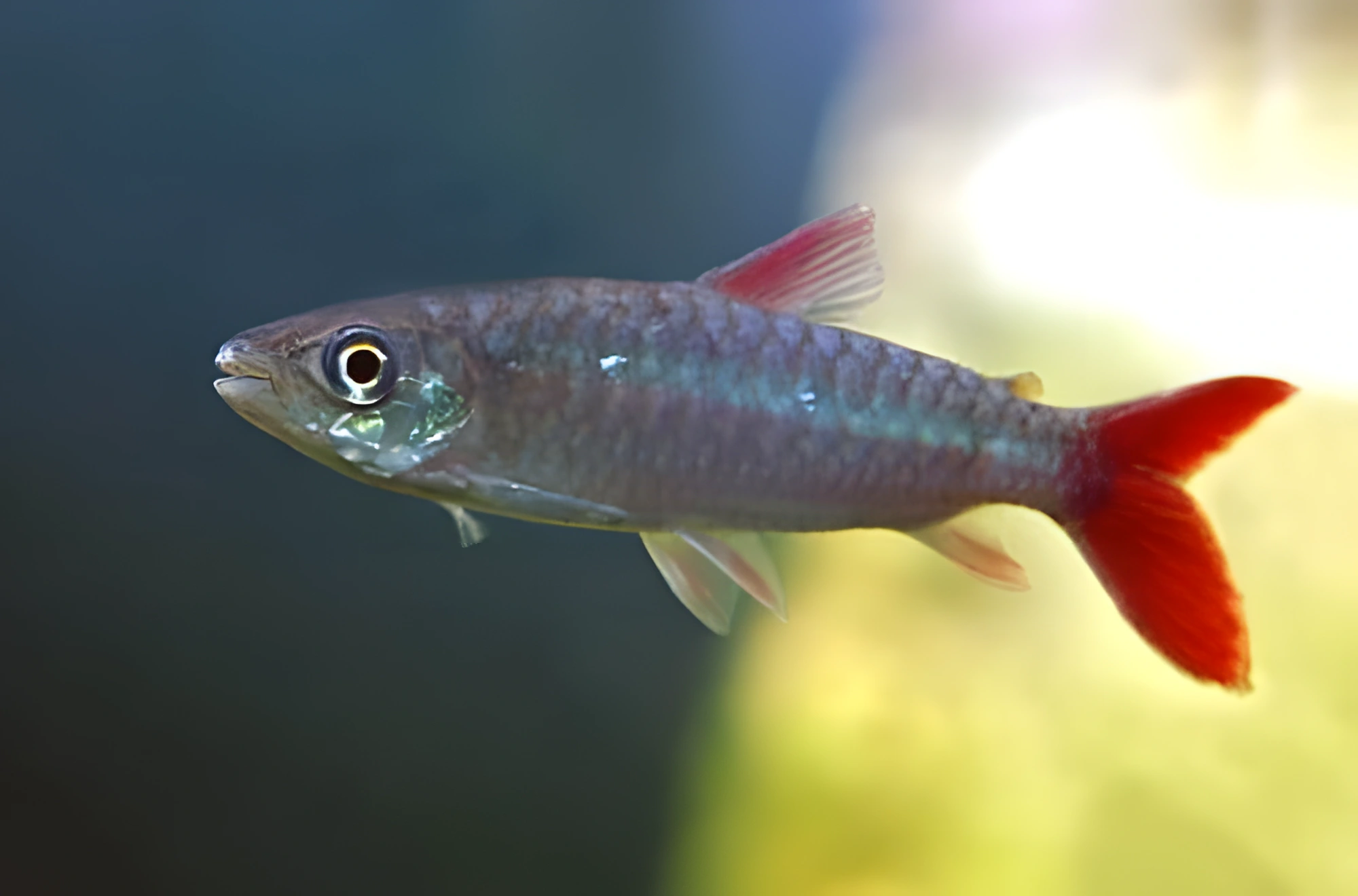
The Red-tailed Chalceus, or Chalceus macrolepidotus by its scientific name, belongs to the family Characidae. This rather large predatory species, while not a true aggressor, will not miss an opportunity to snack on smaller fish. It is advisable to keep it in a separate aquarium, considering it more as a pet whose appeal lies not in its bright coloration, but in its interesting behavior, especially during feeding. Observing this process can be an engaging spectacle for guests.
- Required aquarium volume
- 250 L
- Size in aquarium
- 25 cm
- Temperature
- 23 – 28 °C
- Temperament
- Predator, but semi-peaceful (gets along with large ones)
Parameters
Water pHSlightly acidic (6) – Neutral (7.5)
Water dHSoft (5) – Very hard (18)
Water salinityno salt (freshwater)
Size in aquarium25 cm
Lifespan20 years
TemperamentPredator, but semi-peaceful (gets along with large ones)
Toward small fishpredator
Required aquarium volume250 L
Lightingmoderate (regular)
Substratesandy (regular, light)
Water flowvery weak
FeedingMeat / protein (live, frozen, fresh)
CareBoth solitary and in group (flexible)
Description
Adults can reach 25 cm in length. Their body is elongated, somewhat compressed laterally. The large, deeply forked caudal fin is red. Other fins are typically transparent, but under favorable conditions, they may acquire a reddish tint. Otherwise, the fish does not boast a rich coloration, with dull silver being the dominant color. Sexual dimorphism is weakly expressed — males are almost impossible to distinguish from females. The Red-tailed Chalceus bears a strong resemblance to its close relative, the Yellow-finned Chalceus, but differs from it in its larger size and, as the name suggests, the coloration of its fins.
Habitat
The species' distribution covers the entire northern part of South America. It can be found in Colombia, Venezuela, Guyana, Suriname, French Guiana, and Peru. It inhabits numerous rivers and their tributaries flowing under the canopy of the tropical forest, preferring to stay closer to the water's surface.
Behavior and Compatibility
Complex intraspecific relationships dictate the specifics of keeping chalceus: either alone or in a group of at least 6 individuals. With fewer numbers, clashes are inevitable, and weaker fish will be at a disadvantage. It does not get along well with other species, although cohabitation with large characins, cichlids, and catfishes of comparable size is possible. It is strictly incompatible with small fish, which will be perceived as prey.
Care and Maintenance
Keeping Red-tailed Chalceus requires a spacious aquarium of at least 250 liters with large areas of open water. The decor typically includes a sandy substrate, complemented by beech branches and floating plants. However, the choice of decor here is not critically important and can be adapted to the needs of other aquarium inhabitants. Given their diet and the noticeable size of adult specimens, a large amount of waste is produced, so the filtration system must be powerful and is one of the main expenses when setting up. Another important element is a reliable lid to prevent fish from jumping out (they are prone to jumping, especially during feeding) and to eliminate the possibility of injury from sharp edges or burns from lighting lamps. Ideal keeping conditions include weak to moderate current, medium light levels, water temperature of 23–28°C, slightly acidic pH, and low to medium hardness.
Diet
This species is carnivorous. In its natural habitat, the diet consists of various insects and crustaceans. In an aquarium environment, they readily accept chopped pieces of shrimp, mussels, earthworms, and flying insects. As a source of essential trace elements, a small amount of dry food (flakes, pellets) may be offered, but it should only serve as a supplement to the main diet. It is worth noting that these fish feed exclusively from the surface and will ignore any food that falls to the bottom.
Breeding and Reproduction
Cases of successful breeding of chalceus in amateur home aquariums have not yet been recorded. All fish sold are either raised in specialized commercial nurseries or caught in their natural habitat.
Diseases
A balanced aquarium ecosystem with optimal keeping conditions is the best measure for disease prevention. If signs of illness are detected, such as unusual behavior or rashes on the body, the first step is to check the water quality and parameters. Only after this should treatment begin. Often, simply adjusting the keeping conditions to optimal values is enough to eliminate the problem.
How to choose
When purchasing, attention should be paid to the integrity of the scales, as this species is prone to losing them during transportation. A healthy specimen should be active, without visible fin damage, ulcers, or film on the body. Avoid fish showing signs of severe stress, manifested by erratic darting around the aquarium or, conversely, complete apathy at the bottom. Since the species is often imported from the wild, it is important to ensure that the fish has started accepting food in the store environment. Keep in mind that chalceus are prone to timidity, so they may appear wary in a display tank but should not show signs of emaciation.
Frequently asked questions
The essentials: size, tank volume, water parameters and care
How big does Red-tailed Chalceus get?
An adult reaches 25 cm in length. Plan the tank around the maximum size: the fish quickly outgrows a cramped setup.
What size aquarium does Red-tailed Chalceus need?
The minimum recommended volume is 250 L. A smaller tank speeds up nitrate build-up and raises stress levels.
What water parameters does Red-tailed Chalceus need?
Temperature 23–28 °C, pH 6–7.5, hardness 5–18 dGH. Stability matters more than exact values: sudden swings are harder on the fish than a small deviation from the ideal.
How long does Red-tailed Chalceus live?
Around 20 years when kept properly. Lifespan depends directly on tank volume, water quality and a varied diet.
Is Red-tailed Chalceus aggressive?
Temperament: predator, but semi-peaceful (gets along with large ones). This is a predatory species — any fish small enough to fit in its mouth will eventually be eaten.
How many Red-tailed Chalceus should be kept together?
Recommended setup: both solitary and in group (flexible). Ignoring this is a common cause of stress and disease.
What does Red-tailed Chalceus eat?
Diet type: meat / protein (live, frozen, fresh). Feed small portions that are finished within a couple of minutes — overfeeding does more harm than underfeeding.
What is the scientific name of Red-tailed Chalceus?
The scientific name of the species is Chalceus macrolepidotus, family Characidae. It also appears in the literature as: Brycon macrolepidotus, Chalceus ararapeera, Creagrutus pellegrini.