Temperature23 – 26 °C
Natural range
- Amazon River Basin
- Peru area
- Brazil area
CharacinsConservation status: Least concern LC
Other scientific names: Chalceus macrolepidotus, Pellegrinina heterolepis, Plethodectes erythrurus
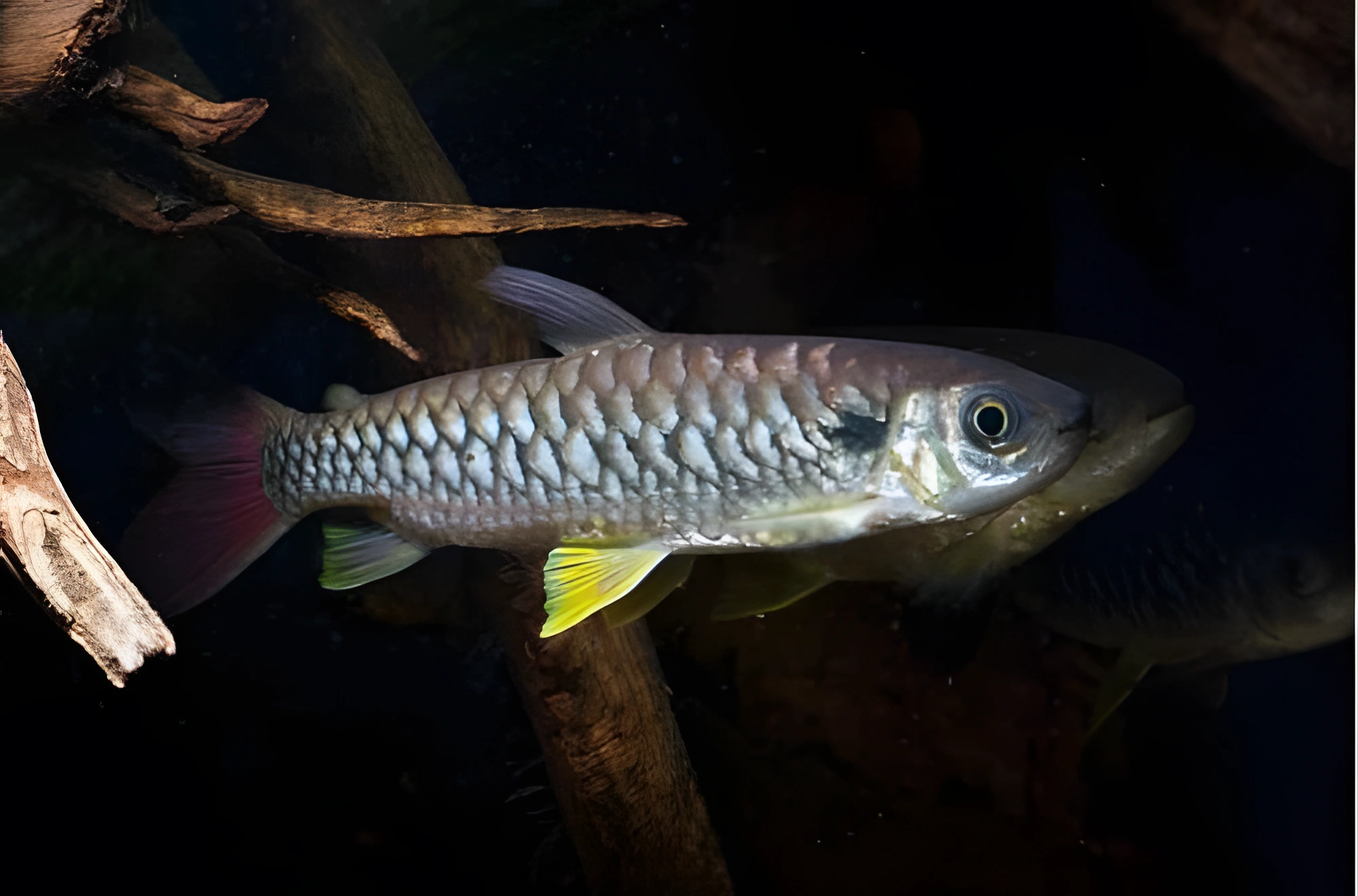
Chalceus erythrurus, known as the Yellowfin Chalceus, belongs to the family Characidae. This South American predator is of moderate size. If you are drawn to carnivorous species but don't want to set up a huge aquarium or constantly search for fresh food for your pet, this species might be a suitable choice. It is quite undemanding and can coexist peacefully with other large but calm fish without harming them.
- Required aquarium volume
- 250 L
- Size in aquarium
- 20 cm
- Temperature
- 23 – 26 °C
- Temperament
- Predator, but semi-peaceful (gets along with large ones)
Parameters
Water pHSlightly acidic (6) – Neutral (7)
Water dHSoft (5) – Hard (15)
Water salinityno salt (freshwater)
Size in aquarium20 cm
Lifespan8 years
TemperamentPredator, but semi-peaceful (gets along with large ones)
Toward small fishpredator
Required aquarium volume250 L
Lightingmoderate (regular)
Substratesandy (regular, light)
Water flowmoderate or strong
FeedingMeat / protein (live, frozen, fresh)
CareBoth solitary and in group (flexible)
Description
Adults can reach a length of about 20 cm. Their body is elongated, silver-colored, and a characteristic feature is a red (sometimes pink) tail. The other fins are yellow. Sexual dimorphism is weakly expressed, making males and females practically indistinguishable externally.
Habitat
Its natural habitat is South America, where it is widely distributed throughout almost the entire Amazon River basin, including the territories of modern Peru and Brazil. The Chalceus prefers to stay closer to the water surface in floodplain rivers and lakes.
Behavior and Compatibility
This species can be kept either in a single-species or species-specific aquarium, or in a large community tank with peaceful large fish such as Leporinus or Pacu, as well as with some catfish species, for example, Pimelodus. When choosing tank mates, select only species that are comparable in size and inhabit the middle or bottom layers to avoid competition for food at the surface. Obviously, small fish should not be considered as tank mates.
Care and Maintenance
For a group of these fish, the minimum recommended aquarium volume is about 250 liters. In a smaller volume, there is a significant risk of injury during a lunge for prey. It is important to provide ample open swimming space. Hiding places are not mandatory; the aquarium setup can be simple—a sandy substrate with a few rooted and floating plants. A mandatory condition is the presence of a lid, where lighting fixtures are securely isolated, and communications (wires, tubes) are well hidden. This is critically important, as these fish are known for their tendency to jump out of the water, and they must be protected from possible contact with wires and hot lamps. Optimal keeping conditions include very weak current, moderate lighting, water temperature in the range of 22–26°C, and slightly acidic pH with low to medium hardness.
Diet
In natural conditions, the Chalceus's diet consists of insects and crustaceans, and may also include unwary small fish. In a home aquarium, it is recommended to offer pieces of fresh or frozen fish meat, shrimp, mussels, or live insects such as earthworms. Dry foods are permissible, but only as a supplement; they should not replace the main protein diet. Feeding should be done exclusively at the water surface, as the Chalceus usually ignores food pieces that fall to the bottom.
Breeding and Reproduction
Reliable information on the breeding method of the Yellowfin Chalceus has not been found in open sources. However, it likely spawns using a scheme similar to that observed in its close relative, the Red-tailed Chalceus.
Diseases
A balanced aquarium ecosystem with optimal conditions is the best preventive measure against the onset of diseases. If signs of illness are detected, such as unusual behavior or skin lesions, the first step should be to check water quality and parameters, and only then proceed with treatment. Often, simply restoring optimal keeping conditions is enough to solve the problem.
How to choose
When choosing a Chalceus in a store, pay attention to the fish's overall activity and the condition of its skin. Healthy individuals should be active, without visible damage, ulcers, white film, or signs of emaciation. Since the species is an active swimmer, fish in a retail tank may often appear timid, but they should not look apathetic or constantly stay at the bottom, as this is atypical behavior for this species.
Given the Chalceus's tendency to jump, it is important to ensure that the aquarium in the store is equipped with a tight-fitting lid. It is also recommended to ask the seller what the fish are fed and observe the feeding process: healthy Chalceus show a pronounced feeding interest and react quickly to food. Avoid purchasing individuals with deformed fins or signs of stress, as this species is sensitive to transport and adaptation conditions.
Frequently asked questions
The essentials: size, tank volume, water parameters and care
How big does Chalceus get?
An adult reaches 20 cm in length. Plan the tank around the maximum size: the fish quickly outgrows a cramped setup.
What size aquarium does Chalceus need?
The minimum recommended volume is 250 L. A smaller tank speeds up nitrate build-up and raises stress levels.
What water parameters does Chalceus need?
Temperature 23–26 °C, pH 6–7, hardness 5–15 dGH. Stability matters more than exact values: sudden swings are harder on the fish than a small deviation from the ideal.
How long does Chalceus live?
Around 8 years when kept properly. Lifespan depends directly on tank volume, water quality and a varied diet.
Is Chalceus aggressive?
Temperament: predator, but semi-peaceful (gets along with large ones). This is a predatory species — any fish small enough to fit in its mouth will eventually be eaten.
How many Chalceus should be kept together?
Recommended setup: both solitary and in group (flexible). Ignoring this is a common cause of stress and disease.
What does Chalceus eat?
Diet type: meat / protein (live, frozen, fresh). Feed small portions that are finished within a couple of minutes — overfeeding does more harm than underfeeding.
What is the scientific name of Chalceus?
The scientific name of the species is Chalceus erythrurus, family Characidae. It also appears in the literature as: Chalceus macrolepidotus, Pellegrinina heterolepis, Plethodectes erythrurus.