Temperature17 – 28 °C
LivebearersConservation status: Least concern LC
Other scientific names: Acanthophacelus guppii, Acanthophacelus reticulatus, Girardinus guppii, Girardinus reticulatus, Haridichthys reticulatus, Heterandria guppyi
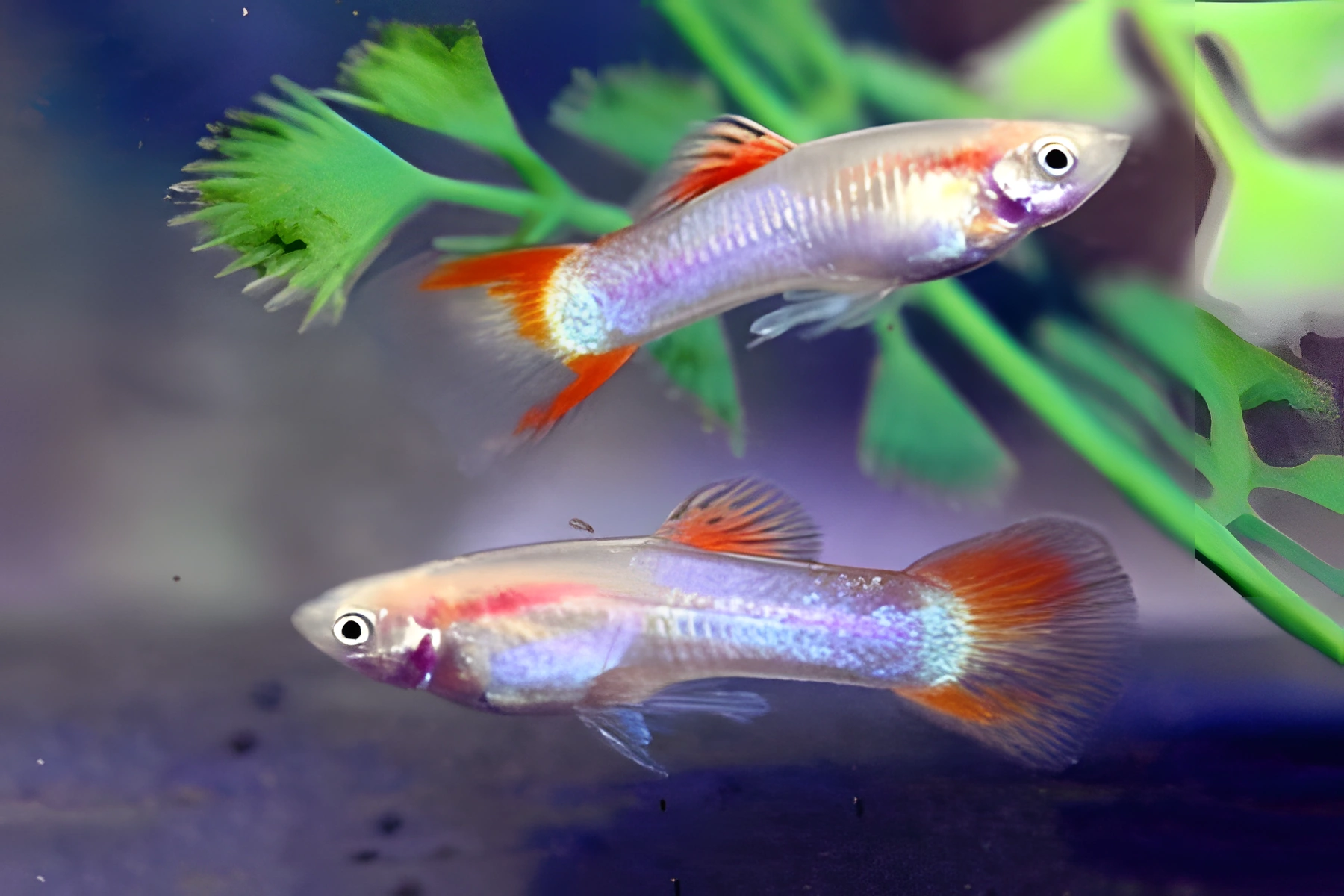
The Neon Guppy, or Neon Guppies (Poecilia reticulata, Neon variety), belongs to the family Poeciliidae. This scientific name is familiar to specialists, and in English-speaking countries, these fish are often found under the name Metal Guppies.
- Required aquarium volume
- 40 L
- Size in aquarium
- 3 – 6 cm
- Temperature
- 17 – 28 °C
- Temperament
- Peaceful (regular)
Parameters
Water pHNeutral (7) – Slightly alkaline (8.5)
Water dHMedium hardness (10) – Very hard (30)
Water salinitylow (3–5 g/L)
Size in aquarium3 – 6 cm
Lifespan3 years
TemperamentPeaceful (regular)
Toward small fishnot a predator
Required aquarium volume40 L
Lightingweak (low)
Substrateany (no restrictions)
Water flowweak or moderate
FeedingAny (universal)
CareMixed (solitary / pair / group)
Description
The Neon Guppy is a selective breeding form, distinguished by the presence of iridophores in its skin. These cells cause light diffraction, creating a characteristic metallic or neon sheen. The fish exhibit pronounced sexual dimorphism: males (up to 3 cm) are brighter, have long fins and a gonopodium, while females (up to 6 cm) are larger, more robust, and more modestly colored. The body is slender, elongated, with a reticulated scale pattern.
Habitat
In nature, the species Poecilia reticulata inhabits waters in the northern part of South America and the Caribbean basin. The neon form is a product of artificial selection and does not occur in natural conditions. The original species prefers shallow areas of rivers and streams with dense vegetation, slow currents, and warm water.
Behavior and Compatibility
A peaceful and active species, suitable for keeping in a community tank with similarly sized, calm fish. They primarily occupy the upper and middle water layers. Intraspecific aggression is practically absent, but it is recommended to keep them in groups to reduce stress and ensure natural behavior.
Care and Maintenance
Neon Guppies are the result of many years of selective breeding and are not found in the wild. However, they have retained high endurance and unpretentiousness from their wild ancestors. A small group of these fish feels quite comfortable in nano-aquariums — small tanks with a minimal set of equipment. To maintain high water quality, uninterrupted filter operation and regular aquarium maintenance are important. This usually means weekly partial water changes with fresh water and the removal of organic waste, such as uneaten food and excrement. In aquarium decoration, dense thickets of fine-leaved plants or other decorative elements that can serve as shelter for fry are welcome. It should be noted that parental instincts in guppies are poorly expressed, so the young are vulnerable to adult fish and need protection. Otherwise, the decoration is at the discretion of the aquarist. As for feeding, these fish are omnivorous and readily accept a variety of foods: both dry and frozen or live. The main condition is the appropriate size of food particles. "Aqvium flake food for aquarium fish, our new bestseller on Ozon with a 4.9 rating, is suitable for most types of aquarium fish. The raw material complies with new European Union standards (EU 2018/848) and contains important vitamins A, C, D3, E, as well as Omega 3-6. Buy on Ozon." This species is distinguished by its peaceful and friendly nature, which makes it an excellent neighbor for many tropical fish of similar size and temperament. More detailed information on compatible species can be found in a separate article.
Diet
An omnivorous species. In the aquarium, they accept all types of food: dry flakes and granules, frozen and live foods (Artemia, Daphnia, bloodworms). To maintain vibrant coloration and health, it is recommended to combine animal and plant components in their diet.
Breeding and Reproduction
Livebearing fish, reproduction does not require special conditions. Fertilization is internal, and the female carries the fry for 3–4 weeks. After birth, the offspring are fully formed and capable of independent feeding. Due to the lack of parental instinct and the tendency of adults towards cannibalism, dense thickets of fine-leaved plants are necessary for the survival of fry in the aquarium.
Diseases
They have a strong immune system, but are sensitive to water quality and sudden changes in conditions. With poor care, bacterial infections, fin rot, or parasitic diseases (ichthyophthiriasis) are possible. Prevention involves regular water changes, maintaining stable parameters, and controlling stocking density.
How to choose
When purchasing, choose active fish with clean fins showing no signs of damage, film, or spots. Avoid individuals with spinal deformities (curvatures) or signs of emaciation. Healthy guppies show curiosity and are constantly in motion.
Frequently asked questions
The essentials: size, tank volume, water parameters and care
How big does Neon Guppy get?
An adult reaches 3–6 cm in length. Plan the tank around the maximum size: the fish quickly outgrows a cramped setup.
What size aquarium does Neon Guppy need?
The minimum recommended volume is 40 L. A smaller tank speeds up nitrate build-up and raises stress levels.
What water parameters does Neon Guppy need?
Temperature 17–28 °C, pH 7–8.5, hardness 10–30 dGH. Stability matters more than exact values: sudden swings are harder on the fish than a small deviation from the ideal.
How long does Neon Guppy live?
Around 3 years when kept properly. Lifespan depends directly on tank volume, water quality and a varied diet.
Is Neon Guppy aggressive?
Temperament: peaceful (regular). Keep this in mind when choosing tank mates.
How many Neon Guppy should be kept together?
Recommended setup: mixed (solitary / pair / group). Ignoring this is a common cause of stress and disease.
What does Neon Guppy eat?
Diet type: any (universal). Feed small portions that are finished within a couple of minutes — overfeeding does more harm than underfeeding.
What is the scientific name of Neon Guppy?
The scientific name of the species is Poecilia reticulata (разновидность Neon), family Poeciliidae. It also appears in the literature as: Acanthophacelus guppii, Acanthophacelus reticulatus, Girardinus guppii.