Temperature24 – 30 °C
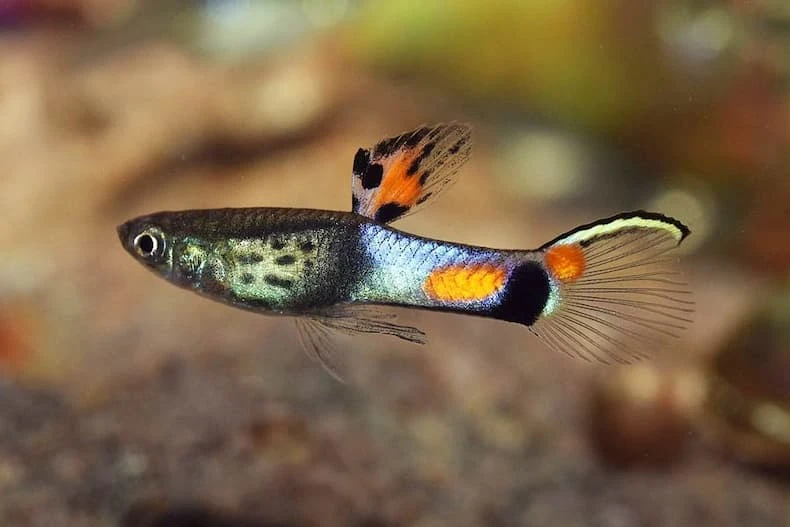
Endler's Guppy, scientifically known as Poecilia wingei, belongs to the family Poeciliidae. This vibrant and colorful fish is easy to keep and breed, making it an excellent choice for beginners in the aquarium hobby. Its high fertility and minimal requirements for living conditions have led many to consider it a reliable and constant source of live food for larger, predatory aquarium inhabitants.
Adults grow to 2–4 cm in length. It is worth noting that males are smaller, not exceeding 3 cm, but they boast bright and variegated coloration, combining green, red, orange, and silvery hues. Females, in contrast, are noticeably larger but their coloration is quite modest, mainly presenting in grey tones.
The natural habitat of this fish is the northern regions of Venezuela, South America. In the past, it inhabited the freshwater lagoons of Campoma and Buena Vista in Carúpano. These brackish bodies of water, once cut off from the ocean, gradually became fresh due to inflowing rivers and streams. The water here was very warm and characterized by high carbonate hardness, and the abundant presence of single-celled algae gave it a greenish tint. Nowadays, this species is not found in the wild. The lagoons have been turned into landfills, and pollution has led to the complete disappearance of these bodies of water. Currently, Endler's Guppy continues its existence exclusively in aquariums.
These fish are active and peaceful. Males are constantly in motion, competing with each other for the attention of females. The latter, in turn, may exhibit territorial behavior and be quite unfriendly towards rivals. Therefore, in a small aquarium it is advisable to keep only one female in the company of males. Given their modest size, Endler's Guppies are compatible only with similarly miniature species. Larger fish will generally perceive guppies as a potential food source.
Even a relatively small aquarium of 40 liters can become a comfortable home for a fairly numerous population of Endler's Guppies, which can exceed a dozen individuals. Their care is extremely simple. The aquarist only needs to maintain the necessary hydrochemical composition of the water and perform regular maintenance. The latter includes weekly partial water changes with fresh water and timely removal of waste, such as food debris and excrement. The aquarium's decor is at your discretion and depends entirely on personal preferences. A vessel of a few litres is a poor choice: the less water there is, the faster its temperature and chemistry swing, and this fish breeds quickly, so the volume fills up in no time.
The fish have no special dietary requirements. They readily consume most standard foods of appropriate size designed for aquarium fish. Their diet can be based exclusively on dry foods, such as flakes or granules, containing vegetable components. Live or frozen Artemia nauplii, Daphnia, and bloodworms will be an excellent addition to their diet.
This species is distinguished by its extraordinary fertility. A new generation can appear almost every month. They do not lay eggs; fertilized eggs develop inside the female's body, and fully formed fry, from 5 to 25 individuals in each brood, are born live. The fry are quite large and from the very beginning are able to eat dry foods, such as crushed flakes or granules, and can also accept Artemia nauplii and Daphnia. Parents generally do not eat their offspring, however, to ensure their survival, it is still recommended to transfer the fry to a separate tank. High breeding frequency often leads to overpopulation. The only way to limit the constant appearance of offspring is to separate the females, leaving only the males.
This fish is surprisingly hardy. Diseases can only be provoked by prolonged exposure to unsuitable conditions or injuries. Upon detecting the first signs of illness, such as lethargy, refusal to eat, or body deformation, the first step should be to check the main water parameters (pH, GH) and ensure there are no dangerous concentrations of nitrogen cycle products. Restoring an optimal habitat usually leads to an improvement in the fish's condition. However, if the signs of illness persist, medication will be required.
When choosing Endler's Guppies in a store, pay attention to the fish's activity: healthy individuals should be active and curious, avoiding lethargy or attempts to stay at the water surface, which may indicate breathing problems. Examine the body for white spots, films, ulcers, or unnaturally clamped fins, as these are signs of infectious diseases. Choose individuals with bright, clear coloration characteristic of the species, without signs of emaciation or spinal curvature. Avoid purchasing from aquariums where dead fish or signs of water contamination are observed. When buying fish, it is advisable to clarify their keeping conditions in the store to ensure a smooth adaptation to the new aquarium.
The essentials: size, tank volume, water parameters and care
An adult reaches 2–4 cm in length. Plan the tank around the maximum size: the fish quickly outgrows a cramped setup.
The recommended volume is 40 L. A smaller tank speeds up nitrate build-up and raises stress levels.
Temperature 24–30 °C, pH 7–8.5, hardness 15–35 dGH. Stability matters more than exact values: sudden swings are harder on the fish than a small deviation from the ideal.
Around 2 years when kept properly. Lifespan depends directly on tank volume, water quality and a varied diet.
Temperament: peaceful (regular). Keep this in mind when choosing tank mates.
Recommended setup: both solitary and in group (flexible). Ignoring this is a common cause of stress and disease.
Diet type: any (universal). Feed small portions that are finished within a couple of minutes — overfeeding does more harm than underfeeding.
The scientific name of the species is Poecilia wingei, family Poeciliidae.
Matched by family, categories and overlapping keeping conditions
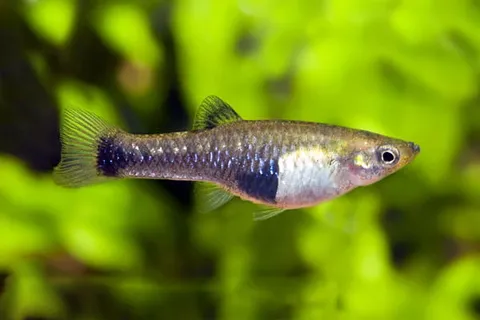
Limia melanogaster
Limia melanogaster, known as the Blackbelly Limia, belongs to the family Poeciliidae. These fish are characterized by their undemanding nature, successful breeding, and good compatibility with various tank mates. Such…
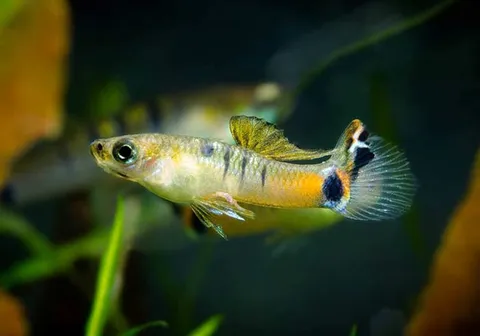
Micropoecilia branneri
The scientific name Micropoecilia branneri belongs to the species Branner's Micropoecilia, which is part of the Poeciliidae family. This fish originates from South America, where it can be found widely in various…
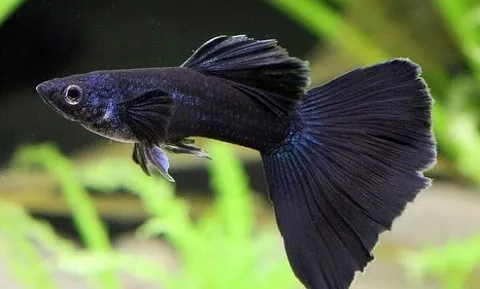
Poecilia reticulata
Black Monk Guppies, also known as Black Guppies, are a breed of Poecilia reticulata (Black strain) from the Poeciliidae family. One of the main features of this variety is the pronounced dark body coloration in males.…
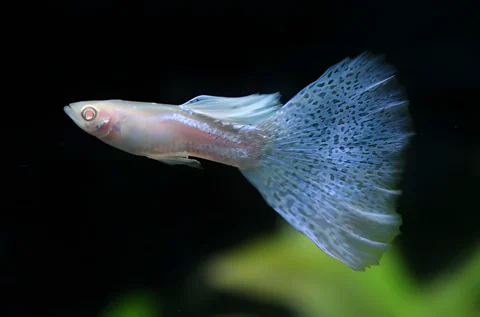
Poecilia reticulata
The Albino Guppy, belonging to the Poeciliidae family, is known by its scientific name Poecilia reticulata (Albino variety). A distinctive feature of this fish is the congenital absence of melanin – the black pigment in…