Temperature16 – 23 °C
Natural range
- Indus River Basin
- Ganges River Basin
- Brahmaputra River Basin
- Irrawaddy River Basin
Predators CatfishConservation status: Vulnerable VU
Other scientific names: Bagarius buchanani, Pachypterus luridus, Pimelodus bagarius, Pimelodus carnaticus
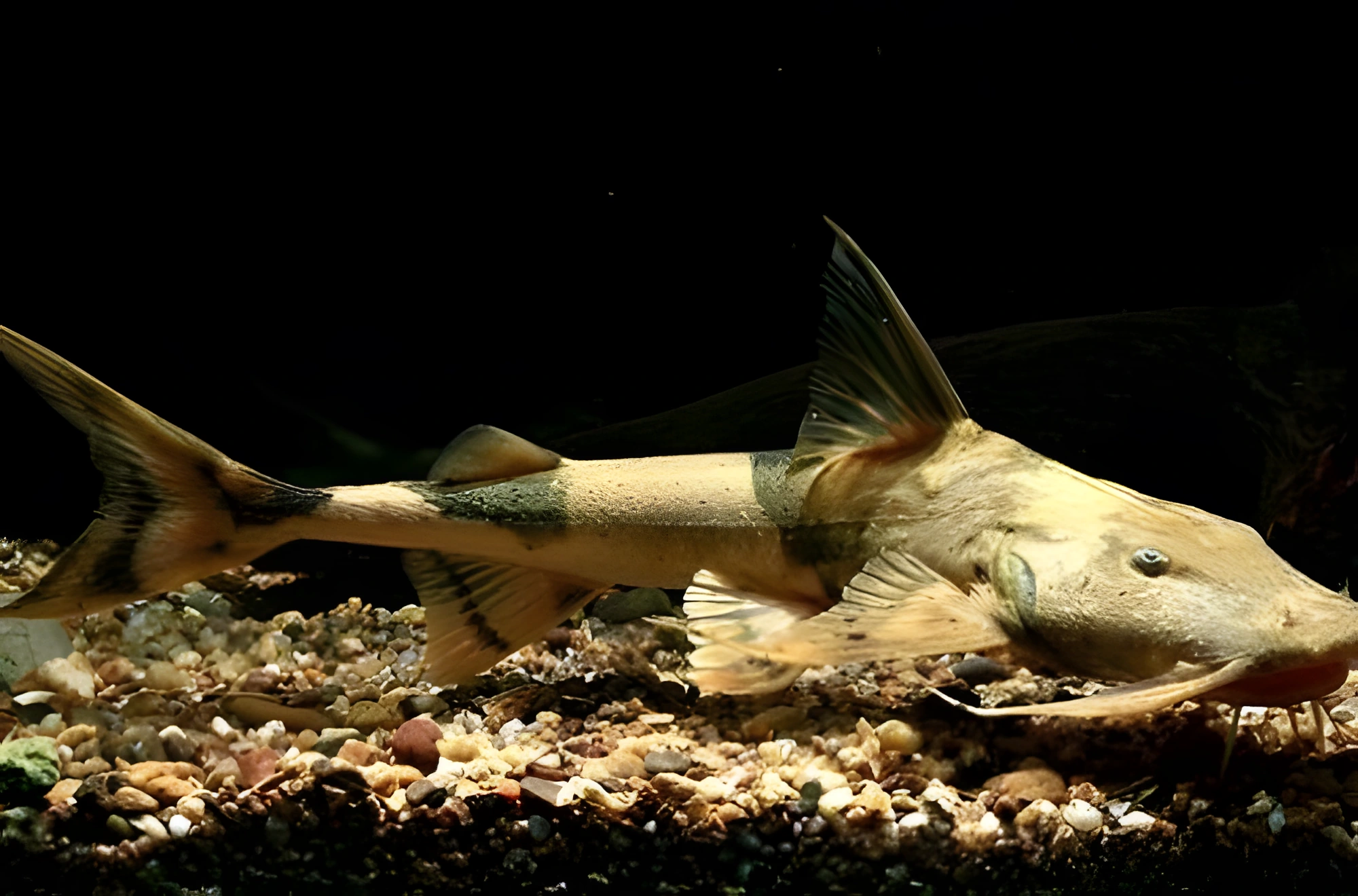
The Goonch, scientifically known as Bagarius bagarius, belongs to the family Sisoridae, or Asian hillstream catfishes. This species, distinguished by its impressive size and high maintenance costs, does not coexist well with other fish, making it attractive only to very wealthy connoisseurs. In its natural habitat regions, it is often a target for sport fishing and is also an important food fish for residents of poor rural areas.
- Required aquarium volume
- 1500 L
- Size in aquarium
- 20 – 200 cm
- Temperature
- 16 – 23 °C
- Temperament
- Aggressive / incompatible / unfriendly
Parameters
Water pHSlightly acidic (6) – Neutral (7.5)
Water dHVery soft (2) – Hard (12)
Water salinityno salt (freshwater)
Size in aquarium20 – 200 cm
Lifespan20 years
TemperamentAggressive / incompatible / unfriendly
Toward small fishpredator
Required aquarium volume1500 L
Lightingdimmed
Substratesandy (regular, light)
Water flowmoderate or strong
FeedingMeat / protein (live, frozen, fresh)
CareSolitary
Description
There are noticeable differences between fish inhabiting various regions. Adult individuals can reach up to 2 meters in length. Catfish from Asian populations are larger, have massive bodies, and their heads resemble dragons from Chinese folklore, adorned with large barbels. Representatives from the Malay Peninsula, while generally similar, have flatter bodies. Their coloration is usually light, with dark pigmentation.
Habitat
Its natural range extends across Asia, covering the Indian subcontinent. It inhabits the river basins of the Indus, Ganges, and Brahmaputra in India, Pakistan, Nepal, and Bangladesh. A number of sources also indicate the distribution of the Goonch in Southeast Asia, including the Irrawaddy and Salween river basins in Myanmar, the Mekong in Laos and Cambodia, the Chao Phraya in Thailand, and other rivers on the Malay Peninsula. However, some researchers express doubts about these disparate habitats. It is quite possible that in the future, populations from Asia and Southeast Asia will be classified as separate species. In their natural environment, these catfishes prefer main river channels and large tributaries with fast, sometimes turbulent currents. Here, they set ambushes, hiding among boulders and large stones, awaiting prey.
Behavior and Compatibility
The Goonch poses a threat to any fish whose size allows it to swallow them. It is also not very friendly to its own kind, and in an insufficiently sized aquarium, territorial skirmishes can occur. Therefore, it is recommended to keep this catfish alone.
Care and Maintenance
Due to the maximum size of the Goonch, a substantial aquarium volume, starting from 1500 liters for a single individual, is required for its comfortable keeping. In addition, specialized equipment is necessary, primarily an effective filtration system, water treatment, and regular water changes. The total weight of a filled aquarium can reach several tons, and its installation, as well as the laying of necessary utilities, involves certain construction works. From all of the above, it follows that this species of catfish does not belong to amateur aquaristics, as its keeping is associated with significant time and financial costs, and also requires considerable experience if all work is performed independently.
Diet
This predator actively hunts other fish, amphibians, crustaceans, and other invertebrates. In aquarium conditions, it readily accepts similar food, as well as various fresh or frozen alternative feeds. Such feeds include whole shrimp, peeled mussels, earthworms, and strips of white fish meat.
Breeding and Reproduction
Reliable information on breeding the Goonch catfish in aquarium conditions is unavailable. In its natural habitat, spawning occurs before the monsoon season begins. The species is rheophilic, so for successful reproduction in nature, fish migrate in search of areas with suitable current and substrate.
Diseases
Most often, diseases are caused by unsuitable keeping conditions. Maintaining a stable environment in the aquarium is a key factor for successful keeping. If any symptoms of illness appear, the first step is to check the water quality. If deviations are found, measures should be taken immediately to correct them. If symptoms persist or even worsen, medicinal treatment will be required. Detailed information on the symptoms of various diseases and their treatment methods can be found in the “Aquarium Fish Diseases” section.
How to choose
When purchasing, it is important to consider the high probability of confusion in the systematics of the genus, as different species with significantly different sizes and needs are often sold under the name Bagarius bagarius. It is recommended to clarify the exact scientific name and region of origin with the supplier, and to request current photos of the specific individual.
When inspecting a fish in the store, pay attention to the following signs:
- absence of damage to the skin and fins, which may indicate bacterial infections due to poor keeping conditions;
- normal breathing without signs of rapid gill movement, which is especially important for fish requiring high levels of dissolved oxygen;
- adequate reaction to external stimuli, absence of lethargy or apathy, which is often observed in individuals experiencing stress from transportation or unsuitable water parameters.
Frequently asked questions
The essentials: size, tank volume, water parameters and care
How big does Goonch get?
An adult reaches 20–200 cm in length. Plan the tank around the maximum size: the fish quickly outgrows a cramped setup.
What size aquarium does Goonch need?
The minimum recommended volume is 1500 L. A smaller tank speeds up nitrate build-up and raises stress levels.
What water parameters does Goonch need?
Temperature 16–23 °C, pH 6–7.5, hardness 2–12 dGH. Stability matters more than exact values: sudden swings are harder on the fish than a small deviation from the ideal.
How long does Goonch live?
Around 20 years when kept properly. Lifespan depends directly on tank volume, water quality and a varied diet.
Is Goonch aggressive?
Temperament: aggressive / incompatible / unfriendly. This is a predatory species — any fish small enough to fit in its mouth will eventually be eaten.
How many Goonch should be kept together?
Recommended setup: solitary. Ignoring this is a common cause of stress and disease.
What does Goonch eat?
Diet type: meat / protein (live, frozen, fresh). Feed small portions that are finished within a couple of minutes — overfeeding does more harm than underfeeding.
What is the scientific name of Goonch?
The scientific name of the species is Bagarius bagarius, family Sisoridae (Asian hillstream catfishes). It also appears in the literature as: Bagarius buchanani, Pachypterus luridus, Pimelodus bagarius.