Temperature23 – 26 °C
Natural range
- Nigeria area
- Cameroon area
- Niger Delta area
- Cross-Sanaga-Bioko Coastal Forests area
KillifishConservation status: Endangered EN
Other scientific names: Aphyosemion caeruleum, Aphyosemion coeruleum, Aphyosemion gulare, Aphyosemion sjoestedti, Aphyosemion sjostedti, Aphyosemion zimmeri
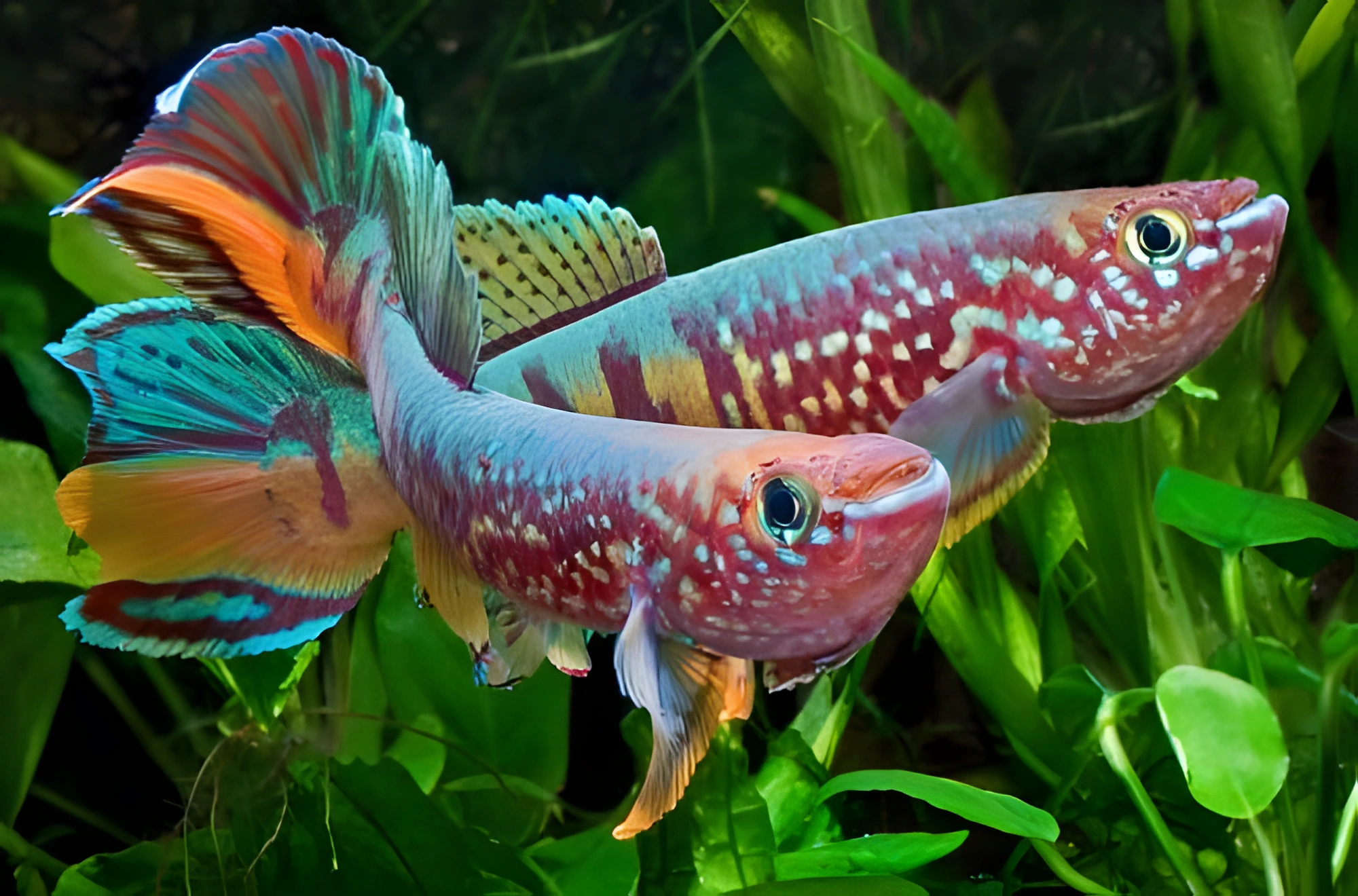
Fundulopanchax sjostedti, known as the Blue Gularis or Blue Panchax, belongs to the family Nothobranchiidae. This fish has gained popularity and is widely available for sale, captivating with its attractive coloration. It is undemanding in care and possesses a calm temperament, making it an excellent choice for general freshwater aquariums.
- Required aquarium volume
- 80 L
- Size in aquarium
- 12 cm
- Temperature
- 23 – 26 °C
- Temperament
- Peaceful (regular)
Parameters
Water pHSlightly acidic (6) – Neutral (6.5)
Water dHVery soft (1) – Medium hardness (10)
Water salinityvery low (up to ~3 g/L)
Size in aquarium12 cm
Lifespan3 years
TemperamentPeaceful (regular)
Toward small fishnot a predator
Required aquarium volume80 L
Lightingdimmed
Substrateany, but dark
Water flowweak
FeedingHigh protein (predominantly meat)
CareHarem (1 male and several females)
Description
Adult specimens of this fish can reach up to 12 cm in length. Males are typically larger than females, feature brighter coloration, and have more pronounced, elongated fins. Their bodies are colored in a bluish hue, transitioning to dark brown or purple towards the head. The fins and caudal fin are adorned with distinctive speckles and lines, as well as a broad reddish stripe.
Habitat
The natural habitat of the Blue Gularis spans modern-day Nigeria and Cameroon in Africa. These fish inhabit swampy areas of tropical forests along the coastal zone – river deltas, small streams, and shallow lakes. The water in these bodies of water can often be brackish due to their proximity to the sea.
Behavior and Compatibility
These fish peacefully coexist with representatives of other non-aggressive species of similar size. However, within a single group, relationships can be less harmonious. Males tend to compete with each other for territory and females, which can lead to fierce, though rarely seriously injurious, skirmishes. Ultimately, a subdominant male risks becoming an outcast. Therefore, in small to medium-sized aquariums (80–140 liters), it is recommended to keep one male with 3–4 females. Such a female-to-male ratio has practical significance: during spawning, the male becomes excessively active in his courtship, and attention distributed among several partners helps reduce his excessive persistence.
Care and Maintenance
For a group consisting of 3–4 fish, an aquarium of at least 80 liters will be required. When decorating, a dark substrate is preferred, as well as areas with dense aquatic vegetation, including floating species, and several shelters, for example, in the form of driftwood. It is important to consider some features of the Blue Gularis when setting up the aquarium: these fish tend to jump out of the water and do not tolerate strong currents well. Consequently, a secure lid must be provided, and equipment (especially filters) should be set up to minimize water movement. Otherwise, this species is quite undemanding and does not require special care. To maintain favorable living conditions, it is sufficient to perform weekly water changes of 15–20% of the volume with fresh water and regularly clean the substrate of organic waste.
Diet
The basis of these fish's diet should consist of frozen or live foods, such as bloodworms, daphnia, or brine shrimp. Dry foods are used only as a supplementary element of the diet and should not be its foundation.
Breeding and Reproduction
For successful spawning, the following water parameters are desirable: pH no higher than 6.5, dGH from 5 to 10, and the temperature should be maintained at 23–24°C. Dense thickets of low-growing, fine-leaved plants or mosses are placed on the bottom of the aquarium, among which the fish lay their eggs. Lighting should be subdued. It should be noted that parental instincts in this species are poorly developed; to save the eggs from being eaten, it is advisable to move them to a separate tank immediately after spawning is complete (which usually lasts about a week). Fry emerge from the eggs in approximately 21 days, with the duration of the incubation period depending on temperature. During this period, the appearance of a white film on the eggs poses a particular threat — this is a pathogenic fungus, and without timely measures, the entire clutch can perish.
Diseases
Health problems in these fish arise only in the presence of injuries or keeping in unsuitable conditions, which leads to a weakening of the immune system and the subsequent occurrence of various diseases. At the first signs of illness, it is necessary first to check the water parameters for exceeding permissible values or the presence of toxic substances (such as nitrites, nitrates, ammonia). If deviations are found, all indicators should be normalized, and then treatment should begin. More detailed information on symptoms and treatment methods is available in the "Diseases of Aquarium Fish" section.
How to choose
When purchasing, choose active specimens with clean fins and no visible damage or whitish film on their bodies. Healthy fish should have clear eyes and natural, vibrant coloration. Avoid specimens that stay at the surface, breathe heavily, or appear emaciated. Since the species exhibits territorial behavior, it is recommended to clarify the sex of the purchased individuals in advance to avoid conflicts in the aquarium, especially when buying multiple males.
Frequently asked questions
The essentials: size, tank volume, water parameters and care
How big does Blue Gularis get?
An adult reaches 12 cm in length. Plan the tank around the maximum size: the fish quickly outgrows a cramped setup.
What size aquarium does Blue Gularis need?
The minimum recommended volume is 80 L. A smaller tank speeds up nitrate build-up and raises stress levels.
What water parameters does Blue Gularis need?
Temperature 23–26 °C, pH 6–6.5, hardness 1–10 dGH. Stability matters more than exact values: sudden swings are harder on the fish than a small deviation from the ideal.
How long does Blue Gularis live?
Around 3 years when kept properly. Lifespan depends directly on tank volume, water quality and a varied diet.
Is Blue Gularis aggressive?
Temperament: peaceful (regular). Keep this in mind when choosing tank mates.
How many Blue Gularis should be kept together?
Recommended setup: harem (1 male and several females). Ignoring this is a common cause of stress and disease.
What does Blue Gularis eat?
Diet type: high protein (predominantly meat). Feed small portions that are finished within a couple of minutes — overfeeding does more harm than underfeeding.
What is the scientific name of Blue Gularis?
The scientific name of the species is Fundulopanchax sjostedti, family Nothobranchiidae. It also appears in the literature as: Aphyosemion caeruleum, Aphyosemion coeruleum, Aphyosemion gulare.