Temperature22 – 26 °C
Natural range
- Sudan area
- Senegal area
- West Africa area
- Central Africa area
KillifishConservation status: Least concern LC
Other scientific names: Aplocheilichthys gambiensis, Aplocheilichthys manni, Aplocheilichthys normani, Haplochilichthys gambiensis, Micropanchax gambiensis, Micropanchax macrurus
Norman's Lampeye, also known as Poropanchax normani, belongs to the family Poeciliidae (livebearers). These peaceful schooling fish are easy to keep and breed, making them a wonderful addition to any freshwater community aquarium.
- Required aquarium volume
- 80 L
- Size in aquarium
- 4 cm
- Temperature
- 22 – 26 °C
- Temperament
- Peaceful (regular)
Parameters
Water pHNeutral (6.5) – Neutral (7.5)
Water dHVery soft (1) – Soft (5)
Water salinityno salt (freshwater)
Size in aquarium4 cm
Lifespan4 years
TemperamentPeaceful (regular)
Toward small fishnot a predator
Required aquarium volume80 L
Lightingdimmed
Substrateany (no restrictions)
Water flownone or stagnant (no flow)
FeedingHigh protein (predominantly meat)
CareLarge group (10+ individuals)
Description
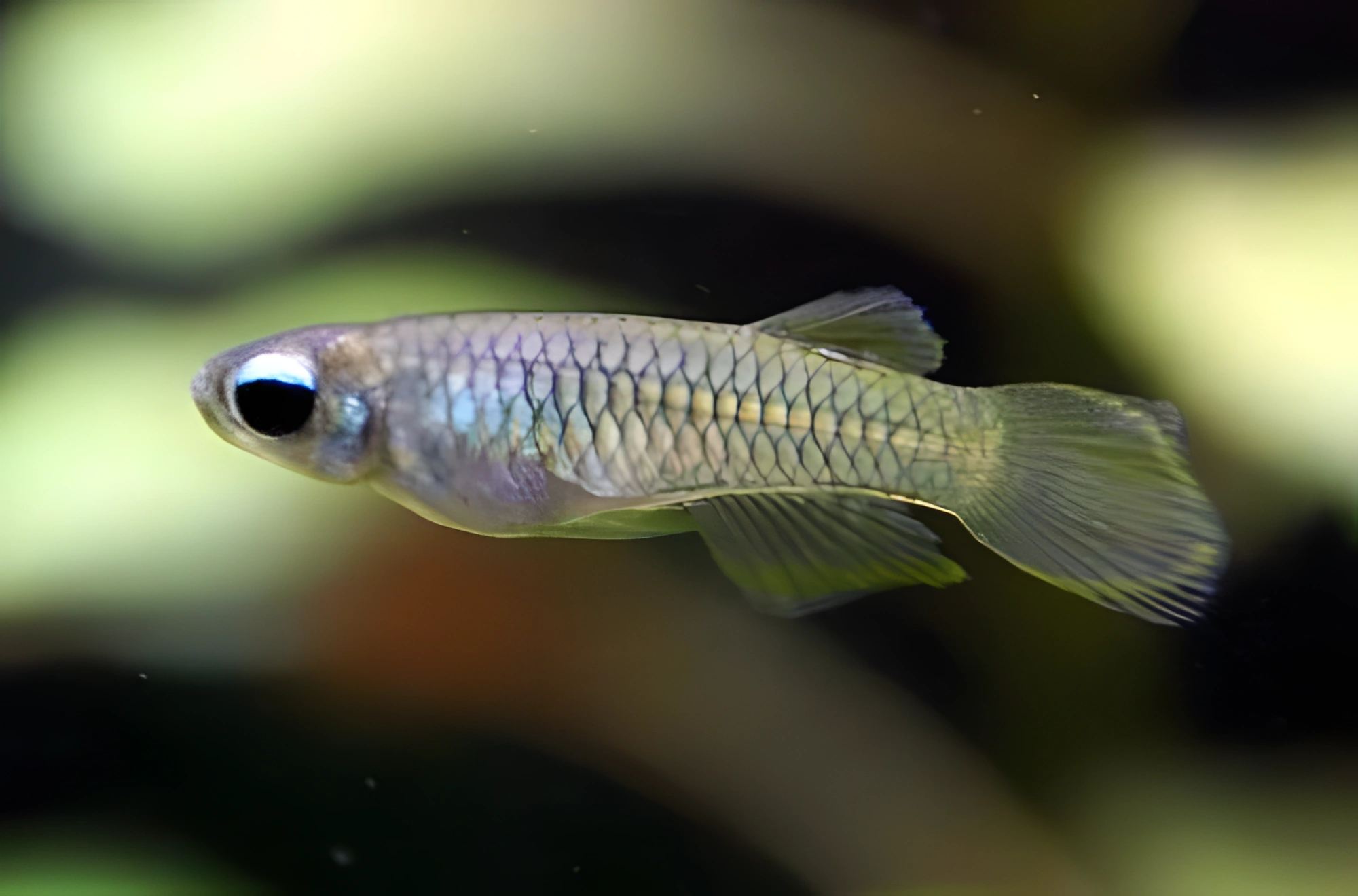
Adults reach about 4 cm in length. Their base color is gray, with a delicate blue or greenish tint. Males differ from females by having larger and more pointed fins. A characteristic feature is the bright white or blue pigment on the iris of the eye, which undoubtedly gave rise to the species' name.
Habitat
These fish are native to Africa, with their natural range extending from Sudan in the east to Senegal in the west, covering the subequatorial climate zone. They prefer shallow streams and rivers that densely cover open savannas.
Behavior and Compatibility
Intraspecific conflicts are absent, but Norman's Lampeyes feel comfortable in schools of 10 or more individuals — the more, the better. They get along well with other peaceful fish of comparable size. Closely related Neon Lampeyes make excellent tankmates.
Care and Maintenance
The optimal aquarium size for long-term keeping of Norman's Lampeye starts from 80 liters. This tank volume for these miniature fish is explained by the need to maintain a school of dozens of individuals and their pronounced activity, especially during the breeding season. In aquarium design, it is recommended to combine open swimming areas with shelters, such as driftwood and dense plant thickets, including floating plants. The latter provides shade and prevents accidental jumping out of the water, as the fish can easily leave the aquarium otherwise. The biological balance in the aquarium largely depends on the regularity of maintenance procedures (partial water changes, waste removal) and the uninterrupted operation of equipment. The filtration system is of particular importance. Since the fish do not tolerate strong currents well, and the filter is its main source, when choosing, preference should be given to a model that does not cause excessive water movement. For example, installing several air-lift filters can be a good solution.
Diet
This species is omnivorous. The daily diet can consist of dry foods in the form of flakes or granules, provided they have a high protein content. Live or frozen brine shrimp, daphnia, bloodworms, and other similar foods will help diversify their diet.
Breeding and Reproduction
These fish are close relatives of popular species like guppies and platies. However, unlike them, they are not livebearers but lay eggs. Their breeding is considered quite simple. Fry may appear from time to time even in a community tank. Nevertheless, the survival rate of the young will be extremely low if they are not promptly transferred to a separate aquarium. Spawning occurs among dense thickets of fine-leaved plants. A favorable environment for the eggs is clean water with a temperature of about 24°C, pH 6.5–7.0, and dGH 10. In hard and alkaline water, the eggs die or become covered with fungus. In the first days of life, it is recommended to feed the fry with micro-foods, such as brine shrimp nauplii.
Diseases
Creating suitable living conditions minimizes the risk of disease. The use of live food can pose a certain threat, as it is often a carrier of parasites. However, the strong immune system of a healthy fish successfully copes with such challenges. More detailed information on symptoms and treatment methods can be found in the "Diseases of Aquarium Fish" section.
How to choose
When choosing individuals, pay attention to their activity and the integrity of their fins. Healthy fish should stay in a school, show curiosity, and react quickly to external stimuli. Avoid specimens with signs of emaciation, damaged scales, or film on the body, as this species is sensitive to stress during transportation and relocation.
- choose fish with a bright, characteristic eye sheen, which is the hallmark of the species
- check for signs of infections or parasites in the store's main aquarium
- purchase a group of 6-10 individuals at once, as single fish experience severe stress and quickly lose their coloration
Frequently asked questions
The essentials: size, tank volume, water parameters and care
How big does Norman's Lampeye Killifish get?
An adult reaches 4 cm in length. Plan the tank around the maximum size: the fish quickly outgrows a cramped setup.
What size aquarium does Norman's Lampeye Killifish need?
The minimum recommended volume is 80 L. A smaller tank speeds up nitrate build-up and raises stress levels.
What water parameters does Norman's Lampeye Killifish need?
Temperature 22–26 °C, pH 6.5–7.5, hardness 1–5 dGH. Stability matters more than exact values: sudden swings are harder on the fish than a small deviation from the ideal.
How long does Norman's Lampeye Killifish live?
Around 4 years when kept properly. Lifespan depends directly on tank volume, water quality and a varied diet.
Is Norman's Lampeye Killifish aggressive?
Temperament: peaceful (regular). Keep this in mind when choosing tank mates.
How many Norman's Lampeye Killifish should be kept together?
Recommended setup: large group (10+ individuals). Ignoring this is a common cause of stress and disease.
What does Norman's Lampeye Killifish eat?
Diet type: high protein (predominantly meat). Feed small portions that are finished within a couple of minutes — overfeeding does more harm than underfeeding.
What is the scientific name of Norman's Lampeye Killifish?
The scientific name of the species is Poropanchax normani, family Poeciliidae. It also appears in the literature as: Aplocheilichthys gambiensis, Aplocheilichthys manni, Aplocheilichthys normani.