Temperature24 – 28 °C
Natural range
- Lake Malawi area
- Northern Malawi area
- Malawi area
- Mozambique area
CichlidsConservation status: Least concern LC
Other scientific names: Metriaclima callainos, Pseudotropheus callainos
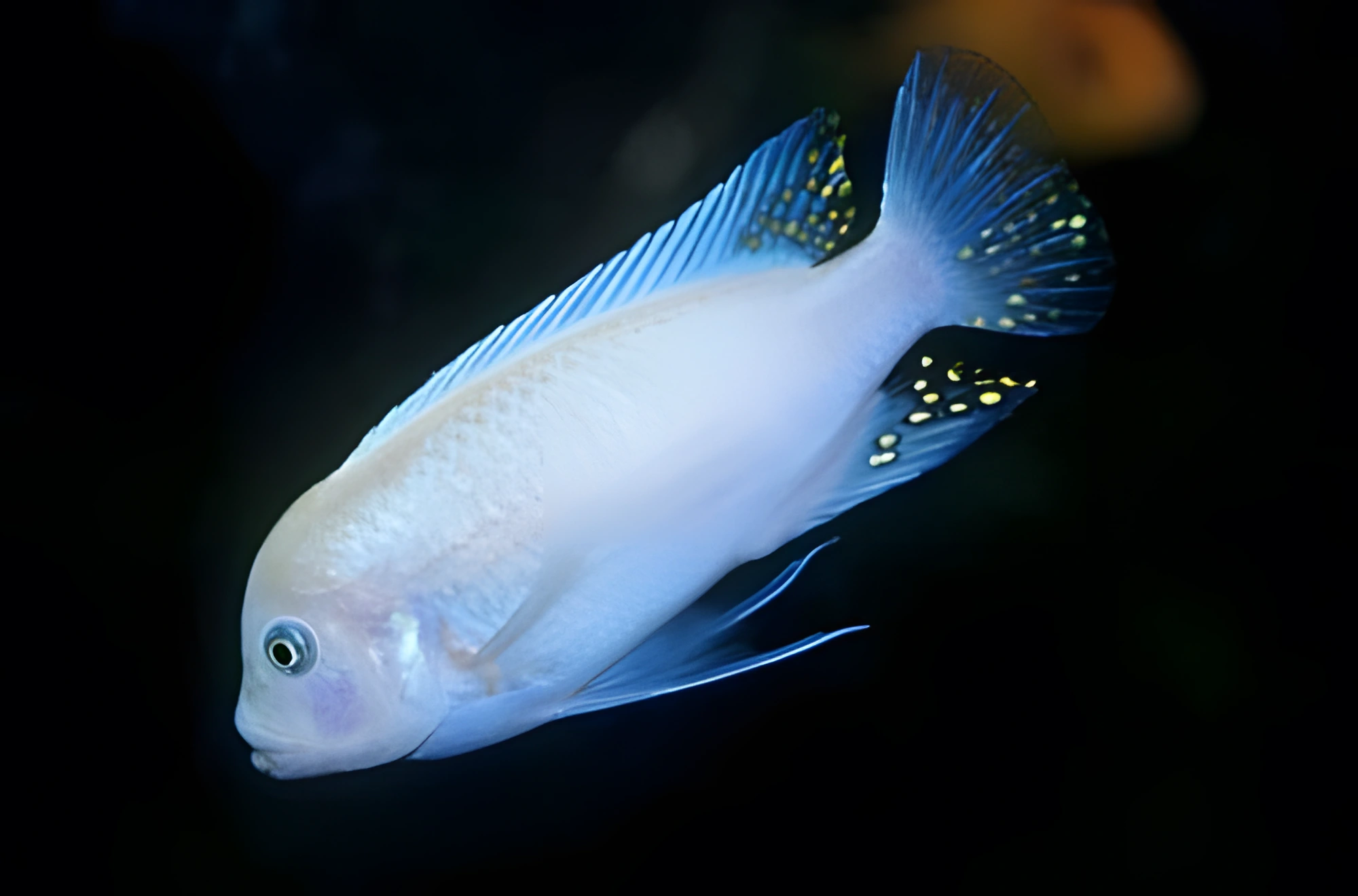
Maylandia callainos, known as the Blue Zebra, belongs to the family Cichlidae. Previously, this species was classified in the genera Pseudotropheus and Metriaclima. It is one of the Malawian cichlids of the Mbuna group, which are distinguished by their bright coloration and unique behavioral traits. Their aggressive nature requires a careful approach to selecting suitable tank mates.
- Required aquarium volume
- 150 L
- Size in aquarium
- 13 cm
- Temperature
- 24 – 28 °C
- Temperament
- Aggressive / incompatible / unfriendly
Parameters
Water pHSlightly alkaline (7.6) – Alkaline (8.8)
Water dHMedium hardness (8) – Very hard (25)
Water salinityno salt (freshwater)
Size in aquarium13 cm
Lifespan8 years
TemperamentAggressive / incompatible / unfriendly
Toward small fishnot a predator
Required aquarium volume150 L
Lightingdimmed or moderate
Substratefine sand
Water flowweak or moderate
FeedingPlant-based (algae, vegetables)
CareHarem (1 male and several females)
Description
Adults can reach approximately 13 cm in length. Their body is pale blue with barely noticeable dark vertical stripes. Sexual dimorphism in this species is weakly expressed. Males are generally slightly larger than females, have a more developed frontal part of the head, and characteristic yellow spots on the anal fin. This fish is outwardly very similar to one of the color forms of the Red Zebra cichlid, some varieties of which, despite the name, also have a blue coloration and are almost indistinguishable from the Blue Zebra.
Habitat
This fish is endemic to Lake Nyasa (Malawi), which is located in the East African Rift Valley, on the borders of Mozambique, Malawi, and Tanzania. In its natural environment, the Blue Zebra prefers the northern coast, inhabiting among piles of stones and rocks.
Behavior and Compatibility
This species is aggressive and territorial. In small aquariums (about 100 liters), males show intolerance towards each other and can attack other fish. In such conditions, harem keeping is recommended, where there are 3–4 females per male. In more spacious tanks (hundreds of liters), a diverse community can be created, including several representatives of Mbuna, Aulonocara, and Utaka.
Care and Maintenance
For keeping 5-6 individuals, the optimal aquarium volume starts from 150 liters. For tank decoration, it is sufficient to use sandy substrate, as well as large stones and rock formations to create shelters in the form of crevices and grottoes. There is no need to place live plants, natural driftwood, and other elements characteristic of tropical aquariums. Such an “empty” environment fully corresponds to the natural habitat of this species. For long-term well-being, it is important to maintain a stable hydrochemical composition of the water with high pH and dGH values. Regular siphoning of the substrate will help prevent the accumulation of organic waste (food remnants, excrement). It is also recommended to change part of the water weekly with fresh water.
Diet
In its natural habitat, the Blue Zebra feeds on algae and small organisms, scraping them from the surfaces of stones and rocks. In a home aquarium, it is extremely important to provide a diet rich in plant components. Specialized foods for Mbuna cichlids will be an excellent choice for beginner aquarists, as they contain all the necessary elements for a balanced diet.
Breeding and Reproduction
Favorable conditions for spawning include a water pH in the range of 8.2–8.5, a temperature of 25–27°C, and a protein-enriched diet. At the beginning of the breeding period, the male chooses a suitable spot on the bottom for the future clutch, usually a flat stone or similar surface. After choosing the spot, the courtship process begins, which can sometimes be overly aggressive. It is precisely to distribute the male's attention that harem keeping is recommended. The female, accepting the courtship, approaches the spawning site and lays several dozen eggs. After fertilization, she takes the eggs into her mouth, where they will incubate for about a month until the fry appear. It is important to have shelters that will protect the female during the incubation period from excessive male attention. If such places are not provided, there is a high risk that the female will release the eggs prematurely. Some breeders place females in separate tanks during this time. However, it should be remembered that a prolonged stay of the fish outside the colony can lead to the loss of her place in the hierarchy and subsequent attacks by conspecifics upon her return.
Diseases
This fish is characterized by its hardiness and unpretentiousness. Health problems usually arise from injuries, poor nutrition, or being in an unsuitable aquatic environment (with low pH and dGH values). Eliminating these external causes positively affects the fish's well-being. If symptoms persist, medication may be required. More detailed information can be found in the section "Diseases of Aquarium Fish."
How to choose
When choosing individuals, it is necessary to pay attention to their overall activity and the absence of damage on the body. Healthy fish show pronounced territoriality and react quickly to external stimuli. Avoid purchasing fish with signs of emaciation, sunken bellies, or damage to the scales, which may be traces of fights in an overcrowded aquarium.
- Make sure the coloration matches the stated color form, as the species can be represented by both blue and white individuals.
- Give preference to individuals from aquariums where water parameters close to those natural for Lake Malawi cichlids are maintained.
- Check the behavior of the fish in the store: dominant males often show aggression towards neighbors, which is normal, but fish constantly hiding in corners or near the surface may be depressed or sick.
Frequently asked questions
The essentials: size, tank volume, water parameters and care
How big does Blue Zebra get?
An adult reaches 13 cm in length. Plan the tank around the maximum size: the fish quickly outgrows a cramped setup.
What size aquarium does Blue Zebra need?
The minimum recommended volume is 150 L. A smaller tank speeds up nitrate build-up and raises stress levels.
What water parameters does Blue Zebra need?
Temperature 24–28 °C, pH 7.6–8.8, hardness 8–25 dGH. Stability matters more than exact values: sudden swings are harder on the fish than a small deviation from the ideal.
How long does Blue Zebra live?
Around 8 years when kept properly. Lifespan depends directly on tank volume, water quality and a varied diet.
Is Blue Zebra aggressive?
Temperament: aggressive / incompatible / unfriendly. Keep this in mind when choosing tank mates.
How many Blue Zebra should be kept together?
Recommended setup: harem (1 male and several females). Ignoring this is a common cause of stress and disease.
What does Blue Zebra eat?
Diet type: plant-based (algae, vegetables). Feed small portions that are finished within a couple of minutes — overfeeding does more harm than underfeeding.
What is the scientific name of Blue Zebra?
The scientific name of the species is Maylandia callainos, family Cichlids (Cichlidae). It also appears in the literature as: Metriaclima callainos, Pseudotropheus callainos.