Temperature20 – 28 °C
Natural range
- Niger River Delta
- Nigeria area
CharacinsConservation status: Endangered EN
Other scientific names: Hemigrammopetersius smykalai, Rhabdalestes smykalai
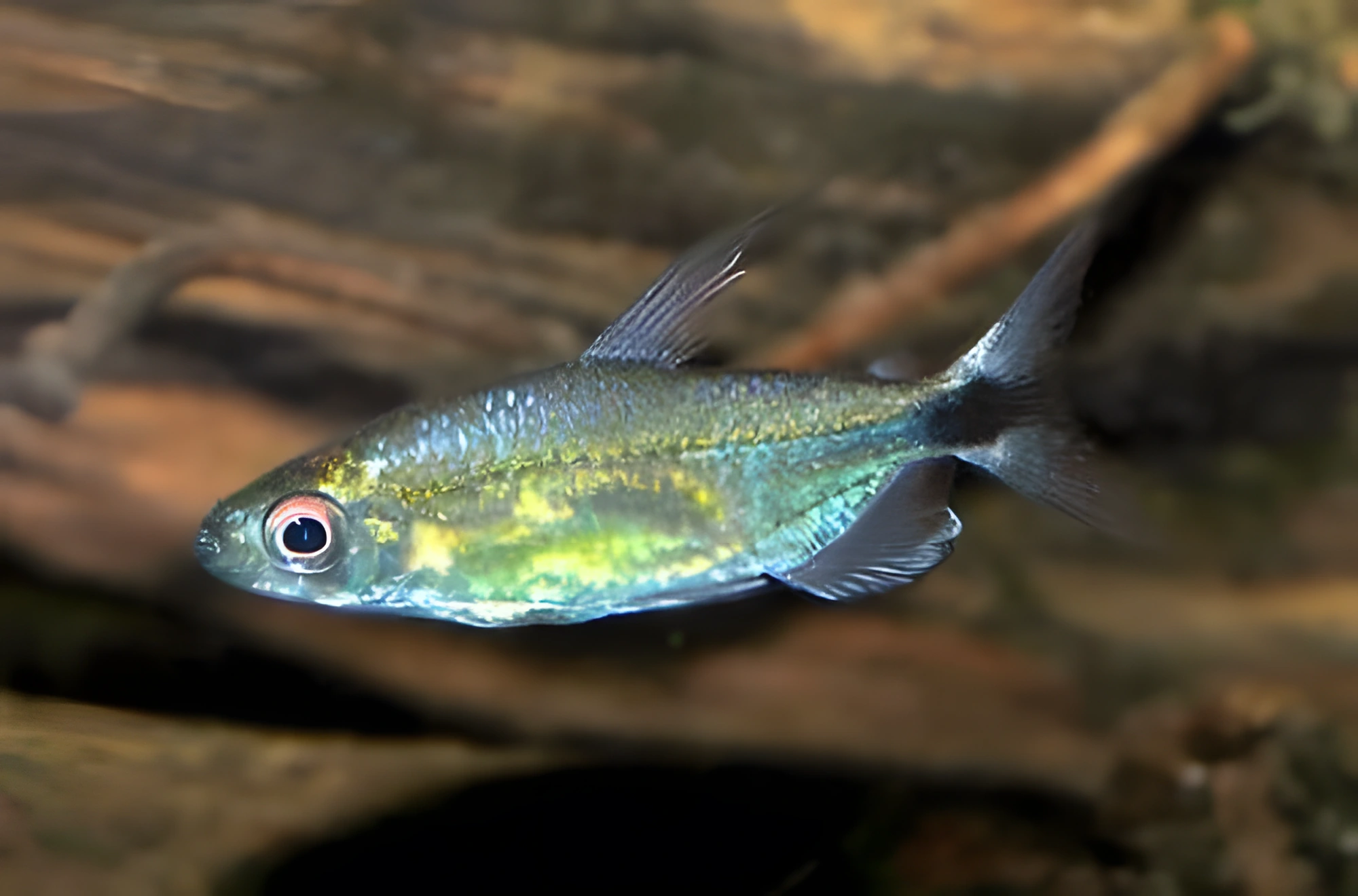
Alestopetersius smykalai, known as the Blue Diamond Tetra, belongs to the family Alestidae (African Tetras). This species is rarely found in home aquariums. In their natural habitat, they have practically disappeared, which precludes their export. Some experts suggest that the number of these fish in aquariums even exceeds their population in natural waters. Keeping this species is not particularly difficult; they are unpretentious and get along well with other peaceful, non-aggressive fish species.
- Required aquarium volume
- 100 L
- Size in aquarium
- 5 – 6 cm
- Temperature
- 20 – 28 °C
- Temperament
- Peaceful (regular)
Parameters
Water pHSlightly acidic (5) – Neutral (7)
Water dHVery soft (2) – Very hard (21)
Water salinityno salt (freshwater)
Size in aquarium5 – 6 cm
Lifespan6 years
TemperamentPeaceful (regular)
Toward small fishnot a predator
Required aquarium volume100 L
Lightingdimmed or moderate
Substrateany (no restrictions)
Water flowweak or moderate
FeedingAny (universal)
CareGroup (8–10 individuals)
Description
Adults reach a length of 5–6 cm. Males differ from females in their larger size, more intense coloration, and elongated fins. The main color of the fish is silvery with an attractive metallic bluish sheen. A large dark spot is noticeable at the base of the tail.
Habitat
The homeland of these tetras is the African continent, specifically the lower Niger River basin in Nigeria. They inhabit small streams and rivulets that flow through humid rainforests. Typical habitats are shaded streams, abundantly strewn with snags, fallen leaves, and overgrown with aquatic plants. Currently, the population of this species is endangered in the wild due to active anthropogenic activity. Over 95% of tropical forests in the country have been destroyed, and the extraction of minerals (oil, gas) in the Niger Delta has led to significant degradation of natural habitats.
Behavior and Compatibility
These fish are quite timid, so they need to be kept in a group of conspecifics or other peaceful fish species of comparable size. Optimal choices would be species inhabiting similar biotopes or representatives of African rivers. It is recommended to keep a school of 8–10 individuals.
Care and Maintenance
For the stable well-being of a group of 8–10 individuals, an aquarium of at least 100 liters is recommended. The choice of decorations is not critical, as the fish adapt well to various conditions, including minimally furnished tanks. However, the Blue Diamond Tetra is extremely sensitive to fluctuations in water hydrochemistry and the accumulation of organic substances. Therefore, it cannot be introduced into an aquarium that has not yet undergone biological stabilization. An effective filtration system and other equipment are necessary to maintain stable water conditions. Nevertheless, the aquarist should regularly perform maintenance: weekly water changes of 20–30% with fresh water, timely removal of excrement and food residues, and monitoring of pH, dGH parameters, and the concentration of nitrogen cycle products (such as ammonia, nitrites, nitrates).
Diet
The diet of these tetras can include various products intended for aquarium fish. The daily menu can be formed from dry, freeze-dried, as well as live or frozen foods.
Breeding and Reproduction
Due to its rarity in amateur aquaristics, detailed and reliable information on the breeding of this species is lacking. The reproduction of these tetras is typical for most members of the family: they scatter eggs among plant thickets. Parental instincts are not developed; adults do not care for their offspring and may eat their own eggs. To preserve the brood, the eggs should be transferred to a separate aquarium with the same water parameters. The incubation period lasts approximately 5 days.
Diseases
Specific diseases that affect only this particular fish species have not been identified. When kept in suitable conditions, including high water quality, a balanced diet, and peaceful tank mates, health issues usually do not arise. The most common cause of illness is a deterioration of living conditions, which weakens the immune system and makes the fish susceptible to infections that are always present in their environment. Upon noticing initial signs of sickness (such as lethargy, emaciation, refusal to eat, or clamped fins), it is crucial to immediately check the basic water parameters. Often, restoring acceptable living conditions will lead to self-recovery, but if the fish is too weak or has suffered visible damage, medicinal treatment may be required. For more details on symptoms and treatment methods, consult the section “Diseases of Aquarium Fish.”
How to choose
When inspecting in a store, choose active individuals that show interest in food and stay in a school. Avoid fish with signs of emaciation, fin damage, or uncharacteristic spots on the body. Given the high sensitivity of the species to water quality and stress, it is recommended to assess the condition of the aquarium: there should be no dead individuals, and the water should be clear and without a sharp odor. Since this species is often supplied from the natural environment, it is important to ensure that the fish have undergone an adaptation period in the retail system and have started to feed stably.
Frequently asked questions
The essentials: size, tank volume, water parameters and care
How big does Blue Tetra get?
An adult reaches 5–6 cm in length. Plan the tank around the maximum size: the fish quickly outgrows a cramped setup.
What size aquarium does Blue Tetra need?
The minimum recommended volume is 100 L. A smaller tank speeds up nitrate build-up and raises stress levels.
What water parameters does Blue Tetra need?
Temperature 20–28 °C, pH 5–7, hardness 2–21 dGH. Stability matters more than exact values: sudden swings are harder on the fish than a small deviation from the ideal.
How long does Blue Tetra live?
Around 6 years when kept properly. Lifespan depends directly on tank volume, water quality and a varied diet.
Is Blue Tetra aggressive?
Temperament: peaceful (regular). Keep this in mind when choosing tank mates.
How many Blue Tetra should be kept together?
Recommended setup: group (8–10 individuals). Ignoring this is a common cause of stress and disease.
What does Blue Tetra eat?
Diet type: any (universal). Feed small portions that are finished within a couple of minutes — overfeeding does more harm than underfeeding.
What is the scientific name of Blue Tetra?
The scientific name of the species is Alestopetersius smykalai, family African Tetras (Alestidae). It also appears in the literature as: Hemigrammopetersius smykalai, Rhabdalestes smykalai.