Temperature21 – 26 °C
Natural range
- Myanmar area
Loaches
Paracanthocobitis pictilis, also known as the Burmese Border Loach, belongs to the family Nemacheilidae. Previously, this species was assigned to the genus Acanthocobitis, but the name "Acanthocobitis" was subsequently re-assigned to another genus. Keeping this fish can be challenging, primarily due to its high demands for water purity, its need for turbulent conditions, and its not-so-simple temperament in interactions with both conspecifics and other aquarium inhabitants.
- Required aquarium volume
- 80 L
- Size in aquarium
- 8 – 9 cm
- Temperature
- 21 – 26 °C
- Temperament
- Aggressive / incompatible / unfriendly
Parameters
Water pHSlightly acidic (6) – Neutral (7.5)
Water dHVery soft (1) – Medium hardness (8)
Water salinityno salt (freshwater)
Size in aquarium8 – 9 cm
Lifespan5 years
TemperamentAggressive / incompatible / unfriendly
Toward small fishnot a predator
Required aquarium volume80 L
Lightingdimmed
Substraterocky (rock formations, boulders, etc.)
Water flowmoderate or strong
FeedingSinking (any)
CareSolitary
Description
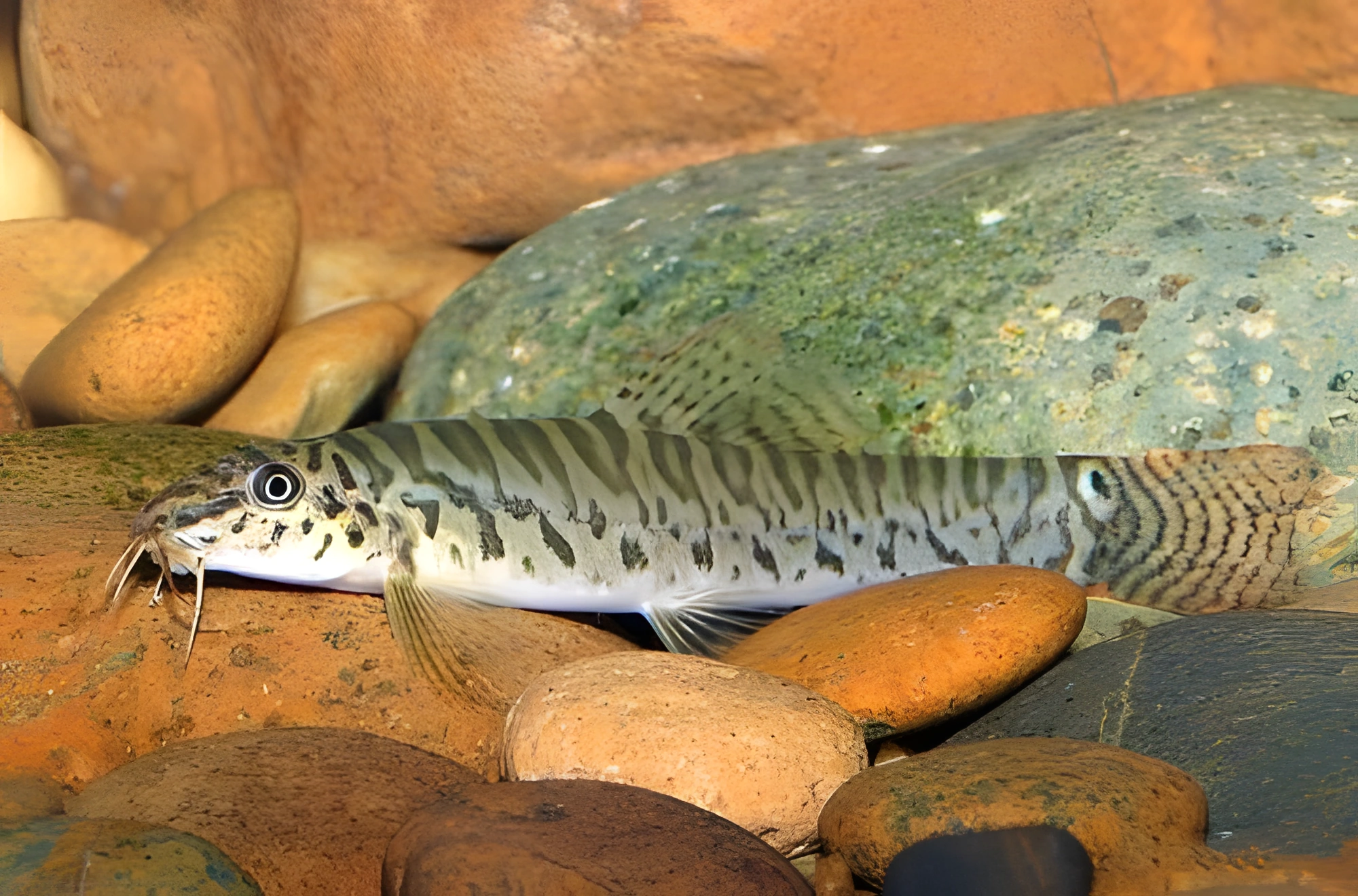
Adults grow to a length of 8–9 cm. The fish has an elongated body shape and short fins. The coloration is predominantly gray, with a characteristic pattern of dark streaks and irregularly shaped spots, while the belly remains light. Two pairs of barbels are located near the mouth on the head. Sexual dimorphism is weakly expressed. Males, unlike females, have a shallow groove under the eye, and during the breeding season, their fins may acquire a reddish tint.
Habitat
The natural habitat of this species is in Southeast Asia, specifically in the southern regions of Myanmar (historically known as Burma), and covers the Ataran River basin. The Burmese Border Loach prefers to inhabit shaded parts of rivers with fast currents. A typical biotope is characterized by a strong water flow, a rocky bottom, the presence of snags, and accumulations of leaf litter, often trapped in depressions and rapids on the bottom.
Behavior and Compatibility
Male aggression is a notable feature of their behavior, especially when they live alone or in small groups, which often leads to conflicts between conspecifics. However, if the number of individuals in the community exceeds 6–7, the hostility of dominant males usually dissipates, and they can coexist quite well in a spacious aquarium. These fish are well compatible with other species of similar size that prefer to inhabit the water column or near the surface. At the same time, difficulties may arise with bottom-dwelling species, such as other loaches and catfish, so their cohabitation is best avoided.
Care and Maintenance
For keeping one or two fish, the optimal aquarium volume starts from 80 liters. An excellent design solution would be to create conditions that mimic their natural habitat, i.e., a mountain stream or river with a bottom of stones, boulders of various sizes, sand, and gravel, where snags are securely fixed. Decor elements can be used to form shelters, such as crevices or grottoes. If desired, live plants such as Anubias, undemanding aquatic mosses, and ferns that can attach to driftwood are permissible. Dim lighting is recommended. The Burmese Border Loach needs clean, flowing water rich in dissolved oxygen. In addition to their primary function, internal filters can create artificial current, and additional aerators will provide the necessary oxygen concentration. Besides technical equipment, regular aquarium maintenance procedures, including weekly partial water changes and timely removal of organic waste (such as uneaten food and excrement), contribute to maintaining high water quality.
Diet
This fish is omnivorous and readily accepts most common aquarium foods, whether live, frozen, or dry. It is recommended to offer a varied menu, combining, for example, dry foods with live or frozen artemia, daphnia, bloodworms, and so on. It is important that the food is sinking, as these fish generally do not take food from the water surface.
Breeding and Reproduction
At the time of preparing information for this article, no successful cases of breeding the Burmese Border Loach in home aquariums by hobbyists have been recorded.
Diseases
Health problems in these fish arise only in the presence of injuries or keeping in unsuitable conditions, which leads to a weakening of the immune system and the subsequent occurrence of various diseases. At the first signs of illness, it is necessary first to check the water parameters for exceeding permissible values or the presence of toxic substances (such as nitrites, nitrates, ammonia). If deviations are found, all indicators should be normalized, and then treatment should begin. More detailed information on symptoms and treatment methods is available in the "Diseases of Aquarium Fish" section.
How to choose
When selecting individuals, attention should be paid to the activity of the fish and the cleanliness of their skin. A healthy loach should show curiosity, actively explore the bottom, and have no visible damage, ulcers, or white spots. Avoid purchasing fish with sunken bellies, which may indicate emaciation or the presence of internal parasites, as well as individuals that appear apathetic or constantly lie on their side. Given the territorial nature of the species, it is preferable to acquire a group of six or more individuals, as fish kept alone become timid or excessively aggressive.
- Check for signs of infections, such as cloudy eyes or fin erosion.
- Ensure that the fish show a natural reaction to movement near the glass but do not appear panically frightened.
- Give preference to individuals that have already adapted to aquarium conditions and have started to accept offered food.
Frequently asked questions
The essentials: size, tank volume, water parameters and care
How big does Burmese Border Loach get?
An adult reaches 8–9 cm in length. Plan the tank around the maximum size: the fish quickly outgrows a cramped setup.
What size aquarium does Burmese Border Loach need?
The minimum recommended volume is 80 L. A smaller tank speeds up nitrate build-up and raises stress levels.
What water parameters does Burmese Border Loach need?
Temperature 21–26 °C, pH 6–7.5, hardness 1–8 dGH. Stability matters more than exact values: sudden swings are harder on the fish than a small deviation from the ideal.
How long does Burmese Border Loach live?
Around 5 years when kept properly. Lifespan depends directly on tank volume, water quality and a varied diet.
Is Burmese Border Loach aggressive?
Temperament: aggressive / incompatible / unfriendly. Keep this in mind when choosing tank mates.
How many Burmese Border Loach should be kept together?
Recommended setup: solitary. Ignoring this is a common cause of stress and disease.
What does Burmese Border Loach eat?
Diet type: sinking (any). Feed small portions that are finished within a couple of minutes — overfeeding does more harm than underfeeding.
What is the scientific name of Burmese Border Loach?
The scientific name of the species is Paracanthocobitis pictilis, family Nemacheilidae.