Temperature20 – 25 °C
Natural range
- Ganges River Basin
- Brahmaputra River Basin
- India area
- Nepal area
LoachesConservation status: Least concern LC
Other scientific names: Canthophrys olivaceous, Canthophrys olivaceus, Canthophrys vittatus, Cobitis balgara, Cobitis guntea, Cobitis maya
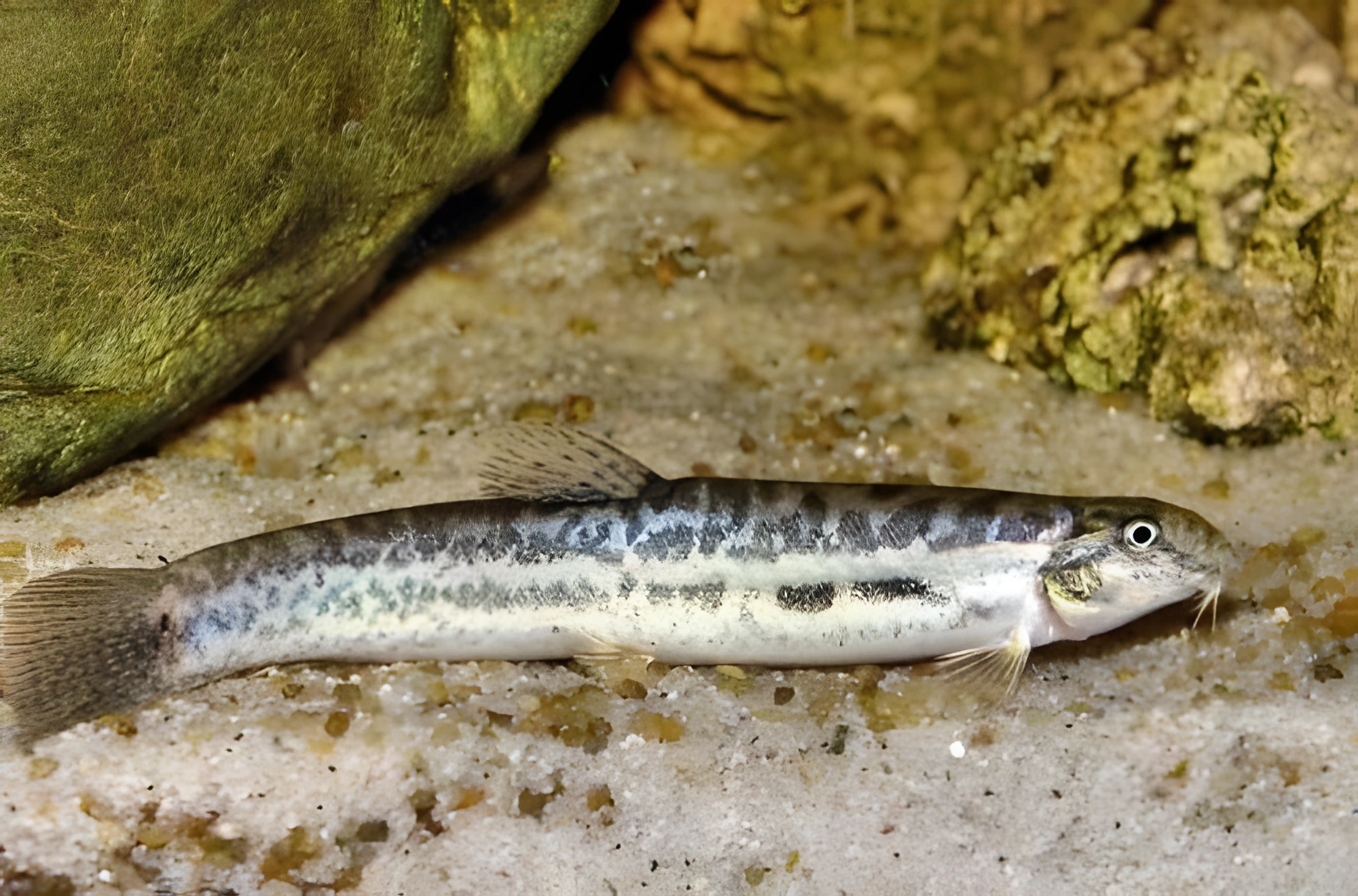
The fish known as the Peppered Loach or Guntea Loach (scientific name Lepidocephalichthys guntea) belongs to the family Cobitidae (Loaches). It is valued in aquaristics, although its coloration sometimes seems modest. However, this feature is amply compensated by its unpretentiousness in care and excellent compatibility with various freshwater species. Therefore, this representative can be safely recommended to aquarists taking their first steps in this hobby.
- Required aquarium volume
- 80 L
- Size in aquarium
- 7 – 8 cm
- Temperature
- 20 – 25 °C
- Temperament
- Peaceful (regular)
Parameters
Water pHSlightly acidic (6) – Slightly alkaline (8)
Water dHVery soft (1) – Hard (12)
Water salinityno salt (freshwater)
Size in aquarium7 – 8 cm
Lifespan5 years
TemperamentPeaceful (regular)
Toward small fishnot a predator
Required aquarium volume80 L
Lightingdimmed
Substratesoft sandy (including silted)
Water flowmoderate
FeedingSinking (meat / protein)
CareSmall group (3–4 individuals)
Description
Adults grow up to 7–8 cm in length, although some sources mention sizes up to 15 cm. The fish has a very elongated body, which gives it an eel-like appearance. The head is small, and the eyes are located high on the top of the head. Near the mouth, three pairs of sensitive barbels are visible, which are used to search for food on the bottom, among the silt. The back and sides are gray, with a light stripe running along the body from head to tail. The belly has a light shade. Sexual dimorphism is weakly expressed. Adult females are usually slightly larger than males. In the latter, the pectoral fins are enlarged, and their 7th and 8th rays are thickened, forming a structure known as a circular ring.
Habitat
The natural habitat of this species covers South Asia. It can be found in vast territories, including the Ganges and Brahmaputra river basins in northern India, Nepal, and Bangladesh. Populations are likely also present in the river systems of Myanmar. These fish prefer shallow waters, inhabiting river backwaters, swamps, flood lakes, and rice fields. Their typical environment is shallow bodies of water with stagnant water or very slow currents. The bottom in such places is usually covered with a layer of silt, numerous fallen plant debris, as well as snags and tree roots.
Behavior and Compatibility
The Guntea Loach is known for its calm and peaceful disposition. It coexists perfectly with its own kind and with other non-aggressive fish of comparable size. A harmonious community can be created by selecting species that inhabit the water column or near the surface.
Care and Maintenance
For a comfortable habitat for a group of four fish, an aquarium of 80 liters or more will be optimal. Special attention should be paid to the substrate when decorating, preferably using sand or fine gravel. This will prevent it from getting stuck in the fish's mouth during feeding. Various snags and decorative elements providing shelters will perfectly complement the setting. Rooted live plants are not recommended, as the fish can actively dig up the bottom. However, thickets of floating vegetation will be very useful – they will create additional shading, which is very important, as the Peppered Loach prefers subdued light. Properly selected decor contributes to the trouble-free keeping of these fish. They are distinguished by their hardiness and unpretentiousness, and their ability to adapt to a wide range of conditions. The key to success is maintaining clean and warm water, as well as the appropriate hydrochemical composition. Regular aquarium maintenance, including water changes, waste removal, and equipment prophylaxis, will help maintain biological balance.
Diet
Feeding occurs at the bottom: the fish sifts the substrate through its mouth in search of food particles. In natural conditions, the diet consists mainly of small invertebrates. For keeping in a home aquarium, sinking foods with a high protein content should be offered. These can be flakes, granules, as well as live or frozen artemia, bloodworms, daphnia, and similar products.
Breeding and Reproduction
Reliable information on regular breeding in captivity is absent. In nature, the species is a seasonal spawner, whose spawning cycle is associated with the rainy season, characterized by rising water levels and changes in its parameters. In aquarium conditions, attempts have been made to simulate the rainy season by creating a dormant period at high temperatures, followed by a large volume water change to cooler and softer water; however, successful cases of offspring production remain isolated and not confirmed in detail. Sexual differences are manifested in the structure of the pectoral fins: in males, they are larger and have a bony process, while in females, the body is usually rounder and more massive.
Diseases
The best prevention against diseases is keeping the fish in suitable conditions, providing them with a balanced diet, and avoiding stress caused, for example, by attacks from tank mates. The appearance of signs of illness can be a signal of problems in care. Often, bringing the habitat back to normal contributes to self-recovery, but if the fish's body is severely weakened, medicinal treatment may be required. More detailed information on symptoms and treatment methods is available in the "Diseases of Aquarium Fish" section.
How to choose
When purchasing, choose active fish that do not have visible skin damage, as they are sensitive to substrate quality and water conditions. Important signs of a healthy individual:
- absence of ulcers, white spots, and fin damage;
- normal breathing without signs of rapid gill rhythm;
- absence of excessive timidity and constant presence at the water surface;
- clean skin without mucous coatings.
It is recommended to acquire a group of 4 or more individuals, as fish become secretive and stressed when alone. It should be noted that in the store, fish often hide in the substrate, so when choosing, carefully inspect the bottom of the aquarium.
Frequently asked questions
The essentials: size, tank volume, water parameters and care
How big does Guntea Loach get?
An adult reaches 7–8 cm in length. Plan the tank around the maximum size: the fish quickly outgrows a cramped setup.
What size aquarium does Guntea Loach need?
The minimum recommended volume is 80 L. A smaller tank speeds up nitrate build-up and raises stress levels.
What water parameters does Guntea Loach need?
Temperature 20–25 °C, pH 6–8, hardness 1–12 dGH. Stability matters more than exact values: sudden swings are harder on the fish than a small deviation from the ideal.
How long does Guntea Loach live?
Around 5 years when kept properly. Lifespan depends directly on tank volume, water quality and a varied diet.
Is Guntea Loach aggressive?
Temperament: peaceful (regular). Keep this in mind when choosing tank mates.
How many Guntea Loach should be kept together?
Recommended setup: small group (3–4 individuals). Ignoring this is a common cause of stress and disease.
What does Guntea Loach eat?
Diet type: sinking (meat / protein). Feed small portions that are finished within a couple of minutes — overfeeding does more harm than underfeeding.
What is the scientific name of Guntea Loach?
The scientific name of the species is Lepidocephalichthys guntea, family Cobitidae (Loaches). It also appears in the literature as: Canthophrys olivaceous, Canthophrys olivaceus, Canthophrys vittatus.