Temperature22 – 30 °C
Natural range
- Amazonas State
- Venezuela area
CatfishConservation status: Least concern LC
Hypancistrus inspector, known scientifically as Hypancistrus inspector, belongs to the armored catfish family (Loricariidae). Its name comes from the Latin word "Inspectores," which translates to "observer," and this is due to the noticeable size of its eyes. This fish is attractive for its bright coloration and peaceful nature, which makes it relatively easy to keep. However, it is recommended for aquarists who already have some experience.
- Required aquarium volume
- 250 L
- Size in aquarium
- 14 – 16 cm
- Temperature
- 22 – 30 °C
- Temperament
- Peaceful (regular)
Parameters
Water pHSlightly acidic (5) – Neutral (7.5)
Water dHVery soft (1) – Hard (15)
Water salinityno salt (freshwater)
Size in aquarium14 – 16 cm
Lifespan9 years
TemperamentPeaceful (regular)
Toward small fishnot a predator
Required aquarium volume250 L
Lightingmoderate (regular)
Substraterocky (rock formations, boulders, etc.)
Water flowmoderate or strong
FeedingSinking (any)
CareBoth solitary and in group (flexible)
Description
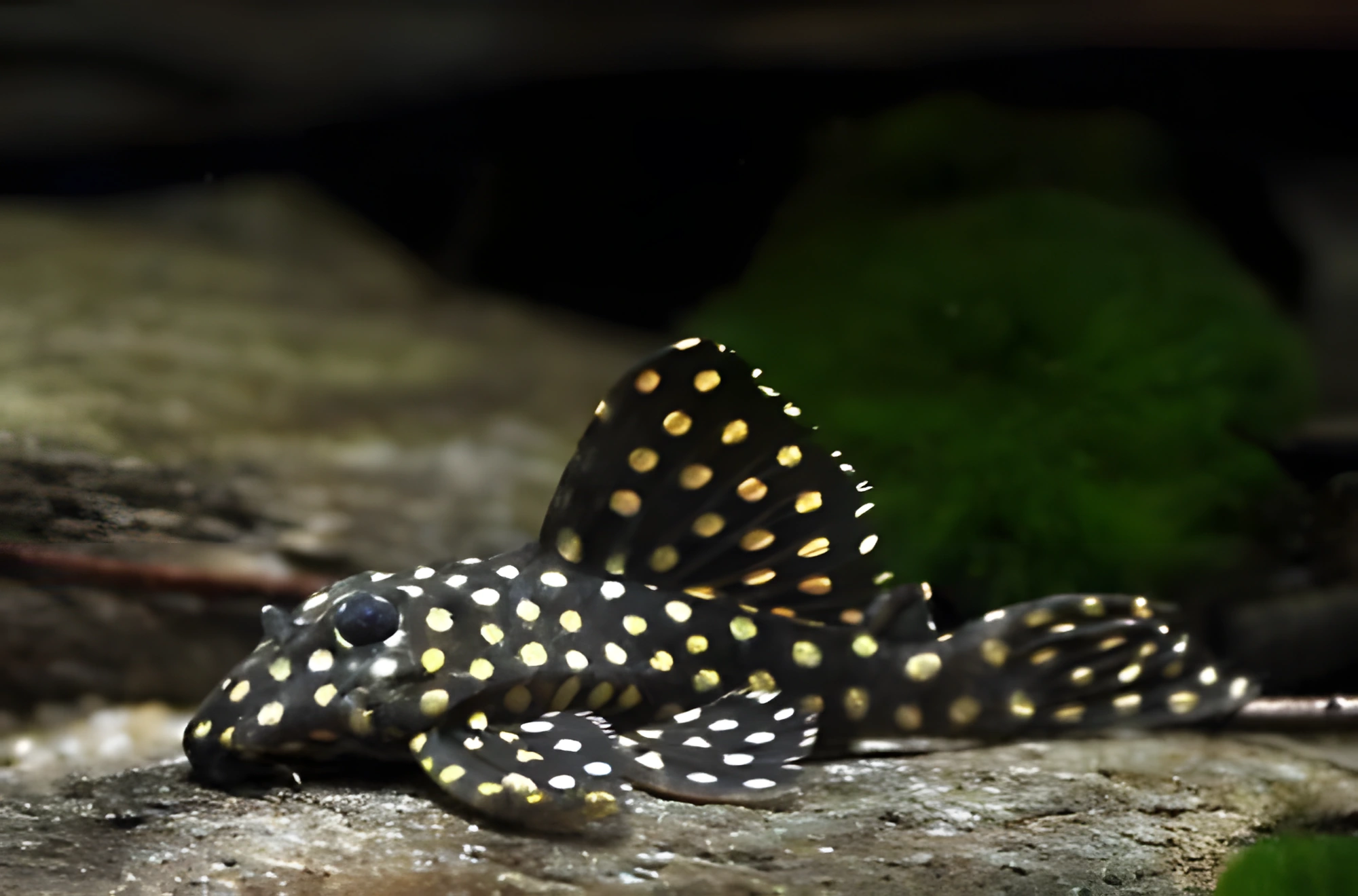
These catfish grow up to 14–16 cm in length. They are characterized by a flattened body, a rather large head, and large fins, the first rays of which are modified into sharp spines. The skin of Hypancistrus inspector is hard and rough to the touch due to many small prickles. The coloration is dark, dotted with bright, contrasting spots. While males appear slimmer and their spots have a yellowish tint, females, on the contrary, are more stocky, with white speckles in their coloration.
Habitat
Its natural habitat is in South America, specifically in the Casiquiare River basin, which is the upper course of the Rio Negro, located in the Venezuelan state of Amazonas. This catfish prefers to live in streams and small rivers with fast currents, which are characteristic of hilly terrain. The beds of these water bodies often consist of rocky substrates and are often cluttered with fallen trees and branches.
Behavior and Compatibility
This peaceful and calm fish will not create problems for other aquarium inhabitants. It is well compatible with other non-aggressive and non-territorial species of comparable size. Hypancistrus inspector can be kept singly or in a group. However, it is not recommended to keep different Hypancistrus species together to avoid hybridization.
Care and Maintenance
For a group of 3–4 catfish, the optimal aquarium volume starts from 250 liters. Their keeping requires creating conditions as close as possible to natural ones. It is recommended to use a sandy-stony substrate with boulders of various sizes, supplementing it with natural or artificial snags and other decorative elements that can serve as shelters. The presence of live plants is not mandatory. Hypancistrus inspector is highly sensitive to water quality and tolerates even slight accumulation of organic waste poorly; therefore, weekly water changes of 30–50% of the volume are mandatory. The installation of a productive filtration and aeration system, often combined in one device, is also necessary.
Diet
In the wild, the fish's diet consists of small aquatic invertebrates and various organisms. In aquarium conditions, it is important to provide a varied diet, which should include both live and frozen foods, such as bloodworms, daphnia, artemia, and dry foods — sinking flakes and granules.
Breeding and Reproduction
Reproduction is possible under favorable conditions, such as high water quality and a balanced diet, but ensuring these can be a challenging task. It is important to provide shelters in the aquarium decor that will serve as spawning sites. In an artificial environment, the breeding period does not have strict time limits. When the mating season begins, the male occupies a certain area on the aquarium bottom and begins to court the females, enticing them. Once one of the females is ready, the pair retreats to the chosen shelter, where several dozen eggs are laid. After this, the female leaves the spawning site, and the male remains to protect the clutch and care for it until the fry emerge.
Diseases
Most health problems in fish often arise from unsuitable keeping conditions. Maintaining a stable and comfortable habitat is a key factor for successful keeping. If symptoms of illness appear, the first step is to check the water quality. If deviations are found, it is important to take immediate measures to eliminate them. If the symptoms do not disappear or worsen, medicinal treatment may be required. More detailed information on symptoms and treatment methods can be found in the "Diseases of Aquarium Fish" section.
How to choose
When choosing a Hypancistrus inspector in a store, attention should be paid to the fish's overall activity during twilight hours and the condition of its external integuments. A healthy individual should have clean coloration without whitish film, ulcers, or damage to the body and fins. It is important to ensure that the fish's eyes are clear and its abdomen does not appear sunken, which may indicate chronic malnutrition or the presence of parasites. Avoid purchasing specimens that appear apathetic, constantly lie in open areas, or show signs of emaciation, as this species is sensitive to water quality and stress during transportation.
- Check for any damage to the fins and the presence of all spiny rays.
- Ensure the fish shows interest in food and actively explores the aquarium bottom.
- Avoid individuals with an unnaturally bloated or severely sunken abdomen.
Frequently asked questions
The essentials: size, tank volume, water parameters and care
How big does Hypancistrus inspector get?
An adult reaches 14–16 cm in length. Plan the tank around the maximum size: the fish quickly outgrows a cramped setup.
What size aquarium does Hypancistrus inspector need?
The minimum recommended volume is 250 L. A smaller tank speeds up nitrate build-up and raises stress levels.
What water parameters does Hypancistrus inspector need?
Temperature 22–30 °C, pH 5–7.5, hardness 1–15 dGH. Stability matters more than exact values: sudden swings are harder on the fish than a small deviation from the ideal.
How long does Hypancistrus inspector live?
Around 9 years when kept properly. Lifespan depends directly on tank volume, water quality and a varied diet.
Is Hypancistrus inspector aggressive?
Temperament: peaceful (regular). Keep this in mind when choosing tank mates.
How many Hypancistrus inspector should be kept together?
Recommended setup: both solitary and in group (flexible). Ignoring this is a common cause of stress and disease.
What does Hypancistrus inspector eat?
Diet type: sinking (any). Feed small portions that are finished within a couple of minutes — overfeeding does more harm than underfeeding.
What is the scientific name of Hypancistrus inspector?
The scientific name of the species is Hypancistrus inspector, family Armored Catfishes (Loricariidae).