Temperature21 – 25 °C
Natural range
- Central Kalimantan area
- Borneo area
Labyrinth fishConservation status: Vulnerable VU
The scientific name Sphaerichthys acrostoma is assigned to the giant chocolate gourami, which belongs to the family Osphronemidae. The lack of bright colors in its coloration and the need to maintain extremely low pH and dGH values create certain difficulties for beginner aquarists, which has led to the limited distribution of this species in amateur aquaristics.
- Required aquarium volume
- 80 L
- Size in aquarium
- 6 – 7 cm
- Temperature
- 21 – 25 °C
- Temperament
- Peaceful (regular)
Parameters
Water pHAcidic (3.5) – Neutral (6.5)
Water dHVery soft (1) – Very soft (3)
Water salinityno salt (freshwater)
Size in aquarium6 – 7 cm
Lifespan5 years
TemperamentPeaceful (regular)
Toward small fishnot a predator
Required aquarium volume80 L
Lightingdimmed
Substrateany, but dark
Water flownone or stagnant (no flow)
FeedingAny (universal)
CareBoth solitary and in group (flexible)
Description
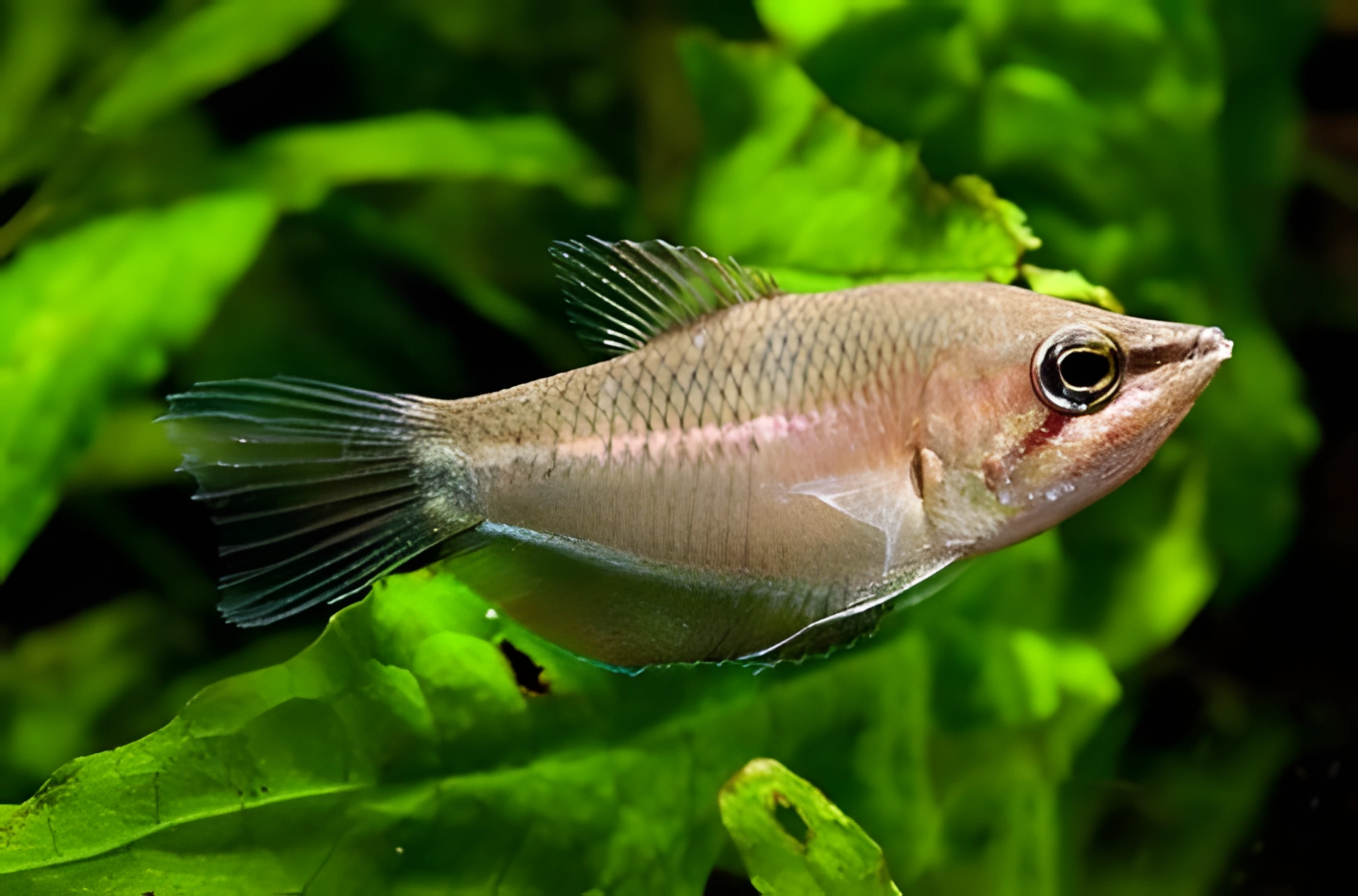
Despite its kinship with the chocolate gourami, they have little in common visually. Although the word “giant” is present in the species name, the size of this fish is quite modest: adults reach no more than 6–7 cm in length. The gourami is characterized by a high, narrow body and a large, pointed head with large eyes. The coloration of these fish is gray, and the fins are translucent with a barely noticeable pattern. During the breeding season, males display a lateral stripe extending from the base of the tail to the middle of the body.
Habitat
The natural habitat of this species covers the Indonesian part of Borneo Island, located in Southeast Asia, where the gourami is found in the Mentaya River basin. The territory of Central Kalimantan province is its limited range. Its preferred habitat is peat swamps hidden in tropical forests. A typical biotope is a shallow body of water, at the bottom of which lies a thick layer of fallen leaves, branches, and various snags. Due to the high concentration of humic acids and other tannins, the water in such bodies of water acquires a rich brown hue.
Behavior and Compatibility
The giant chocolate gourami is a peaceful and unhurried fish, not a schooling species, although observations show that it feels most comfortable in the company of its own kind. It is recommended to acquire a group of 3–4 individuals. The choice of tank mates should be approached with particular caution. Avoid overly active and, especially, aggressive fish. Good compatibility is achieved with inhabitants of similar biotopes that reach the same size.
Care and Maintenance
For a small group of these fish, an aquarium of at least 80 liters is recommended. When decorating, it is important to create shelters using both natural and artificial decor. Snags and dense thickets of plants will be an excellent choice. Additionally, dried leaves of certain trees, such as oak, birch, maple, and exotic Indian almond, can be used. This will give the decor a more natural look and, thanks to the release of tannins, bring the chemical composition of the water closer to natural conditions. Detailed information can be found in the article “Which tree leaves can be used in an aquarium”. One of the key conditions for successful keeping of the giant chocolate gourami is water quality. Despite the fact that inhabitants of swampy waters are usually less demanding than their relatives from rivers and streams, for this species it is necessary to maintain very low hydrochemical parameters within the permissible pH and dGH range. The stability of the aquarium's biological system directly depends on the regularity of its maintenance, which includes waste removal and weekly partial water changes, as well as the uninterrupted operation of equipment, primarily the filtration system.
Diet
Fish bred in artificial aquarium conditions and intended for retail sale are usually already adapted to consuming a variety of foods: dry, frozen, and live. Among these, the latter are considered the most preferred.
Breeding and Reproduction
When optimal keeping conditions are met and a balanced diet is provided, breeding gourami usually presents no difficulties. A noticeable sign of the approaching spawning period in males is the appearance of a distinct lateral stripe, as mentioned earlier. A peculiarity of these fish is the unusual distribution of parental duties. The female initiates courtship, while all care for the eggs falls to the male. Spawning can last for several hours; the male places all fertilized eggs into his buccal cavity, where they remain for approximately 3 weeks until the fry hatch. The emerging fry are fully formed and immediately actively seek food. After this, the parents show no further interest in their offspring.
Diseases
Most often, diseases are caused by unsuitable keeping conditions. Maintaining a stable environment in the aquarium is a key factor for successful keeping. If any symptoms of illness appear, the first step is to check the water quality. If deviations are found, measures should be taken immediately to correct them. If symptoms persist or even worsen, medicinal treatment will be required. Detailed information on the symptoms of various diseases and their treatment methods can be found in the “Aquarium Fish Diseases” section.
How to choose
When selecting individuals, attention should be paid to their activity and the condition of their skin. Healthy fish should show curiosity, have clean fins without signs of erosion or plaque, and not appear emaciated. Avoid purchasing fish with sunken bellies, damaged scales, or unnatural behavior, such as constantly hovering near the water surface without visible reasons. Given the species' natural timidity, fish in a store may be highly stressed, so it's worth assessing their reaction to feeding, if possible. It is recommended to acquire a group of 6 or more individuals, as solitary keeping negatively affects their behavior and stress levels.
Frequently asked questions
The essentials: size, tank volume, water parameters and care
How big does Giant Chocolate Gourami get?
An adult reaches 6–7 cm in length. Plan the tank around the maximum size: the fish quickly outgrows a cramped setup.
What size aquarium does Giant Chocolate Gourami need?
The minimum recommended volume is 80 L. A smaller tank speeds up nitrate build-up and raises stress levels.
What water parameters does Giant Chocolate Gourami need?
Temperature 21–25 °C, pH 3.5–6.5, hardness 1–3 dGH. Stability matters more than exact values: sudden swings are harder on the fish than a small deviation from the ideal.
How long does Giant Chocolate Gourami live?
Around 5 years when kept properly. Lifespan depends directly on tank volume, water quality and a varied diet.
Is Giant Chocolate Gourami aggressive?
Temperament: peaceful (regular). Keep this in mind when choosing tank mates.
How many Giant Chocolate Gourami should be kept together?
Recommended setup: both solitary and in group (flexible). Ignoring this is a common cause of stress and disease.
What does Giant Chocolate Gourami eat?
Diet type: any (universal). Feed small portions that are finished within a couple of minutes — overfeeding does more harm than underfeeding.
What is the scientific name of Giant Chocolate Gourami?
The scientific name of the species is Sphaerichthys acrostoma, family Osphronemidae.