Temperature22 – 26 °C
Natural range
- Suriname area
- French Guiana area
- Maroni River basin
- Suriname River basin
CichlidsConservation status: Least concern LC
Other scientific names: Sparus surinamensis, Sparus trimaculatus
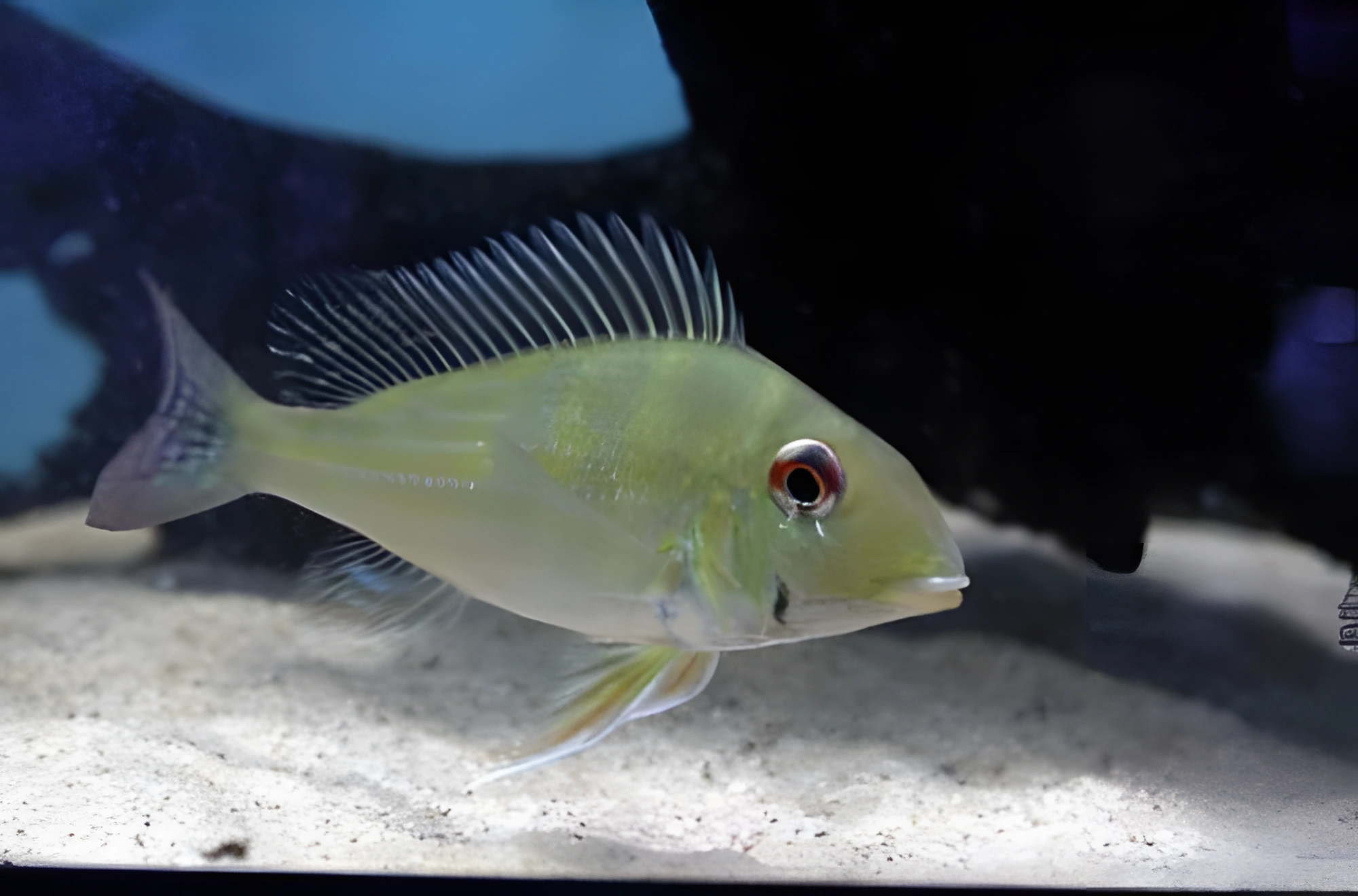
Geophagus surinamensis, known as the Surinam Geophagus, belongs to the Cichlidae family. This fish is undemanding and easy to keep, provided it has a sufficiently large aquarium. Compatibility with other species is limited and only possible with fish of similar size.
- Required aquarium volume
- 600 L
- Size in aquarium
- 30 cm
- Temperature
- 22 – 26 °C
- Temperament
- Semi-peaceful (including aggression during spawning / intraspecific conflicts)
Parameters
Water pHAcidic (4) – Neutral (7)
Water dHVery soft (1) – Medium hardness (10)
Water salinityno salt (freshwater)
Size in aquarium30 cm
Lifespan10 years
TemperamentSemi-peaceful (including aggression during spawning / intraspecific conflicts)
Toward small fishnot a predator
Required aquarium volume600 L
Lightingdimmed
Substratesandy (regular, light)
Water flowweak
FeedingSinking (any)
CareMedium group (6–8 individuals)
Description
Adults of this fish can reach lengths of over 30 cm. Their body is high and narrow, and the head is quite large. The coloration ranges from olive-green to pearly-grey hues, complemented by iridescent blue-green stripes along the sides. In their natural environment, the body pattern may also include red stripes, but these usually disappear in aquarium conditions. Sexual dimorphism is weakly expressed; males and females are practically indistinguishable externally.
Habitat
This species is native to South America. Geophagus surinamensis is found in limited areas of the Maroni, Surinam, and Saramacca river basins, located in modern-day Suriname and French Guiana. It inhabits both tributaries and main river channels, preferring areas with slow currents and substrates consisting of sandy silt. These fish typically live predominantly in the bottom layer.
Behavior and Compatibility
This fish has a calm disposition, except during spawning periods. At this time, Geophagus become aggressive, protecting their clutch and fry. Since spawning can occur several times a year under favorable conditions, tankmates should be large but peaceful fish capable of withstanding temporary bursts of aggression. Other South American cichlids, as well as plecostomus and various catfish species, are suitable as such tankmates.
Care and Maintenance
For a group of 5–8 individuals, the optimal aquarium volume starts from 500–600 liters. It is essential to use a sandy substrate in the decor, which is important for the fish's natural feeding process. It is advisable to provide shelters created from piles of rocks, stones, or large snags that form caves and grottoes. Lighting should be subdued. Due to the Geophagus' habit of sifting through the substrate, live plants should be selected from undemanding, shade-loving species with strong root systems, or those capable of growing on rocks or snags. Keeping Surinam Geophagus does not present great difficulties if the aquarium is equipped with all the necessary elements (filtration system, heater, lighting, etc.) and regular maintenance procedures are carried out. These procedures include weekly partial water changes and timely removal of organic waste, such as uneaten food remnants and excrement.
Diet
The daily diet of Geophagus surinamensis includes a variety of foods. This includes dry sinking foods such as flakes and pellets, as well as fresh and frozen invertebrates — brine shrimp, bloodworms, daphnia, and others. The fish forage for food at the bottom by sifting through the substrate.
Breeding and Reproduction
With the onset of the breeding season, the male and female form a temporary pair. The eggs are laid on a hard surface, and after fertilization, the female immediately takes them into her mouth, where they remain for the entire incubation period. The hatched fry continue to stay in this "sheltered place," periodically emerging to feed. Sometimes males also participate in brooding the offspring. The parents zealously protect the young until they become sufficiently independent.
Diseases
The main cause of most diseases lies in unsuitable keeping conditions. Deviations from acceptable parameters inevitably weaken the immune system, making fish vulnerable to various infections that are constantly present in the environment. If disease is suspected, the first step is to check the water parameters and ensure there are no dangerous concentrations of nitrogen cycle products. Often, restoring optimal conditions promotes recovery. However, in some cases, medication may be required. More detailed information on symptoms and treatment methods can be found in the "Aquarium Fish Diseases" section.
How to choose
When selecting individuals, pay attention to their activity and the cleanliness of their skin. A healthy fish should show interest in its surroundings, have no visible injuries, ulcers, white film, or signs of emaciation. Avoid purchasing fish with sunken bellies or unnatural behavior, such as a constant tendency to stay at the water surface or in the corners of the aquarium.
- Inspect the fins: they should be intact, without signs of splitting or redness.
- Ensure the fish's eyes are clear and transparent, without cloudiness.
- Ask the seller about the keeping conditions and diet to assess the individuals' adaptation to aquarium foods. Remember that young individuals adapt more easily to new conditions than adult specimens, so it is better to choose medium-sized fish.
Frequently asked questions
The essentials: size, tank volume, water parameters and care
How big does Surinam Geophagus get?
An adult reaches 30 cm in length. Plan the tank around the maximum size: the fish quickly outgrows a cramped setup.
What size aquarium does Surinam Geophagus need?
The minimum recommended volume is 600 L. A smaller tank speeds up nitrate build-up and raises stress levels.
What water parameters does Surinam Geophagus need?
Temperature 22–26 °C, pH 4–7, hardness 1–10 dGH. Stability matters more than exact values: sudden swings are harder on the fish than a small deviation from the ideal.
How long does Surinam Geophagus live?
Around 10 years when kept properly. Lifespan depends directly on tank volume, water quality and a varied diet.
Is Surinam Geophagus aggressive?
Temperament: semi-peaceful (including aggression during spawning / intraspecific conflicts). Keep this in mind when choosing tank mates.
How many Surinam Geophagus should be kept together?
Recommended setup: medium group (6–8 individuals). Ignoring this is a common cause of stress and disease.
What does Surinam Geophagus eat?
Diet type: sinking (any). Feed small portions that are finished within a couple of minutes — overfeeding does more harm than underfeeding.
What is the scientific name of Surinam Geophagus?
The scientific name of the species is Geophagus surinamensis, family Cichlids (Cichlidae). It also appears in the literature as: Sparus surinamensis, Sparus trimaculatus.