Temperature20 – 30 °C
Natural range
- Colombia area
CichlidsConservation status: Least concern LC
Other scientific names: Geophagus hondae, Geophagus magdalena
Geophagus steindachneri, scientifically known as Geophagus steindachneri, belongs to the Cichlidae family. It was named after the Austrian zoologist Franz Steindachner, who first described this species. Keeping these fish can be associated with certain difficulties regarding water parameters and feeding habits, making them not the best choice for beginner aquarists.
- Required aquarium volume
- 250 L
- Size in aquarium
- 11 – 15 cm
- Temperature
- 20 – 30 °C
- Temperament
- Aggressive / incompatible / unfriendly
Parameters
Water pHSlightly acidic (6) – Neutral (7.5)
Water dHVery soft (2) – Hard (12)
Water salinityno salt (freshwater)
Size in aquarium11 – 15 cm
Lifespan10 years
TemperamentAggressive / incompatible / unfriendly
Toward small fishnot a predator
Required aquarium volume250 L
Lightingdimmed
Substratesandy (regular, light)
Water flowweak
FeedingHigh protein (predominantly meat)
CareHarem (1 male and several females)
Description
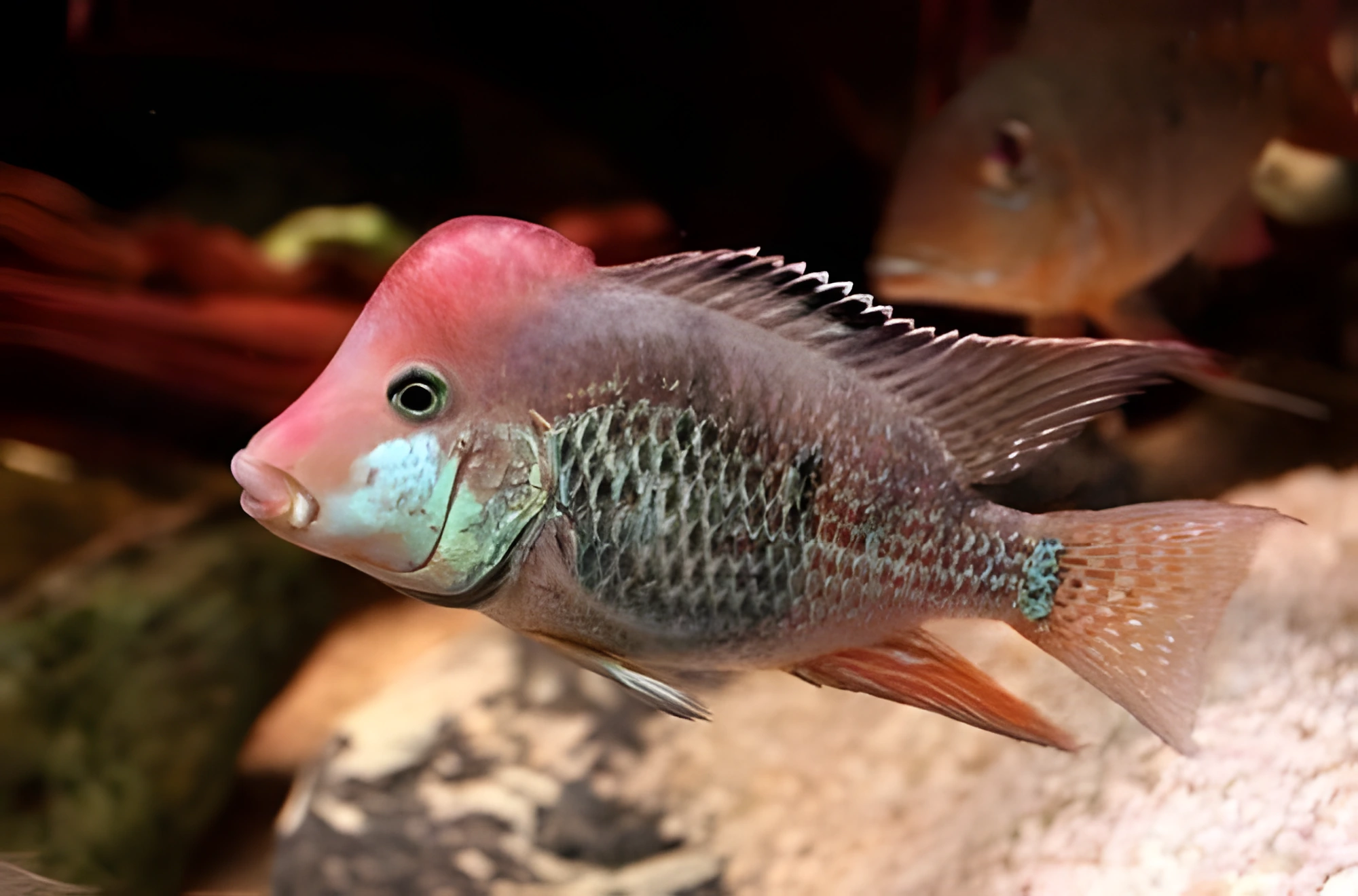
Adults reach a length of 11 to 15 cm. The coloration of the fish can vary from yellow to red tones, depending on their specific region of origin. Males are generally larger than females and are distinguished by a characteristic 'nuchal hump' on their head.
Habitat
The species originates from South America, localized in modern-day Colombia. These fish inhabit the Magdalena River basin and its main tributary, the Cauca River, located in the northwest of the country. Although they can be found in various biotopes, Geophagus generally prefer sections of rivers flowing through tropical forests, as well as quiet backwaters with sandy substrates.
Behavior and Compatibility
Adult males display aggression towards each other, so only one male should be kept in an aquarium, accompanied by two or three females. They are peaceful towards other fish species, demonstrating compatibility with non-aggressive fish of comparable size.
Care and Maintenance
For keeping 2–3 fish, an aquarium of at least 250 liters will be optimal. The decor can simply include a sandy substrate and a few pieces of driftwood. Avoid adding small stones or pebbles to prevent them from getting stuck in the fish's mouth during feeding. Dim lighting is recommended. Aquatic plants are not an essential element, but if desired, undemanding and shade-loving varieties can be planted. If breeding is planned, one or two flat, large stones should be placed on the bottom, which can serve as potential spawning sites. Geophagus steindachneri requires high water quality with specific hydrochemical parameters — slightly acidic, with low carbonate hardness, and a significant content of tannins. In their natural environment, these substances are formed by the decomposition of leaves, branches, and roots of tropical trees. In an aquarium, tannins can be introduced using leaves from certain trees, but this method is not always optimal, as leaves can clutter the substrate, which serves as a 'dining table' for Geophagus. A more preferable option is to use special essences containing concentrated tannins, where a few drops can replace a handful of leaves. The filtration system plays a key role in maintaining high water quality. When feeding, the fish stir up suspended particles that can quickly clog the filter material, so consulting a specialist when choosing a filter is essential. They can help select a specific model and determine optimal placement to minimize clogging. Regular aquarium maintenance is also very important. At least once a week, 40–70% of the water volume should be replaced with fresh water, and organic waste, such as food remnants and excrement, should be systematically removed.
Diet
These fish feed at the bottom: they sift through sand in search of small plant particles and various organisms such as crustaceans, larvae, and worms. In a home aquarium, Geophagus steindachneri readily accept various sinking foods. These can be dry flakes and pellets, supplemented with pieces of bloodworms, shrimp, mollusks, as well as frozen daphnia and artemia. It is important that food particles are small and contain plant-based components.
Breeding and Reproduction
Males are polygamous and may form temporary pairs with several females during the breeding season. For spawning, the fish use flat stones or other smooth, hard surfaces. The male initiates courtship, which can last several hours, after which the female lays eggs in batches. Each batch is immediately taken into the female's mouth, and in the short time the eggs are on the stone, the male manages to fertilize them. Ultimately, the entire clutch ends up in the female's mouth and remains there throughout the incubation period, which lasts 10–14 days, until the free-swimming fry emerge. In the first days of their lives, the fry stay together and instantly hide in their safe refuge if danger arises. This mechanism of offspring protection is not unique to this species; it is widespread among cichlids of the African continent inhabiting Lakes Tanganyika and Malawi.
Diseases
The main cause of diseases often lies in the keeping conditions: if they go beyond acceptable limits, immunity decreases, making the fish vulnerable to various infections inevitably present in the environment. At the first suspicion of illness, it is important first of all to check the water parameters and ensure there are no dangerous concentrations of nitrogen cycle products. Often, restoring normal, suitable conditions promotes recovery. However, in some cases, medication may be required. Detailed information on symptoms and treatment methods is presented in the "Aquarium Fish Diseases" section.
How to choose
When selecting individuals in a store, pay attention to the fish's activity and the condition of its skin. A healthy Geophagus should show curiosity, actively explore the substrate, and have no visible damage, ulcers, or film on its scales. Avoid specimens with sunken bellies, signs of emaciation, or unnaturally bloated abdomens, as well as fish that stay near the water surface, which may indicate gill problems or general health issues.
Since this species is prone to intraspecific aggression, it is recommended to assess the number of individuals in the store's aquarium beforehand. It is better to acquire a group of young fish to establish a natural hierarchy or an already established pair. When purchasing, it is worth clarifying the age of the fish, as males begin to show pronounced territoriality and develop the characteristic nuchal hump as they mature. Ensure that there are no signs of ichthyophthiriasis (white spots on the body) in the sales conditions, as this species is sensitive to infectious diseases under stress.
Frequently asked questions
The essentials: size, tank volume, water parameters and care
How big does Geophagus steindachneri get?
An adult reaches 11–15 cm in length. Plan the tank around the maximum size: the fish quickly outgrows a cramped setup.
What size aquarium does Geophagus steindachneri need?
The minimum recommended volume is 250 L. A smaller tank speeds up nitrate build-up and raises stress levels.
What water parameters does Geophagus steindachneri need?
Temperature 20–30 °C, pH 6–7.5, hardness 2–12 dGH. Stability matters more than exact values: sudden swings are harder on the fish than a small deviation from the ideal.
How long does Geophagus steindachneri live?
Around 10 years when kept properly. Lifespan depends directly on tank volume, water quality and a varied diet.
Is Geophagus steindachneri aggressive?
Temperament: aggressive / incompatible / unfriendly. Keep this in mind when choosing tank mates.
How many Geophagus steindachneri should be kept together?
Recommended setup: harem (1 male and several females). Ignoring this is a common cause of stress and disease.
What does Geophagus steindachneri eat?
Diet type: high protein (predominantly meat). Feed small portions that are finished within a couple of minutes — overfeeding does more harm than underfeeding.
What is the scientific name of Geophagus steindachneri?
The scientific name of the species is Geophagus steindachneri, family Cichlids (Cichlidae). It also appears in the literature as: Geophagus hondae, Geophagus magdalena.