Temperature25 – 30 °C
Natural range
- Chocó Department area
- Colombia area
CichlidsConservation status: Data deficient DD
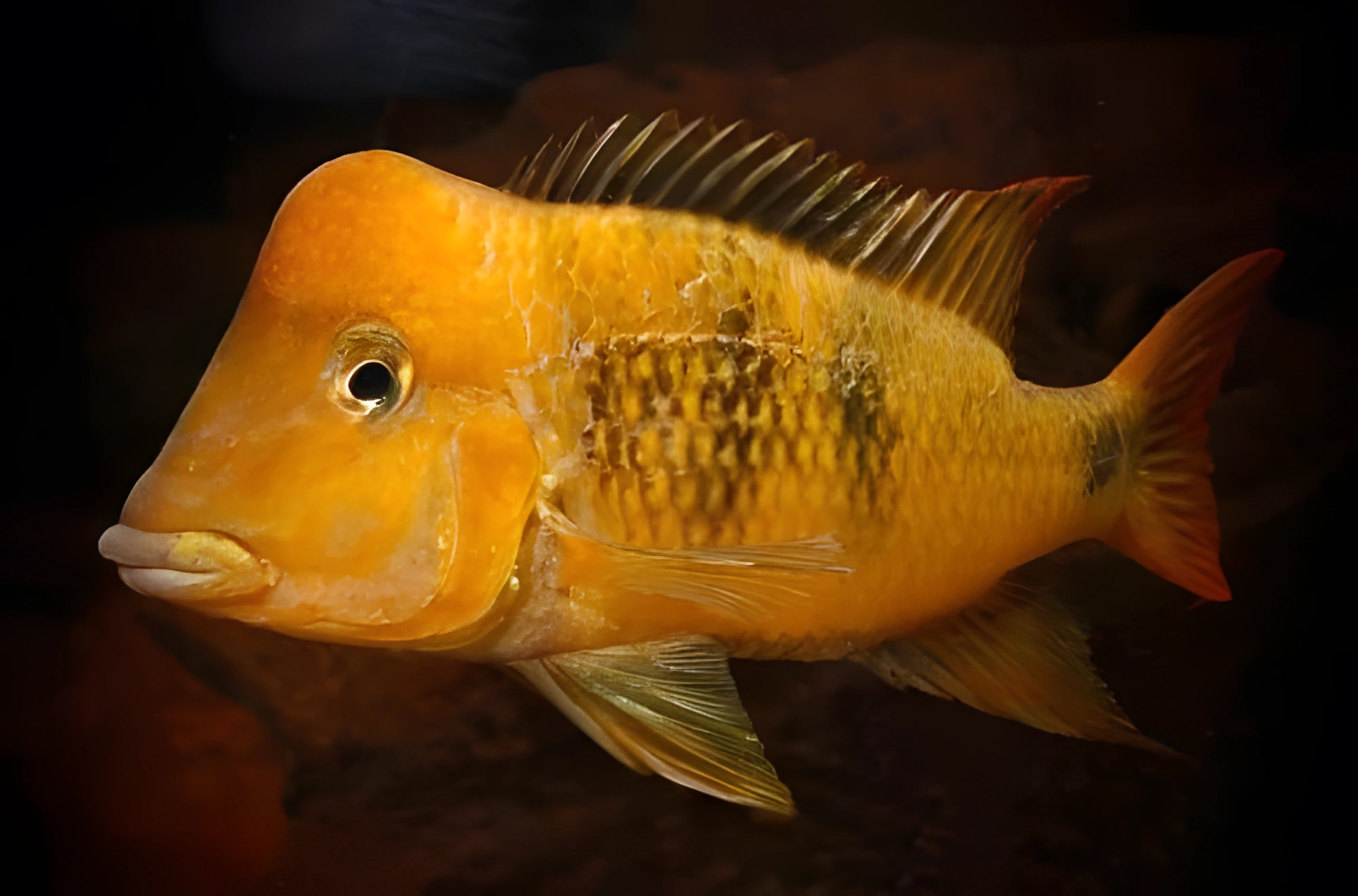
Geophagus pellegrini, also known as the Yellow Hump Geophagus (scientific name Geophagus pellegrini), belongs to the Cichlidae family. This fish was named in honor of the French zoologist Jacques Pellegrin, who discovered it. Although it is not often encountered in amateur aquariums, this species could be a wonderful addition to a freshwater aquarium. It is known for its relative ease of care and breeding, as well as good compatibility with many other aquarium inhabitants.
- Required aquarium volume
- 250 L
- Size in aquarium
- 13 – 15 cm
- Temperature
- 25 – 30 °C
- Temperament
- Peaceful (regular)
Parameters
Water pHSlightly acidic (5) – Slightly acidic (6)
Water dHVery soft (0) – Soft (5)
Water salinityno salt (freshwater)
Size in aquarium13 – 15 cm
Lifespan10 years
TemperamentPeaceful (regular)
Toward small fishnot a predator
Required aquarium volume250 L
Lightingdimmed
Substratesandy (regular, light)
Water flowweak
FeedingSinking (any)
CareMedium group (6–8 individuals)
Description
Adults reach a size of 13–15 cm. Males are generally somewhat larger than females and have pointed tips on their dorsal and anal fins, where the last rays are elongated. An important feature of males is the nuchal hump that forms on their head, which becomes quite prominent in dominant ("alpha") individuals. The coloration of the fish varies from orange to yellow, with characteristic rows of dark dashes across the body.
Habitat
Its natural habitat is in South America. This species is endemic to the San Juan River basin, which flows through the Chocó department in northwestern Colombia. Geophagus pellegrini inhabits diverse biotopes: it has been observed in narrow channels with dense aquatic vegetation and silty bottoms, as well as in more open sections of the riverbed with sandy substrate, abundant driftwood, but no aquatic plants.
Behavior and Compatibility
During spawning, these fish actively protect their offspring, which can make them less-than-ideal neighbors, especially in small aquariums. At other times, however, they are peaceful and calm fish, capable of coexisting successfully with other non-aggressive freshwater species. Intraspecific relationships revolve around the dominance of the alpha male, while weaker individuals are generally not attacked by him. It is recommended to keep these fish in groups of 5–8 individuals of both sexes.
Care and Maintenance
For a group of 5–8 individuals, the optimal aquarium volume starts from 250 liters. Geophagus pellegrini looks most natural in conditions that mimic its natural biotopes, for example, under dim lighting among driftwood and large boulders or stones placed on the bottom. The substrate is a key element of the setup: a soft sandy substrate must be used, as this will allow the fish to feed normally, as mentioned earlier. For long-term successful keeping, constant maintenance of high water quality is required. It is important to avoid sudden fluctuations in temperature and hydrochemical parameters, and also to prevent the accumulation of dangerous concentrations of nitrogen cycle products — ammonia, nitrites, and nitrates. For this purpose, an effective filtration system is installed, and regular aquarium maintenance is performed. Maintenance includes weekly partial water changes, cleaning the substrate of organic waste, checking and maintaining equipment, and other procedures.
Diet
This fish feeds from the bottom; it sifts portions of the substrate through its mouth, searching for small invertebrates. This feeding method implies that a sandy substrate must be provided in the aquarium. Geophagus pellegrini readily accepts most common sinking foods, such as dry flakes and pellets. The diet can be supplemented with frozen brine shrimp, daphnia, and pieces of bloodworms.
Breeding and Reproduction
Under favorable conditions, the chances of fry appearing are quite high. The dominant male forms a temporary pair with one of the females, but this bond can last for a long time. The pair chooses an area on the aquarium bottom for spawning. The female lays several dozen eggs on a flat surface, and after fertilization, she takes them into her mouth. The eggs remain in this "shelter" throughout the incubation period, which lasts several days. After hatching, the fry also continue to stay in the female's mouth. She periodically releases them for short periods for feeding. Over time, these intervals increase, and eventually, the fry begin to swim freely. Throughout this period, the male vigilantly guards the female and her offspring from any potential danger.
Diseases
The main cause of diseases often lies in the keeping conditions: if they go beyond acceptable limits, immunity decreases, making the fish vulnerable to various infections inevitably present in the environment. At the first suspicion of illness, it is important first of all to check the water parameters and ensure there are no dangerous concentrations of nitrogen cycle products. Often, restoring normal, suitable conditions promotes recovery. However, in some cases, medication may be required. Detailed information on symptoms and treatment methods is presented in the "Aquarium Fish Diseases" section.
How to choose
When selecting individuals, attention should be paid to the cleanliness of the skin and fins: any spots, ulcers, or signs of tissue damage may indicate bacterial infections. A healthy fish should be active, have clear eyes, and normal breathing without signs of rapid gill cover movement. Avoid purchasing fish with sunken bellies or signs of stunted growth, as these often indicate poor keeping conditions in the past.
Since the species is sensitive to water quality, it is recommended to assess the condition of the aquarium in the store: the presence of cloudy water, accumulations of organic matter on the bottom, or dead individuals in neighboring tanks poses a serious risk. It is advisable to purchase young individuals from the same group to facilitate their further adaptation in the community tank. Observe the fish's behavior: they should show curiosity towards the substrate, performing characteristic sifting movements.
Frequently asked questions
The essentials: size, tank volume, water parameters and care
How big does Geophagus pellegrini get?
An adult reaches 13–15 cm in length. Plan the tank around the maximum size: the fish quickly outgrows a cramped setup.
What size aquarium does Geophagus pellegrini need?
The minimum recommended volume is 250 L. A smaller tank speeds up nitrate build-up and raises stress levels.
What water parameters does Geophagus pellegrini need?
Temperature 25–30 °C, pH 5–6, hardness 0–5 dGH. Stability matters more than exact values: sudden swings are harder on the fish than a small deviation from the ideal.
How long does Geophagus pellegrini live?
Around 10 years when kept properly. Lifespan depends directly on tank volume, water quality and a varied diet.
Is Geophagus pellegrini aggressive?
Temperament: peaceful (regular). Keep this in mind when choosing tank mates.
How many Geophagus pellegrini should be kept together?
Recommended setup: medium group (6–8 individuals). Ignoring this is a common cause of stress and disease.
What does Geophagus pellegrini eat?
Diet type: sinking (any). Feed small portions that are finished within a couple of minutes — overfeeding does more harm than underfeeding.
What is the scientific name of Geophagus pellegrini?
The scientific name of the species is Geophagus pellegrini, family Cichlids (Cichlidae).