Temperature24 – 32 °C
Natural range
- Brazil area
CichlidsConservation status: Least concern LC
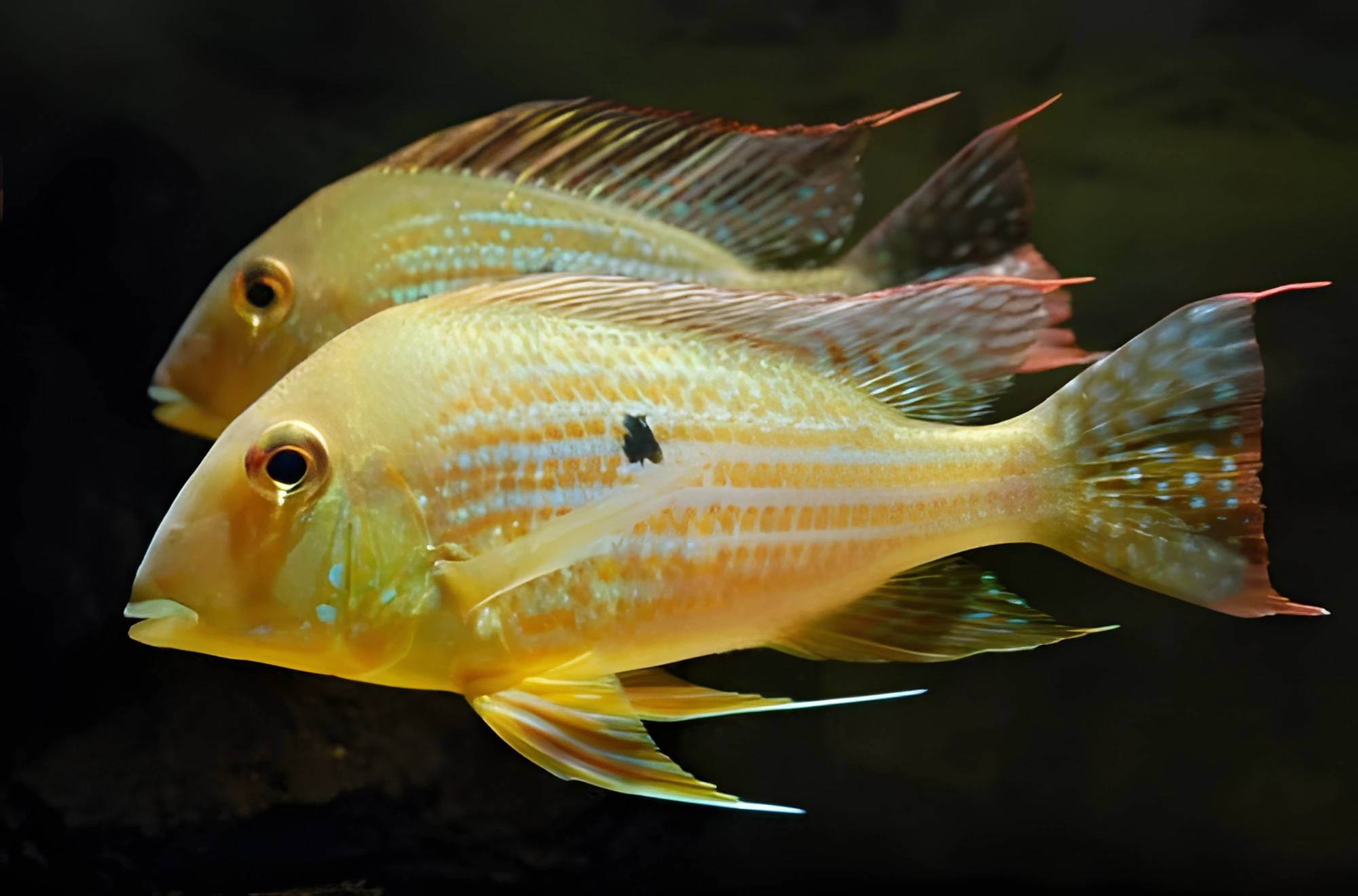
Geophagus neambi, widely known as Geophagus neambi or Geophagus Tocantins, is a member of the Cichlidae family. This popular American cichlid is actively offered to buyers, and its keeping, as well as breeding, does not present particular difficulties. It adapts perfectly to life with other fish species. This scientific name comes from the acronym NEAMB, which in Portuguese means the Federal University of Tocantins State (Brazil), paying tribute to the scientists of this institution for their contribution to the study of the aquatic fauna of the river of the same name.
- Required aquarium volume
- 600 L
- Size in aquarium
- 17 – 20 cm
- Temperature
- 24 – 32 °C
- Temperament
- Peaceful (regular)
Parameters
Water pHSlightly acidic (5.5) – Neutral (7.5)
Water dHVery soft (1) – Medium hardness (10)
Water salinityno salt (freshwater)
Size in aquarium17 – 20 cm
Lifespan9 years
TemperamentPeaceful (regular)
Toward small fishnot a predator
Required aquarium volume600 L
Lightingdimmed
Substratesandy (regular, light)
Water flowweak
FeedingSinking (any)
CareMedium group (6–8 individuals)
Description
Adults of this species reach a length of 17 to 20 cm. They have weakly expressed sexual dimorphism, meaning it is quite difficult to visually distinguish a male from a female. The body coloration is yellow-orange, with blue horizontal stripes. The fins and tail have a reddish tint, adorned with turquoise markings. A large dark spot can be observed in the central part of the body.
Habitat
The natural habitats of this species are in South America, specifically in the Tocantins River basin, which is considered one of the largest on the continent. These fish prefer shallow waters, where the bottom is predominantly sandy, located near banks or islands. The conditions here largely resemble those in which Geophagus species live in the Amazon. Depending on the specific locality, their biotope may include various elements such as roots, fallen tree branches, stones, and other plant debris.
Behavior and Compatibility
By nature, these fish are quite peaceful and calm, except during spawning periods when they show intolerance towards other inhabitants, striving to protect their offspring. In a spacious aquarium, this usually does not become a problem. However, in limited space, it may be necessary to temporarily isolate the breeding pair. The rest of the time, they get along well with other non-aggressive freshwater species. Within the species group, a hierarchy forms, with alpha males holding the dominant position. It is important to maintain a group size of at least 5–8 individuals to avoid aggression from stronger fish towards weaker ones.
Care and Maintenance
For a group consisting of 5–8 individuals, an aquarium of at least 600 L is recommended. Although the decor can be chosen at the discretion of the aquarist, it is desirable to recreate conditions as close as possible to the natural environment: subdued light, an abundance of driftwood, large stones, and rock fragments. Special attention should be paid to the substrate; due to the feeding habits of these cichlids, only sandy substrate should be used. Geophagus neambi is very sensitive to deteriorating water quality, as well as to fluctuations in hydrochemical parameters and temperature, so it is undesirable to place them in a biologically unstable aquarium. Stable water conditions are ensured by an effective filtration system and regular maintenance, which includes weekly partial water changes with fresh water, timely removal of organic residues, and strict control over ammonia, nitrite, and nitrate levels.
Diet
These fish are accustomed to feeding at the bottom, sifting through the substrate with their mouths in search of small invertebrates. In a home aquarium, they readily accept most standard aquarium fish foods. It is important that the food is sinking and consists of small particles. Despite their size, large pieces of food may be too big for them and get stuck in their mouths.
Breeding and Reproduction
Breeding Geophagus Tocantins does not present particular difficulties. Under favorable conditions, such as high water quality and a balanced diet, spawning occurs regularly. Fish reach sexual maturity at one year of age. During the breeding season, the male and female form a temporary pair. Then, choosing a suitable spot in the aquarium, usually a stone or a piece of driftwood, they lay up to 200 eggs on the chosen surface. The female stays near the clutch to protect it, while the male "patrols" the territory, chasing away any fish that might pose a threat. Sometimes the female may incubate the eggs in her mouth for additional safety. Fry appear after a few days. The parents care for their offspring for about two weeks, after which the fry begin independent swimming.
Diseases
The main cause of diseases often lies in the keeping conditions: if they go beyond acceptable limits, immunity decreases, making the fish vulnerable to various infections inevitably present in the environment. At the first suspicion of illness, it is important first of all to check the water parameters and ensure there are no dangerous concentrations of nitrogen cycle products. Often, restoring normal, suitable conditions promotes recovery. However, in some cases, medication may be required. Detailed information on symptoms and treatment methods is presented in the "Aquarium Fish Diseases" section.
How to choose
When choosing Geophagus neambi, preference should be given to individuals that are active and have clean, undamaged fins. It is important to carefully inspect the fish for the absence of ulcers, white spots, or erosions on the head and lateral line, which often indicate unsatisfactory keeping conditions in the store. Particular attention should be paid to the abdomen: it should not be sunken, which is a sign of exhaustion or parasitic diseases.
- acquire a group of 5–8 individuals, as this species is schooling and experiences severe stress when alone
- avoid purchasing fish that appear lethargic, hide in corners, or have an unnaturally bloated abdomen
- inquire about the keeping conditions from the seller, as Geophagus neambi are extremely sensitive to water quality and organic accumulation, making them poor candidates for purchase from overcrowded aquariums with poor filtration
Frequently asked questions
The essentials: size, tank volume, water parameters and care
How big does Geophagus neambi get?
An adult reaches 17–20 cm in length. Plan the tank around the maximum size: the fish quickly outgrows a cramped setup.
What size aquarium does Geophagus neambi need?
The minimum recommended volume is 600 L. A smaller tank speeds up nitrate build-up and raises stress levels.
What water parameters does Geophagus neambi need?
Temperature 24–32 °C, pH 5.5–7.5, hardness 1–10 dGH. Stability matters more than exact values: sudden swings are harder on the fish than a small deviation from the ideal.
How long does Geophagus neambi live?
Around 9 years when kept properly. Lifespan depends directly on tank volume, water quality and a varied diet.
Is Geophagus neambi aggressive?
Temperament: peaceful (regular). Keep this in mind when choosing tank mates.
How many Geophagus neambi should be kept together?
Recommended setup: medium group (6–8 individuals). Ignoring this is a common cause of stress and disease.
What does Geophagus neambi eat?
Diet type: sinking (any). Feed small portions that are finished within a couple of minutes — overfeeding does more harm than underfeeding.
What is the scientific name of Geophagus neambi?
The scientific name of the species is Geophagus neambi, family Cichlids (Cichlidae).