Temperature24 – 28 °C
Natural range
- Rio Negro basin
- Amazonas State
- Orinoco River upper tributaries
- Colombia area
CichlidsConservation status: Least concern LC
Other scientific names: Geophagus daemon
Although this fish bears a fearsome name, Geophagus daemon, or Satanperca daemon (scientific name Satanoperca daemon), is actually a rather peaceful member of the Cichlidae family. Despite its unusual name, it poses no threat to other aquarium inhabitants, even if they are significantly smaller. However, beyond compatibility issues, its maintenance will be a significant challenge, as this species is demanding regarding diet and high water quality standards.
- Required aquarium volume
- 500 L
- Size in aquarium
- 25 cm
- Temperature
- 24 – 28 °C
- Temperament
- Peaceful (regular)
Parameters
Water pHAcidic (3.5) – Slightly acidic (6)
Water dHVery soft (1) – Soft (5)
Water salinityno salt (freshwater)
Size in aquarium25 cm
Lifespan8 years
TemperamentPeaceful (regular)
Toward small fishnot a predator
Required aquarium volume500 L
Lightingdimmed
Substratesandy (regular, light)
Water flowweak
FeedingHigh protein (predominantly meat)
CareMedium group (6–8 individuals)
Description
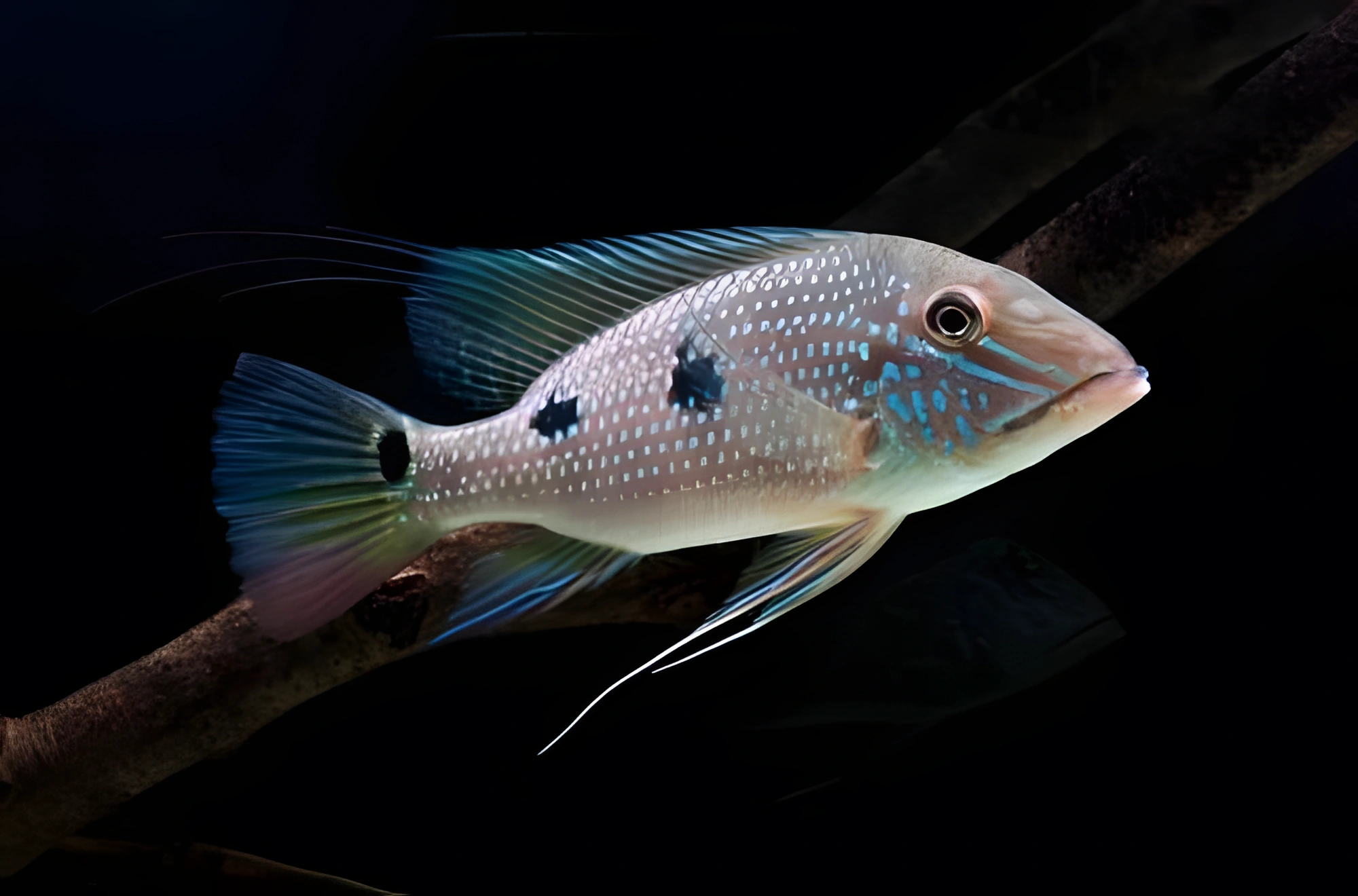
Adults can reach 20–25 cm in length. The body and fins of the fish are gray with numerous blue speckles. The lower edge of the tail, as well as the anal and pelvic fins, attract attention with red hues. A distinctive feature is three large black spots located on the sides of the body. Sexual dimorphism is weakly expressed: males and females are almost identical in appearance.
Habitat
The natural habitats of this fish are in South America, covering the Rio Negro basin in the Brazilian state of Amazonas, as well as the upper tributaries of the Orinoco River in Colombia and Venezuela. A characteristic feature of their natural environment is slow, winding streams flowing through tropical forests. The bottom of such bodies of water usually consists of sand or silt, covered with a thick layer of fallen leaves and numerous snags. The water is saturated with organic matter, which gives it a pronounced brown tint, and semi-darkness usually prevails beneath the surface.
Behavior and Compatibility
The name of this species does not at all correspond to its behavior: Geophagus daemon is a peaceful and calm fish. It gets along perfectly with other non-aggressive species and poses no threat even to the smallest aquarium neighbors. Representatives of this species prefer to stay in groups of 5–6 individuals, with the need for a school being especially pronounced in young fish.
Care and Maintenance
For a group of 5–6 fish, an aquarium of at least 500 liters is recommended. The design of such an aquarium should be simple and dictated by the dietary characteristics of Geophagus daemon. The only decorative elements needed are a sandy substrate and a few snags. Lighting should be subdued, and aquatic plants are not essential. It is important that the substrate does not contain stones that could get stuck in the fish's mouth during feeding. Maintaining high water quality is critically important for long-term keeping, as the fish are extremely sensitive to the slightest fluctuations in hydrochemical parameters and the accumulation of nitrogen cycle products. In addition, the water must include dissolved tannins. The classic method of using dry leaves for this purpose is not suitable here due to substrate fouling. The solution is to introduce essences containing tannins (a form of tannins), which can be purchased at pet stores or ordered online. A key role in maintaining a healthy ecosystem is played by the filtration system; it should absolutely not be skimped on. It is important to consider that during feeding, the fish raise a cloud of sandy suspension, which can lead to a reduction in power or even damage to the filter if sand constantly enters the system. Therefore, consultation with a specialist when choosing a filter model is highly desirable. Weekly aquarium maintenance includes changing 50–70% of the water volume and regularly removing food debris and excrement.
Diet
The diet of Geophagus daemon in its natural environment consists of zoo- and phytoplankton, which the fish obtains by taking sand or silt into its mouth and sifting it through its gills. In a home aquarium, small sinking foods are recommended. This can be a mixture of dry flakes and granules enriched with vegetable additives, as well as pieces of frozen or fresh bloodworms, shrimp meat, mollusks, and Artemia. The diet can also include plant-based products, such as finely chopped vegetables and fruits characteristic of South America.
Breeding and Reproduction
Reproduction of this species in artificial conditions in home aquariums is often associated with difficulties. However, successful spawnings have been repeatedly recorded at specialized fish farms and in large professional aquarium complexes. When the breeding season arrives, the male and female form a stable pair and seek a secluded place for spawning. Together, they begin to create a peculiar nest — a deep pit dug in the bottom, its diameter can reach 1–2 meters. This territory becomes their home, which the pair will jealously guard from any external intrusions. After some time, the female lays the first portion of eggs, which the male immediately fertilizes. This process is repeated until the total number of eggs reaches approximately 200. The clutch is carefully covered with a layer of leaves. The female remains near the eggs, providing protection, while the male constantly patrols the boundaries of their territory. The development of the eggs takes about 3 days, after which, approximately two days later, the fry begin to swim actively. The parents continue to care for their offspring, protecting them until the fry reach a sufficient size.
Diseases
The main cause of diseases in fish is most often unfavorable keeping conditions. If environmental parameters go beyond acceptable limits, the fish's immune system is suppressed, making it vulnerable to various infections constantly present in the environment. At the first suspicion of illness, it is necessary to immediately check the water parameters and ensure there are no dangerous concentrations of nitrogen cycle products. Restoring optimal conditions often contributes to self-healing. However, in some cases, medication may be required. More detailed information on symptoms and treatment methods can be found in the “Aquarium Fish Diseases” section.
How to choose
When choosing individuals, preference should be given to active fish with clean fins and no visible damage to the body. It is important to avoid specimens with signs of emaciation, sunken bellies, or unnaturally bloated abdomens. Since the species is extremely sensitive to water quality, it is worth observing the fish's behavior in the store: healthy individuals show interest in the substrate, making characteristic movements of sifting sand through their gills. Avoid buying fish that appear apathetic, stay near the surface, or show signs of head and lateral line erosion, which often indicates chronic poor keeping conditions.
Frequently asked questions
The essentials: size, tank volume, water parameters and care
How big does Geophagus daemon get?
An adult reaches 25 cm in length. Plan the tank around the maximum size: the fish quickly outgrows a cramped setup.
What size aquarium does Geophagus daemon need?
The minimum recommended volume is 500 L. A smaller tank speeds up nitrate build-up and raises stress levels.
What water parameters does Geophagus daemon need?
Temperature 24–28 °C, pH 3.5–6, hardness 1–5 dGH. Stability matters more than exact values: sudden swings are harder on the fish than a small deviation from the ideal.
How long does Geophagus daemon live?
Around 8 years when kept properly. Lifespan depends directly on tank volume, water quality and a varied diet.
Is Geophagus daemon aggressive?
Temperament: peaceful (regular). Keep this in mind when choosing tank mates.
How many Geophagus daemon should be kept together?
Recommended setup: medium group (6–8 individuals). Ignoring this is a common cause of stress and disease.
What does Geophagus daemon eat?
Diet type: high protein (predominantly meat). Feed small portions that are finished within a couple of minutes — overfeeding does more harm than underfeeding.
What is the scientific name of Geophagus daemon?
The scientific name of the species is Satanoperca daemon, family Cichlids (Cichlidae). It also appears in the literature as: Geophagus daemon.