Temperature20 – 24 °C
Natural range
- Sarawak area
- Borneo area
LoachesConservation status: Near threatened NT
Endemic to the island of Borneo, Gastromyzon stellatus became known after its discovery in the Skrang and Lupar river basins, located in the Malaysian state of Sarawak in the northeast of the island. This species belongs to the family Balitoridae, also known as river loaches.
- Required aquarium volume
- 60 L
- Size in aquarium
- 4 – 5 cm
- Temperature
- 20 – 24 °C
- Temperament
- Peaceful (regular)
Parameters
Water pHSlightly acidic (6) – Neutral (7.5)
Water dHVery soft (1) – Hard (12)
Water salinityno salt (freshwater)
Size in aquarium4 – 5 cm
Lifespan4 years
TemperamentPeaceful (regular)
Toward small fishnot a predator
Required aquarium volume60 L
Lightingmoderate or bright
Substraterocky (rock formations, boulders, etc.)
Water flowstrong
FeedingPlant-based (algae, vegetables)
CareSmall group (3–4 individuals)
Description
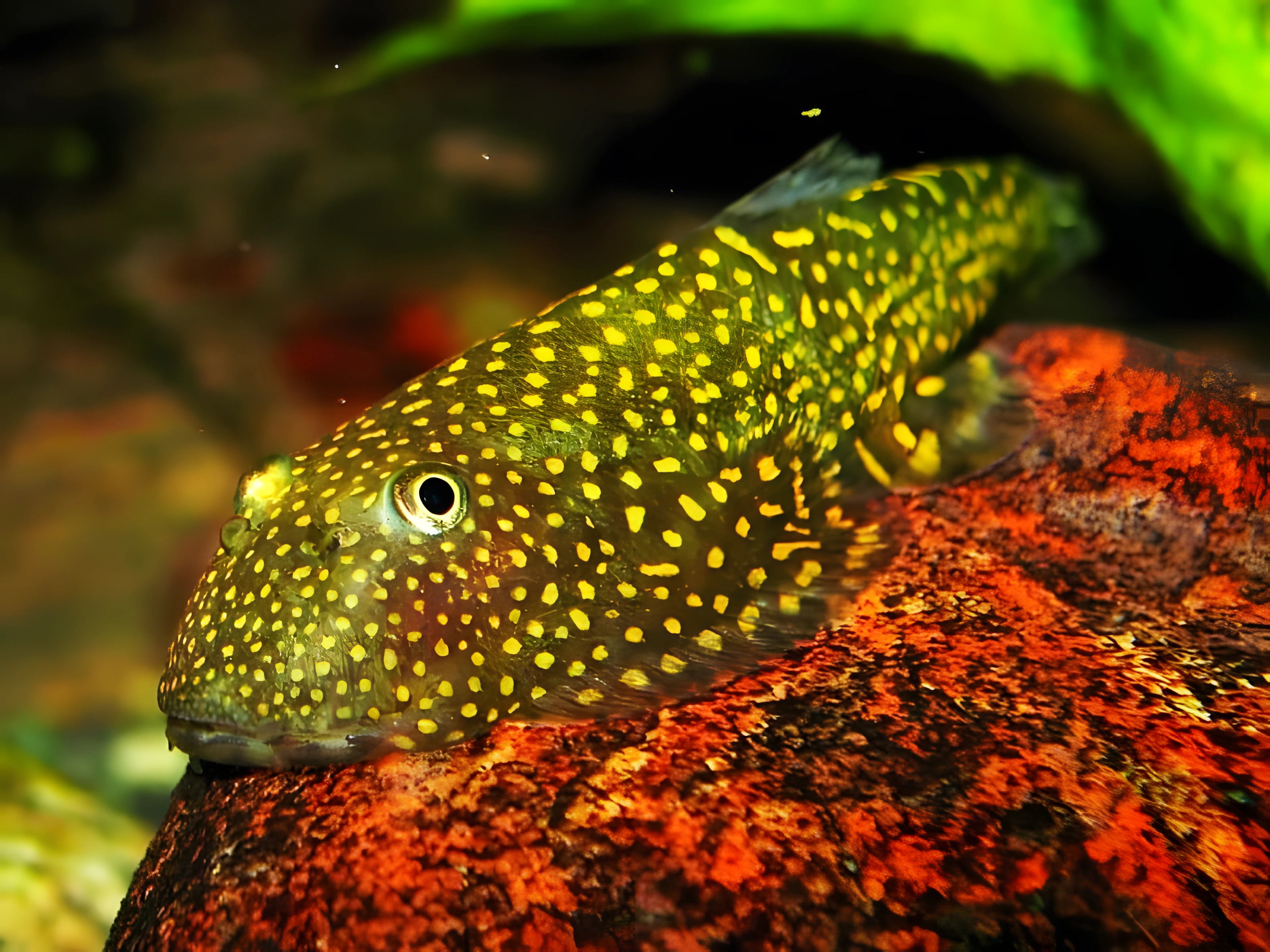
Gastromyzon stellatus has a flattened body characteristic of the genus, adapted to life in strong currents. The main coloration is dark brown, with numerous small yellow spots scattered over the entire body and head, which is reflected in the species' name. Adults reach a length of about 5 cm. Sexual dimorphism is weakly expressed: females usually appear rounder, while mature males may develop noticeable tubercles on their heads.
Habitat
The species is endemic to the island of Borneo, found in the Sarawak, Sadong, and Lupar river basins. It inhabits shallow streams with fast currents, clear, and oxygen-rich water. It prefers areas with stony or gravel bottoms, where a rich biofilm of algae and microorganisms develops on rocks and boulders.
Behavior and Compatibility
This is a peaceful, diurnal fish that lives on the bottom. In nature, Gastromyzon live in small groups, so it is recommended to keep them in an aquarium in a shoal of at least 4 individuals to encourage natural behavior. They are compatible with other small, peaceful fish that prefer similar living conditions, but due to their feeding habits, they may lose out in competition for food to faster species.
Care and Maintenance
For keeping, an aquarium with powerful filtration and aeration is necessary, providing a strong current and a high level of dissolved oxygen. Fine gravel or sand is suitable as substrate; smooth stones and driftwood are essential, on which the fish will graze. The aquarium should be mature, with an established ecosystem and a natural algal film on decorations. A tight lid is required, as the fish are capable of moving on the glass above the water level.
Diet
In nature, it feeds mainly on algal growths and microorganisms (biofilm). In the aquarium, the diet is supplemented with high-quality dry foods in the form of sinking tablets for catfish, specialized foods for herbivorous fish, and small frozen foods. It is important to ensure an abundance of algae on the stones, as constant scraping of food is fundamental to their life.
Breeding and Reproduction
Breeding in an aquarium is extremely difficult and rarely occurs. Spawning is paired; males prepare small depressions in the substrate under stones, where the female lays her eggs. After fertilization, the male may cover the clutch with substrate. Fry appear after some time and begin to feed on microorganisms on surfaces. No special conditions for stimulating reproduction in home aquariums have been developed.
Diseases
The species is sensitive to water quality, especially to the accumulation of nitrogenous compounds and low oxygen content. Under poor keeping conditions, fish quickly lose activity and are susceptible to bacterial infections. Prevention involves maintaining cleanliness, stable water parameters, and ensuring a high level of aeration. It is not recommended to use aggressive medications unless absolutely necessary.
How to choose
When purchasing, choose active fish that constantly move across surfaces or glass, scraping food. Avoid individuals with signs of emaciation, fin damage, or apathetic behavior. Healthy fish should have a robust physique and clean coverings without whitish film or sores. It is advisable to acquire specimens that have already adapted to aquarium conditions and accept the offered food.
Frequently asked questions
The essentials: size, tank volume, water parameters and care
How big does Gastromyzon stellatus get?
An adult reaches 4–5 cm in length. Plan the tank around the maximum size: the fish quickly outgrows a cramped setup.
What size aquarium does Gastromyzon stellatus need?
The minimum recommended volume is 60 L. A smaller tank speeds up nitrate build-up and raises stress levels.
What water parameters does Gastromyzon stellatus need?
Temperature 20–24 °C, pH 6–7.5, hardness 1–12 dGH. Stability matters more than exact values: sudden swings are harder on the fish than a small deviation from the ideal.
How long does Gastromyzon stellatus live?
Around 4 years when kept properly. Lifespan depends directly on tank volume, water quality and a varied diet.
Is Gastromyzon stellatus aggressive?
Temperament: peaceful (regular). Keep this in mind when choosing tank mates.
How many Gastromyzon stellatus should be kept together?
Recommended setup: small group (3–4 individuals). Ignoring this is a common cause of stress and disease.
What does Gastromyzon stellatus eat?
Diet type: plant-based (algae, vegetables). Feed small portions that are finished within a couple of minutes — overfeeding does more harm than underfeeding.
What is the scientific name of Gastromyzon stellatus?
The scientific name of the species is Gastromyzon stellatus, family Balitoridae (River loaches).