Temperature20 – 24 °C
Natural range
- Borneo area
- Sabah area
LoachesConservation status: Least concern LC
Other scientific names: Lepidoglanis monticola
Gastromyzon monticola, known as the Gastromyzon monticola, is a representative of the Balitoridae family (River Loaches). This species is endemic to the island of Borneo, also known as Kalimantan. Its natural habitat is in the Tampassuk River basin, which flows through Kudat — the northernmost and smallest region in the Malaysian state of Sabah. The river originates in Kinabalu National Park.
- Required aquarium volume
- 100 L
- Size in aquarium
- 7 – 8 cm
- Temperature
- 20 – 24 °C
- Temperament
- Peaceful (regular)
Parameters
Water pHSlightly acidic (6) – Slightly alkaline (8.5)
Water dHVery soft (2) – Hard (12)
Water salinityno salt (freshwater)
Size in aquarium7 – 8 cm
Lifespan5 years
TemperamentPeaceful (regular)
Toward small fishnot a predator
Required aquarium volume100 L
Lightingmoderate or bright
Substraterocky (rock formations, boulders, etc.)
Water flowstrong
FeedingPlant-based (algae, vegetables)
CareSmall group (3–4 individuals)
Description
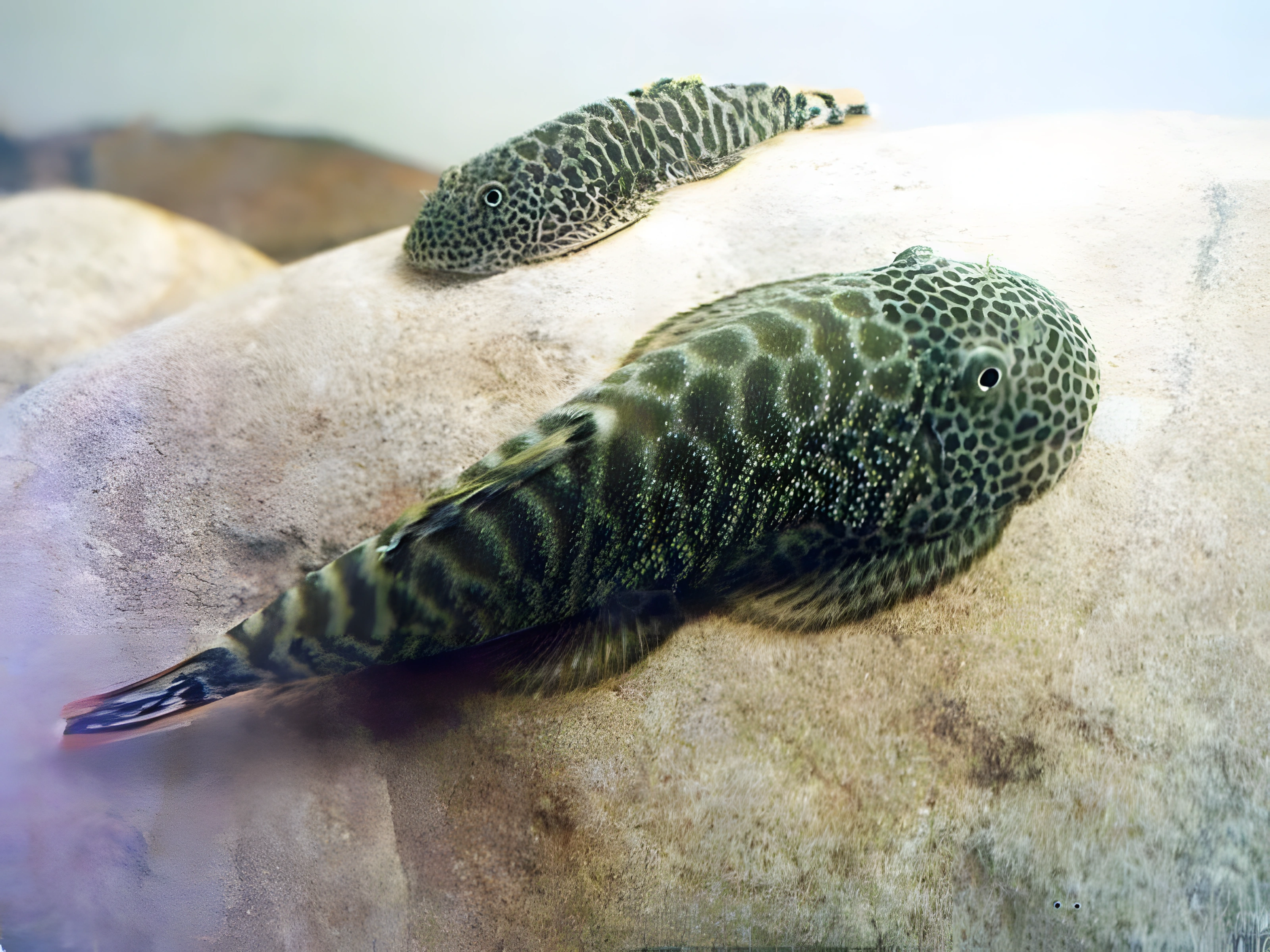
Gastromyzon monticola is a small fish from the river loach family, possessing a unique morphology for life in fast-flowing currents. The body and head are greatly flattened, and the pectoral and pelvic fins are positioned horizontally and partially fused, forming a powerful suction disc. This allows the fish to firmly attach to rocks and move across them. Adults reach 7–8 cm in length. Sexual dimorphism is subtle, but females are typically larger and have a wider body, which is noticeable when viewed from above.
Habitat
The species is endemic to the island of Borneo (Malaysia). In nature, it inhabits the headwaters of mountain rivers and streams with fast currents, clean, and oxygen-rich water. It prefers areas with a rocky or gravel bottom, where a rich biofilm of algae and microorganisms forms on the surface of the stones. The fish often stay in zones with moderate or strong currents, occupying spots behind boulders or on their vertical surfaces.
Behavior and Compatibility
This is a peaceful but territorial fish. Intraspecific skirmishes for the best feeding spots are common, but they rarely result in injuries. In an aquarium, it is recommended to keep a group of 4 or more individuals to observe their natural social behavior. The species is primarily bottom-dwelling, active during the day. It is well compatible with small schooling fish that occupy the middle and upper water layers, as well as with other inhabitants of fast-flowing streams.
Care and Maintenance
For keeping, an aquarium of at least 100 liters is required with strong aeration and powerful filtration, ensuring a high water flow rate. Rounded pebbles and large stones, which will eventually be covered with algae, are best used as substrate. Lighting should be bright enough to stimulate biofilm growth. A tight-fitting lid is essential, as the fish can move along the glass and may leave the aquarium. Water parameters: temperature 20–24 °C, pH 6.0–8.5, hardness 2–12 dGH.
Diet
In nature, it feeds primarily on algae and microorganisms scraped from rocks. In the aquarium, the diet should include high-quality dry foods, frozen or live foods (brine shrimp, bloodworms). It is important to avoid an excess of protein-rich food, as this can cause digestive problems. It is recommended to use specialized plant-based foods and ensure the presence of rocks with natural algal growth in the aquarium.
Breeding and Reproduction
Breeding in an aquarium is possible if suitable conditions are provided. Spawning occurs on a rocky substrate. The eggs are small, non-adhesive, and settle in crevices between stones. Fry are very small and require an abundance of microorganisms (infusoria) in the first days of life. Successful breeding requires a stable environment with good water quality and the presence of hiding places for offspring among large gravel.
Diseases
The species is sensitive to low oxygen levels and organic water pollution. Infections caused by bacteria or parasites (e.g., flagellates) are common under poor keeping conditions. Prevention involves maintaining high water purity, regular water changes, and ensuring active circulation. When treating, the high sensitivity of the fish to certain medications and salts should be considered.
How to choose
When purchasing, choose active fish that show interest in foraging on rocks and glass. Avoid individuals with signs of emaciation, sunken bellies, or fin damage. Healthy fish should firmly attach to surfaces and not have whitish coatings or spots on their bodies. It is recommended to inquire about what the fish were fed in the store to facilitate adaptation to a new diet.
Frequently asked questions
The essentials: size, tank volume, water parameters and care
How big does Gastromyzon monticola get?
An adult reaches 7–8 cm in length. Plan the tank around the maximum size: the fish quickly outgrows a cramped setup.
What size aquarium does Gastromyzon monticola need?
The minimum recommended volume is 100 L. A smaller tank speeds up nitrate build-up and raises stress levels.
What water parameters does Gastromyzon monticola need?
Temperature 20–24 °C, pH 6–8.5, hardness 2–12 dGH. Stability matters more than exact values: sudden swings are harder on the fish than a small deviation from the ideal.
How long does Gastromyzon monticola live?
Around 5 years when kept properly. Lifespan depends directly on tank volume, water quality and a varied diet.
Is Gastromyzon monticola aggressive?
Temperament: peaceful (regular). Keep this in mind when choosing tank mates.
How many Gastromyzon monticola should be kept together?
Recommended setup: small group (3–4 individuals). Ignoring this is a common cause of stress and disease.
What does Gastromyzon monticola eat?
Diet type: plant-based (algae, vegetables). Feed small portions that are finished within a couple of minutes — overfeeding does more harm than underfeeding.
What is the scientific name of Gastromyzon monticola?
The scientific name of the species is Gastromyzon monticola, family Balitoridae. It also appears in the literature as: Lepidoglanis monticola.