Temperature20 – 28 °C
Natural range
- Brazil area
CharacinsConservation status: Least concern LC
Other scientific names: Pterodiscus levis
The Silver Hatchetfish, also known as the Silver Hatchet (scientific name Gasteropelecus levis), belongs to the family Gasteropelecidae. Interestingly, this fish received its second name thanks to the naturalist Eigenmann, who discovered it in 1909. At that time, the fish's shape reminded him of a popular women's hat in Europe. This species is characterized by its unpretentiousness to keeping conditions, ease of care, and compatibility with many other aquarium inhabitants.
- Required aquarium volume
- 50 L
- Size in aquarium
- 3.5 – 6 cm
- Temperature
- 20 – 28 °C
- Temperament
- Peaceful (regular)
Parameters
Water pHSlightly acidic (5) – Neutral (7.5)
Water dHVery soft (1) – Hard (15)
Water salinityno salt (freshwater)
Size in aquarium3.5 – 6 cm
Lifespan5 years
TemperamentPeaceful (regular)
Toward small fishnot a predator
Required aquarium volume50 L
Lightingdimmed or moderate
Substrateany (no restrictions)
Water flowweak or moderate
FeedingFloating (any)
CareLarge group (10+ individuals)
Description
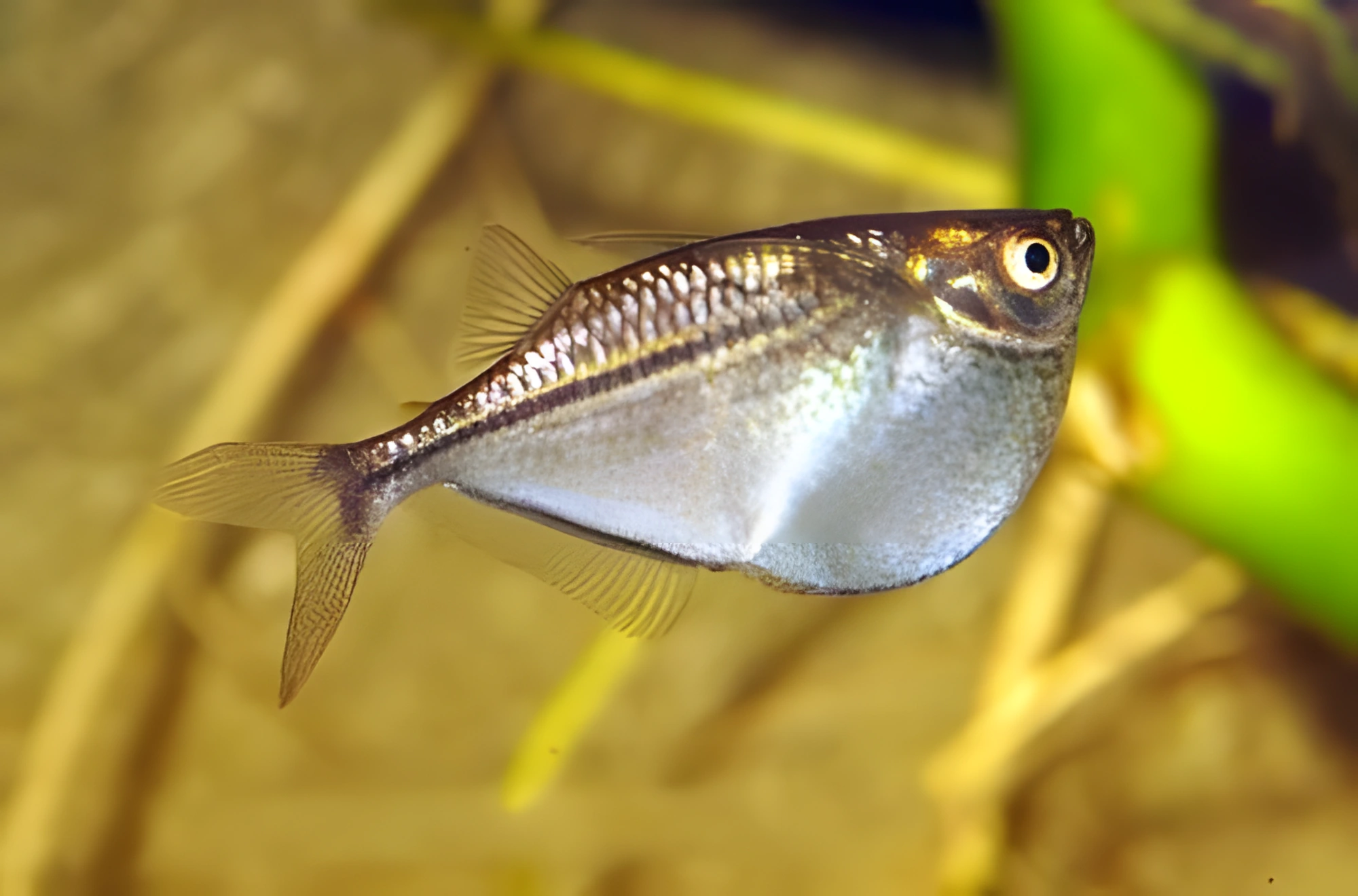
The genus Gasteropelecus includes three species that are very similar to each other. The Silver Hatchetfish, for example, is almost identical to the Common Hatchetfish (Gasteropelecus sternicla), differing only in size — it reaches about 3 cm in length. The fish's body has a typical shape with a pronounced, strongly flattened belly. The coloration is silvery, the back is gray, adorned with rows of horizontal black and yellow stripes running along the lateral line. The fins and tail are short, translucent.
Habitat
The natural habitat of this species is in South America, specifically in Brazil, in the lower Amazon River basin, including its large tributaries Tocantins and Guamá. The fish prefer calm river sections, backwaters, and floodplain lakes. They are often found in open waters with islands of floating vegetation, where they usually gather in large groups.
Behavior and Compatibility
This is a peaceful schooling fish. Due to its small size, it cannot compete with more active species, so their cohabitation should be avoided. It coexists perfectly with various small tetras and cichlids, Corydoras catfish, and other non-aggressive South American species of comparable size.
Care and Maintenance
For a school of ten fish, an aquarium of at least 50 L will be optimal. The Silver Hatchetfish spends most of its time near the water surface, so decorative arrangement does not play a decisive role for it. It is sufficient to provide several shelters in the form of groups of floating plants. The aquarist can choose the rest of the decor at their discretion, or based on the needs of other inhabitants. The presence of a lid on the tank is mandatory to prevent accidental jumps by the fish. It is widely believed that hatchetfish are capable of significant jumps out of the water, supposedly thanks to their pectoral fins resembling miniature wings. Although they, like many other fish, can indeed jump, it usually does not come to "flights." This is a relatively undemanding species. Long-term and successful keeping is possible by maintaining stable water parameters within acceptable limits of temperature and hydrochemical indicators. High water quality, i.e., a low concentration of pollutants, is ensured by the uninterrupted operation of the installed equipment, especially the filtration system, as well as regular performance of mandatory care procedures: weekly partial water changes, removal of organic waste, and similar actions.
Diet
In natural conditions, the basis of these fish's diet is small insects. However, acclimatized individuals, as well as fish bred in captivity, adapt to dry foods. It is important to note that all offered foods must remain on the water surface, as any sunken food will remain uneaten.
Breeding and Reproduction
Unfortunately, at the time of preparing this article, no successful cases of breeding these fish in home aquariums have been recorded. In their natural environment, their spawning is closely linked to seasonal changes and involves migration to flooded areas of tropical forests during the rainy season. For the average aquarist, recreating such conditions is quite a challenging task.
Diseases
Maintaining a stable biological system, providing a balanced diet, and eliminating stress factors (e.g., harassment by aggressive tank mates) are the best guarantees for preserving fish health. If the first signs of illness appear, the first thing to pay attention to is precisely these three aspects, as deviations have likely occurred in one of them. As a rule, eliminating the problem leads to self-recovery. However, if the immune system proves to be insufficiently strong, medicinal treatment may be required. More detailed information on symptoms and treatment methods can be found in the "Diseases of Aquarium Fish" section.
How to choose
When purchasing, choose active individuals with clean fins and no visible damage to the body. It is important to ensure that the fish swim in the upper layers of the water and exhibit the natural shyness characteristic of this species. Avoid specimens with signs of emaciation, sunken bellies, or film on their scales, as these fish are sensitive to stress during transport and changes in keeping conditions.
Since similar species of the genus Gasteropelecus may be sold under the name "silver hatchetfish," it is recommended to carefully examine the pattern on the body. Healthy fish should have clear horizontal lines and not show signs of apathy. Before purchasing, clarify what the fish are fed in the store, as recently arrived individuals may refuse dry foods, preferring live or frozen alternatives.
Frequently asked questions
The essentials: size, tank volume, water parameters and care
How big does Silver Hatchetfish get?
An adult reaches 3.5–6 cm in length. Plan the tank around the maximum size: the fish quickly outgrows a cramped setup.
What size aquarium does Silver Hatchetfish need?
The minimum recommended volume is 50 L. A smaller tank speeds up nitrate build-up and raises stress levels.
What water parameters does Silver Hatchetfish need?
Temperature 20–28 °C, pH 5–7.5, hardness 1–15 dGH. Stability matters more than exact values: sudden swings are harder on the fish than a small deviation from the ideal.
How long does Silver Hatchetfish live?
Around 5 years when kept properly. Lifespan depends directly on tank volume, water quality and a varied diet.
Is Silver Hatchetfish aggressive?
Temperament: peaceful (regular). Keep this in mind when choosing tank mates.
How many Silver Hatchetfish should be kept together?
Recommended setup: large group (10+ individuals). Ignoring this is a common cause of stress and disease.
What does Silver Hatchetfish eat?
Diet type: floating (any). Feed small portions that are finished within a couple of minutes — overfeeding does more harm than underfeeding.
What is the scientific name of Silver Hatchetfish?
The scientific name of the species is Gasteropelecus levis, family Freshwater Hatchetfish (Gasteropelecidae). It also appears in the literature as: Pterodiscus levis.