Temperature14 – 20 °C
Natural range
- Turkey area
- Syria area
- Iraq area
- Iran area
CyprinidsConservation status: Least concern LC
Other scientific names: Discognathus crenulatus, Discognathus obtusus, Discognathus rufus
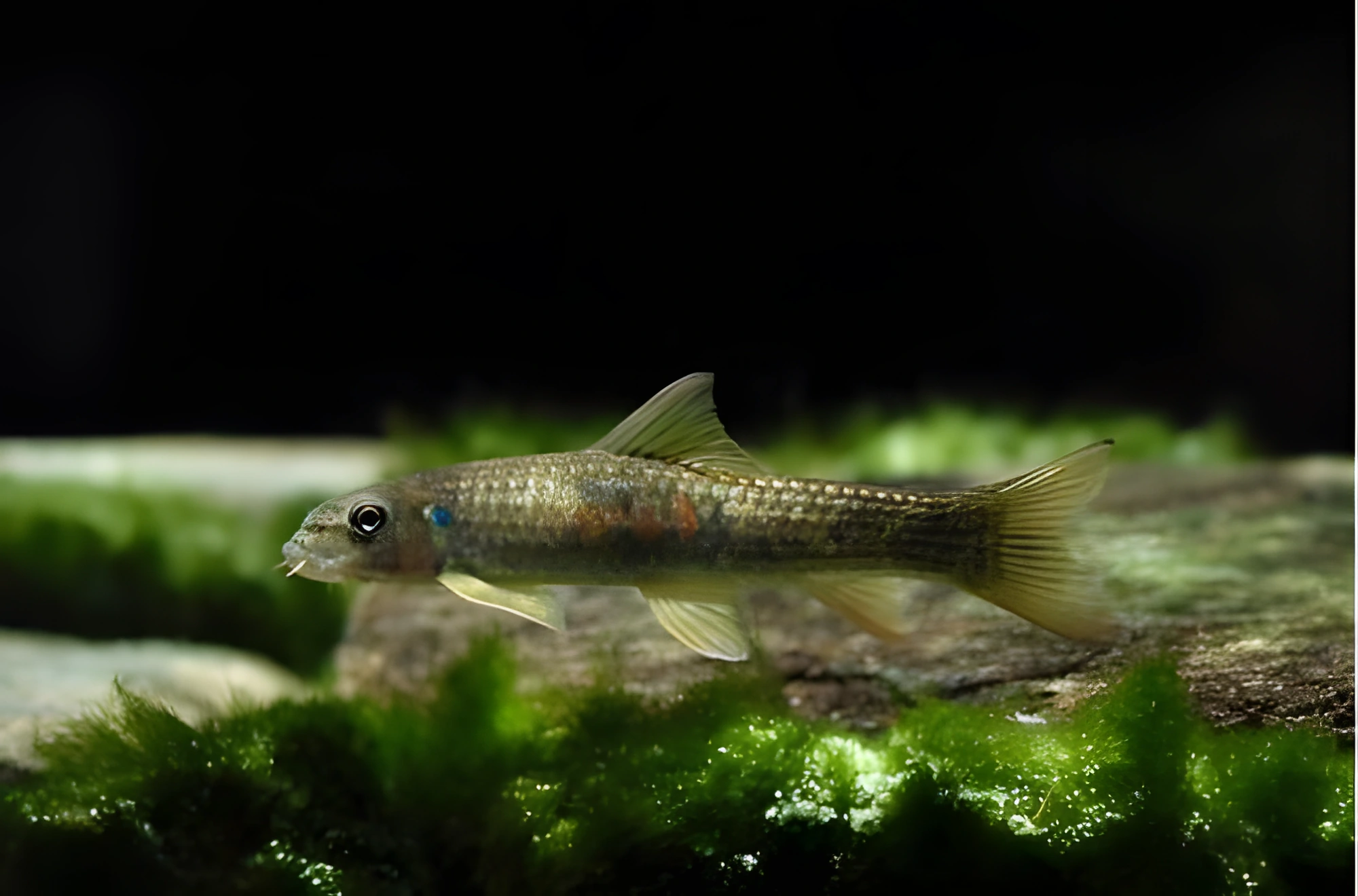
Garra rufa, also known as the Doctor Fish (scientific name Garra rufa), belongs to the Cyprinidae family. It is rightly considered one of the most recognizable fish, but its popularity is not associated with home aquariums. This species is actively used in medicine and cosmetology, especially in resorts and sanatoriums, where it is applied to alleviate psoriasis symptoms.
- Required aquarium volume
- 250 L
- Size in aquarium
- 10 – 12 cm
- Temperature
- 14 – 20 °C
- Temperament
- Peaceful (regular)
Parameters
Water pHSlightly acidic (6) – Slightly alkaline (8)
Water dHVery soft (0) – Very hard (25)
Water salinityno salt (freshwater)
Size in aquarium10 – 12 cm
Lifespan6 years
TemperamentPeaceful (regular)
Toward small fishnot a predator
Required aquarium volume250 L
Lightingbright
Substraterocky (rock formations, boulders, etc.)
Water flowmoderate or strong
FeedingPlant-based (algae, vegetables)
CareSmall group (3–4 individuals)
Description
The active use of this fish to alleviate psoriasis symptoms has led to the fact that under the name Garra rufa, not only true representatives of the species are often sold, but also several closely related forms, as well as their hybrids. True Garra rufa grows up to 10–12 cm in length. Its coloration is dark gray, with uneven shades. Young individuals sometimes have a bluish spot visible behind the gill cover. The tips of the dorsal and caudal fins are marked with black spots. The mouth is framed by two pairs of small barbels. Sexual dimorphism is not pronounced: females are generally slightly larger, while males, in turn, are more slender. During the breeding season, males develop tiny tubercles on their heads.
Habitat
The natural habitat of these fish is Central Asia; they are found in the territories of Turkey, Syria, Iraq, and Iran. They can be found in various bodies of water: from clear, fast-flowing rivers to shallow, sometimes murky, temporarily drying waters. However, due to intensive overfishing in nature, Garra rufa has become endangered.
Behavior and Compatibility
This is a peaceful and friendly fish that prefers to stay in a group; when alone, it can show aggression. It cohabits well with other calm species of comparable size.
Care and Maintenance
Observing the fish during their “medical procedures” might lead one to mistakenly assume that an empty, water-filled tank is sufficient for them. However, such an environment is far from optimal. Garra rufa are recommended to be kept in spacious aquariums of 250 L or more (for a group of 3–4 individuals), decorated with driftwood and stones, with a sandy substrate. Aquatic vegetation is not a mandatory element. If desired, plants that can attach to wood or stones and do not require planting in the substrate can be used. The key factor is water quality, while hydrochemical parameters do not play such a significant role. The fish adapts well to a wide range of pH and dGH values. It is important to ensure a constant flow of clean, oxygen-rich water and recreate conditions of moderate current.
Diet
In natural conditions, the fish feed on what is called “biofilm,” which forms on the surface of submerged driftwood and stones. This biofilm consists of algae and various small invertebrates, such as worms, crustaceans, and larvae. In a home aquarium, the daily diet of Garra rufa should be balanced, including both protein and plant components or a combination thereof in one food. They can consume dry sinking foods, as well as pieces of cucumbers, zucchini, blanched spinach, and other green vegetables.
Breeding and Reproduction
In natural conditions, reproduction does not occur regularly; it usually takes place from April to November, after prolonged rains. The fish scatter their eggs on the bottom of the reservoir, showing no parental care for the offspring. Various sources often contain conflicting information regarding the specifics of breeding these fish in artificial conditions. In any case, to stimulate spawning, it is necessary to simulate changes in external conditions, similar to heavy rainfall, and also to provide a high-protein diet.
Diseases
In favorable living conditions, cases of disease in Garra rufa are extremely rare. However, environmental degradation, poor nutrition, contact with sick individuals, or injuries can provoke the development of ailments. In most situations, if the root causes are eliminated and the exposure was short-lived, the fish's immune system is capable of coping with the disease on its own. Otherwise, medical intervention may be required. More detailed information on symptoms and treatment methods can be found in the “Diseases of Aquarium Fish” section.
How to choose
When choosing individuals, attention should be paid to their activity and the integrity of their skin. Healthy fish should show curiosity, constantly exploring the bottom and decorations in search of food, rather than lethargically staying in the water column or near the surface. Avoid purchasing fish with signs of damage, ulcers, white coating, or unnatural spots on the body. It is important to consider that these fish are schooling, so it is recommended to acquire a group of 5–7 individuals or more to reduce intraspecific aggression and ensure natural behavior. Before purchasing, clarify the conditions of keeping in the store: the fish must be in clean, well-aerated water, as they are extremely sensitive to water quality and the accumulation of nitrogenous compounds.
Frequently asked questions
The essentials: size, tank volume, water parameters and care
How big does Garra rufa get?
An adult reaches 10–12 cm in length. Plan the tank around the maximum size: the fish quickly outgrows a cramped setup.
What size aquarium does Garra rufa need?
The minimum recommended volume is 250 L. A smaller tank speeds up nitrate build-up and raises stress levels.
What water parameters does Garra rufa need?
Temperature 14–20 °C, pH 6–8, hardness 0–25 dGH. Stability matters more than exact values: sudden swings are harder on the fish than a small deviation from the ideal.
How long does Garra rufa live?
Around 6 years when kept properly. Lifespan depends directly on tank volume, water quality and a varied diet.
Is Garra rufa aggressive?
Temperament: peaceful (regular). Keep this in mind when choosing tank mates.
How many Garra rufa should be kept together?
Recommended setup: small group (3–4 individuals). Ignoring this is a common cause of stress and disease.
What does Garra rufa eat?
Diet type: plant-based (algae, vegetables). Feed small portions that are finished within a couple of minutes — overfeeding does more harm than underfeeding.
What is the scientific name of Garra rufa?
The scientific name of the species is Garra rufa, family Cyprinids (Cyprinidae). It also appears in the literature as: Discognathus crenulatus, Discognathus obtusus, Discognathus rufus.