Temperature24 – 28 °C
Natural range
- Narmada River Basin
- Tapi River Basin
- Mahanadi River Basin
- Godavari River Basin
CyprinidsConservation status: Least concern LC
Other scientific names: Chondrostoma mullya, Discognathus fusiformis, Garra alta, Garra jenkinsonianum, Garra jerdoni, Garra malabarica
Garra mullya, a representative of the family Cyprinidae, is native to Asia. This species is widespread in the river systems of India and Nepal. It can be found everywhere – from shallow mountain streams to large rivers with calm currents.
- Required aquarium volume
- 250 L
- Size in aquarium
- 12 – 17 cm
- Temperature
- 24 – 28 °C
- Temperament
- Semi-peaceful (including aggression during spawning / intraspecific conflicts)
Parameters
Water pHNeutral (6.5) – Neutral (7.5)
Water dHSoft (5) – Hard (15)
Water salinityno salt (freshwater)
Size in aquarium12 – 17 cm
Lifespan4 years
TemperamentSemi-peaceful (including aggression during spawning / intraspecific conflicts)
Toward small fishnot a predator
Required aquarium volume250 L
Lightingweak (low)
Substratesand or gravel + stones/boulders
Water flowmoderate or strong
FeedingSinking (plant-based)
CareBoth solitary and in group (flexible)
Description
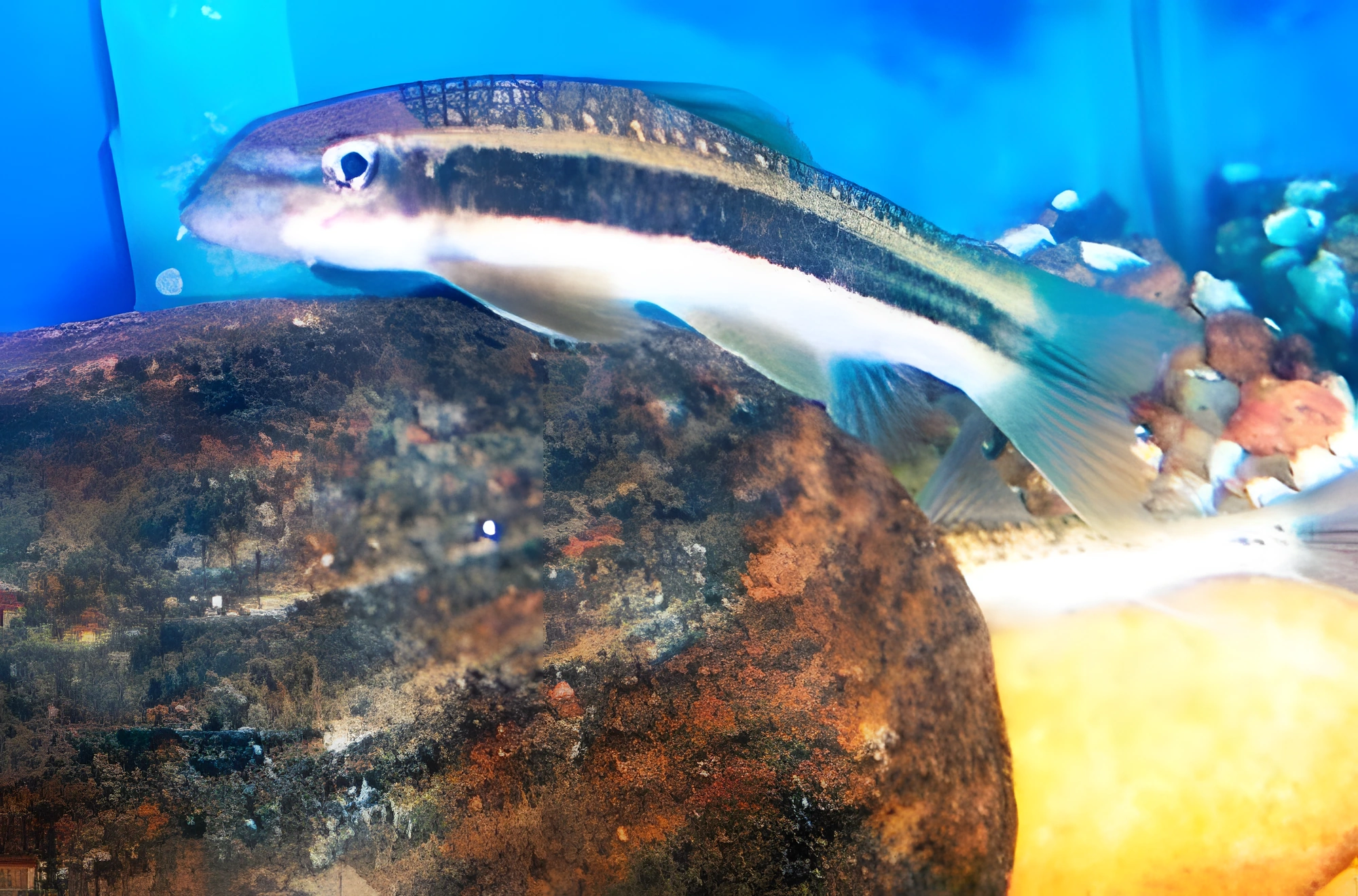
Depending on the variety and region of origin, adult specimens reach 12–17 cm in length. The fish is characterized by an elongated body and strong, large fins. Its coloration features a silvery belly and a grey back, as well as a broad dark stripe running along its sides.
Habitat
The species is endemic to the Indian subcontinent, where it is widely distributed in the basins of the Narmada, Tapti, Mahanadi, Godavari, Krishna, and Kaveri rivers. The fish inhabit diverse biotopes, including both fast mountain streams with rocky bottoms and lowland river sections. In nature, Garra demonstrates high adaptability to environmental conditions, even being found in polluted waters, but it is sensitive to pesticides and chemicals.
Behavior and Compatibility
Young fish, initially gathering in groups, tend to become more solitary as they mature, preferring to keep their distance from conspecifics. This behavior is explained by competition for food resources. Competition can also arise with other bottom-dwelling species. In light of these characteristics, when choosing aquarium mates, it is recommended to prefer fish that inhabit the water column or surface.
Care and Maintenance
For 2–3 fish, the optimal aquarium volume starts from 250 liters, and its decoration can be arbitrary. However, it has been observed that an environment mimicking a mountain river bottom is most comfortable for Garra mullya. Accordingly, when decorating, it is advisable to use a stony substrate with large boulders and snags. It should be noted that delicate aquarium plants may be damaged by the fish. The placement of some unpretentious, fast-growing species, as well as aquatic mosses and ferns, is permissible. For long-term keeping, ensuring clean, flowing water is critically important, as Garra mullya is sensitive to the accumulation of organic waste. The aquarium should be equipped with a powerful filtration system, and a portion of the water should be replaced weekly with fresh water, combined with thorough substrate cleaning. In their natural habitat, Garra mullya's diet consists of algae, including diatoms, and organic detritus. In a home aquarium, the main diet will consist of sinking plant-based foods in the form of large flakes, tablets, and pellets.
Diet
In natural conditions, this fish feeds on algae, including diatoms, as well as organic detritus. When kept in a home aquarium, sinking plant-based foods play a key role in the diet: large flakes, tablets, and pellets.
Breeding and Reproduction
In natural conditions, spawning occurs from December to January. For reproduction, some populations migrate upstream. Specific breeding methods in captivity are not well understood; reliable data on spawning stimulation, egg care, and fry rearing in aquarium conditions are lacking.
Diseases
The species has a strong immune system, but when kept in unsuitable conditions, such as low dissolved oxygen content or poor filtration, the fish become susceptible to bacterial infections and skin parasites. Garra mullya is extremely sensitive to chemical preparations, including some types of fertilizers and insecticides, so caution should be exercised with medication dosages during treatment.
How to choose
When purchasing, select active fish that exhibit natural behavior, constantly exploring aquarium surfaces with their sucker mouth. Healthy specimens should have clean skin without white spots, ulcers, or fin damage, and normal respiration without signs of rapid gill cover movement. It is recommended to avoid specimens that appear apathetic or have sunken bellies, which may indicate emaciation or the presence of internal parasites.
Frequently asked questions
The essentials: size, tank volume, water parameters and care
How big does Garra mullya get?
An adult reaches 12–17 cm in length. Plan the tank around the maximum size: the fish quickly outgrows a cramped setup.
What size aquarium does Garra mullya need?
The minimum recommended volume is 250 L. A smaller tank speeds up nitrate build-up and raises stress levels.
What water parameters does Garra mullya need?
Temperature 24–28 °C, pH 6.5–7.5, hardness 5–15 dGH. Stability matters more than exact values: sudden swings are harder on the fish than a small deviation from the ideal.
How long does Garra mullya live?
Around 4 years when kept properly. Lifespan depends directly on tank volume, water quality and a varied diet.
Is Garra mullya aggressive?
Temperament: semi-peaceful (including aggression during spawning / intraspecific conflicts). Keep this in mind when choosing tank mates.
How many Garra mullya should be kept together?
Recommended setup: both solitary and in group (flexible). Ignoring this is a common cause of stress and disease.
What does Garra mullya eat?
Diet type: sinking (plant-based). Feed small portions that are finished within a couple of minutes — overfeeding does more harm than underfeeding.
What is the scientific name of Garra mullya?
The scientific name of the species is Garra mullya, family Cyprinids (Cyprinidae). It also appears in the literature as: Chondrostoma mullya, Discognathus fusiformis, Garra alta.