Temperature24 – 26 °C
Natural range
- Sri Lanka area
- Central Highlands area
CyprinidsConservation status: Near threatened NT
The Ceylon Garra, known scientifically as Garra ceylonensis, belongs to the carp family (Cyprinidae). As its name suggests, this species is endemic to Sri Lanka, formerly known as Ceylon, an island located in the Indian Ocean, on the Asian continent.
- Required aquarium volume
- 250 L
- Size in aquarium
- 15 cm
- Temperature
- 24 – 26 °C
- Temperament
- Semi-peaceful (including aggression during spawning / intraspecific conflicts)
Parameters
Water pHNeutral (6.5) – Neutral (7.5)
Water dHSoft (5) – Hard (15)
Water salinityno salt (freshwater)
Size in aquarium15 cm
Lifespan5 years
TemperamentSemi-peaceful (including aggression during spawning / intraspecific conflicts)
Toward small fishnot a predator
Required aquarium volume250 L
Lightingweak (low)
Substratesand or gravel + stones/boulders
Water flowmoderate or strong
FeedingSinking (any)
CareBoth solitary and in group (flexible)
Description
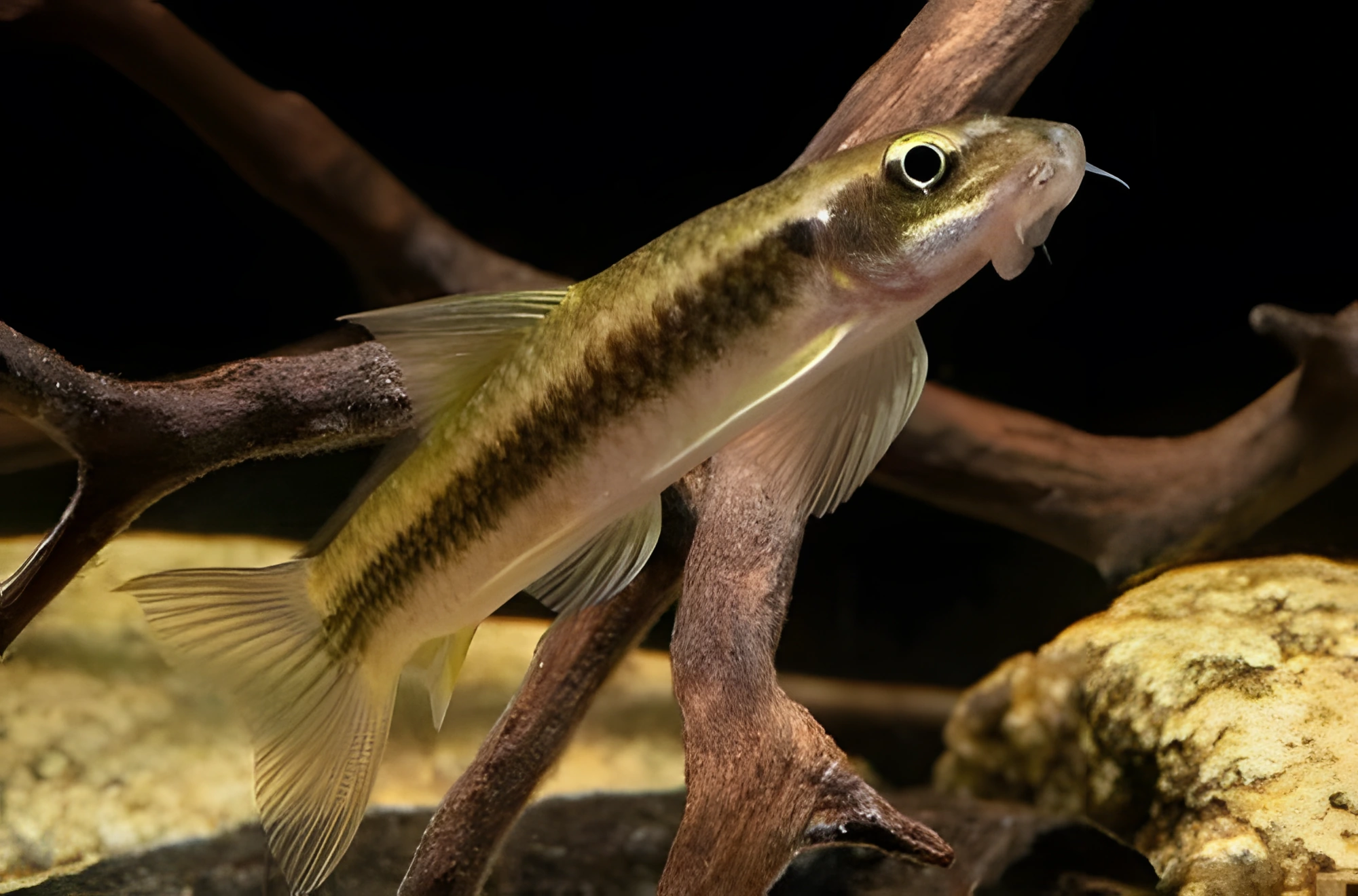
Adults of this fish species reach a length of about 15 cm. Their body is relatively short, and their fins are elongated. The predominant coloration is gray, with a lighter belly, and sometimes pale yellow hues can be observed on the back. The structure of its mouth is one of its distinguishing features: it resembles a sucker, allowing the fish to attach itself to various surfaces, resisting strong currents. This "sucker" also acts as a scraper, which Garra ceylonensis uses to scrape microorganisms from snags and stones.
Habitat
The Ceylon Garra is endemic to Sri Lanka. In nature, it inhabits mountain streams and rivers with fast or moderate currents. A typical biotope consists of well-lit areas with a rocky bottom, where the fish live in the bottom layer. Water parameters in their natural habitat correspond to tropical conditions with high dissolved oxygen content.
Behavior and Compatibility
The Ceylon Garra is considered a fish with a rather challenging temperament. If the aquarium is small, it is recommended to keep only one adult specimen, which coexists well with other species that prefer the middle and upper water layers. It has been observed that when 2 to 4 individuals are kept together, they are unable to coexist peacefully. However, with a number of 5 or more of these fish, their behavior changes significantly, and they form a stable group.
Care and Maintenance
For a group of 5 fish, the optimal aquarium volume starts from 250 liters, and its length should be at least 120 cm. The setup uses gravel, sand, various stones, and snags, on the surface of which aquatic mosses or ferns can be placed. In the long term, water quality plays a crucial role. Since the Ceylon Garra originates from flowing waters, it is sensitive to the accumulation of organic waste and a deficiency of dissolved oxygen. The aquarium must be equipped with a powerful filtration system that will not only ensure water purity but also create an internal current, replicating the conditions of a mountain stream. In addition to the filter, it is advisable to install an aeration system. It is important not to forget about weekly water changes of 40–50% of the volume with fresh water. It should be remembered that these fish, using their sucker mouth, can climb the aquarium walls and escape. Therefore, a reliable aquarium lid is a mandatory condition. In its natural environment, Garra feeds on microorganisms that inhabit the algal film covering snags and stones. Because of this, there is a common misconception that this species is exclusively herbivorous. Although the fish does consume plant material, it plays a secondary role. The diet should be based on high-protein foods. These can be sinking granules or flakes, as well as live or frozen foods (e.g., Artemia, bloodworms, Daphnia, etc.).
Diet
In natural conditions, Garra feeds on microorganisms inhabiting the algal film covering snags and stones. For this reason, it is often mistakenly believed that this species is exclusively herbivorous. Although the fish does consume plant material, it is only part of its diet. The diet should be based on high-protein foods. These can be sinking flakes or granules, as well as live or frozen products such as Artemia, bloodworms, Daphnia, etc.
Breeding and Reproduction
In its natural habitat, the Ceylon Garra migrates upstream into small rocky streams for spawning. Reliable information on the regular breeding of this species in aquarium conditions is extremely limited. Given the fish's rheophilic lifestyle, stimulating spawning requires creating a strong water flow, mimicking a mountain stream, and using a rocky substrate.
Diseases
The species is highly sensitive to water quality, particularly to the accumulation of organic compounds and nitrogen cycle products. Insufficient filtration and low dissolved oxygen levels provoke the development of bacterial infections and weaken the immune system. To prevent diseases, it is necessary to maintain stable water parameters and ensure effective aeration.
How to choose
When purchasing, choose active individuals without visible skin damage, ulcers, or signs of emaciation. It is important to pay attention to the integrity of the fins and the absence of plaque on the body. In the store, the fish should exhibit natural behavior, actively exploring substrate surfaces with their oral apparatus. It is recommended to avoid individuals that appear sluggish or stay near the water surface, which may indicate problems with husbandry quality in the retail aquarium.
Frequently asked questions
The essentials: size, tank volume, water parameters and care
How big does Ceylon Garra get?
An adult reaches 15 cm in length. Plan the tank around the maximum size: the fish quickly outgrows a cramped setup.
What size aquarium does Ceylon Garra need?
The minimum recommended volume is 250 L. A smaller tank speeds up nitrate build-up and raises stress levels.
What water parameters does Ceylon Garra need?
Temperature 24–26 °C, pH 6.5–7.5, hardness 5–15 dGH. Stability matters more than exact values: sudden swings are harder on the fish than a small deviation from the ideal.
How long does Ceylon Garra live?
Around 5 years when kept properly. Lifespan depends directly on tank volume, water quality and a varied diet.
Is Ceylon Garra aggressive?
Temperament: semi-peaceful (including aggression during spawning / intraspecific conflicts). Keep this in mind when choosing tank mates.
How many Ceylon Garra should be kept together?
Recommended setup: both solitary and in group (flexible). Ignoring this is a common cause of stress and disease.
What does Ceylon Garra eat?
Diet type: sinking (any). Feed small portions that are finished within a couple of minutes — overfeeding does more harm than underfeeding.
What is the scientific name of Ceylon Garra?
The scientific name of the species is Garra ceylonensis, family Cyprinids (Cyprinidae).