Temperature22 – 25 °C
Natural range
- Gabon area
Killifish
Other scientific names: Aphyosemion boehmi, Aphyosemion marginatum
The Gabon Killifish, or Aphyosemion gabunense, belongs to the family Nothobranchiidae. This miniature fish boasts iridescent, vibrant coloration, which varies depending on its region of origin. Accordingly, three subspecies are recognized, though hybrid forms are more commonly found in trade. Keeping these fish is relatively simple, but breeding requires some experience.
- Required aquarium volume
- 40 L
- Size in aquarium
- 5 cm
- Temperature
- 22 – 25 °C
- Temperament
- Peaceful (regular)
Parameters
Water pHNeutral (6.5) – Neutral (7.2)
Water dHSoft (5) – Hard (15)
Water salinityno salt (freshwater)
Size in aquarium5 cm
Lifespan3 years
TemperamentPeaceful (regular)
Toward small fishnot a predator
Required aquarium volume40 L
Lightingdimmed
Substratesand or gravel + stones/boulders
Water flowweak or moderate
FeedingAny (universal)
CarePair (male/female)
Description
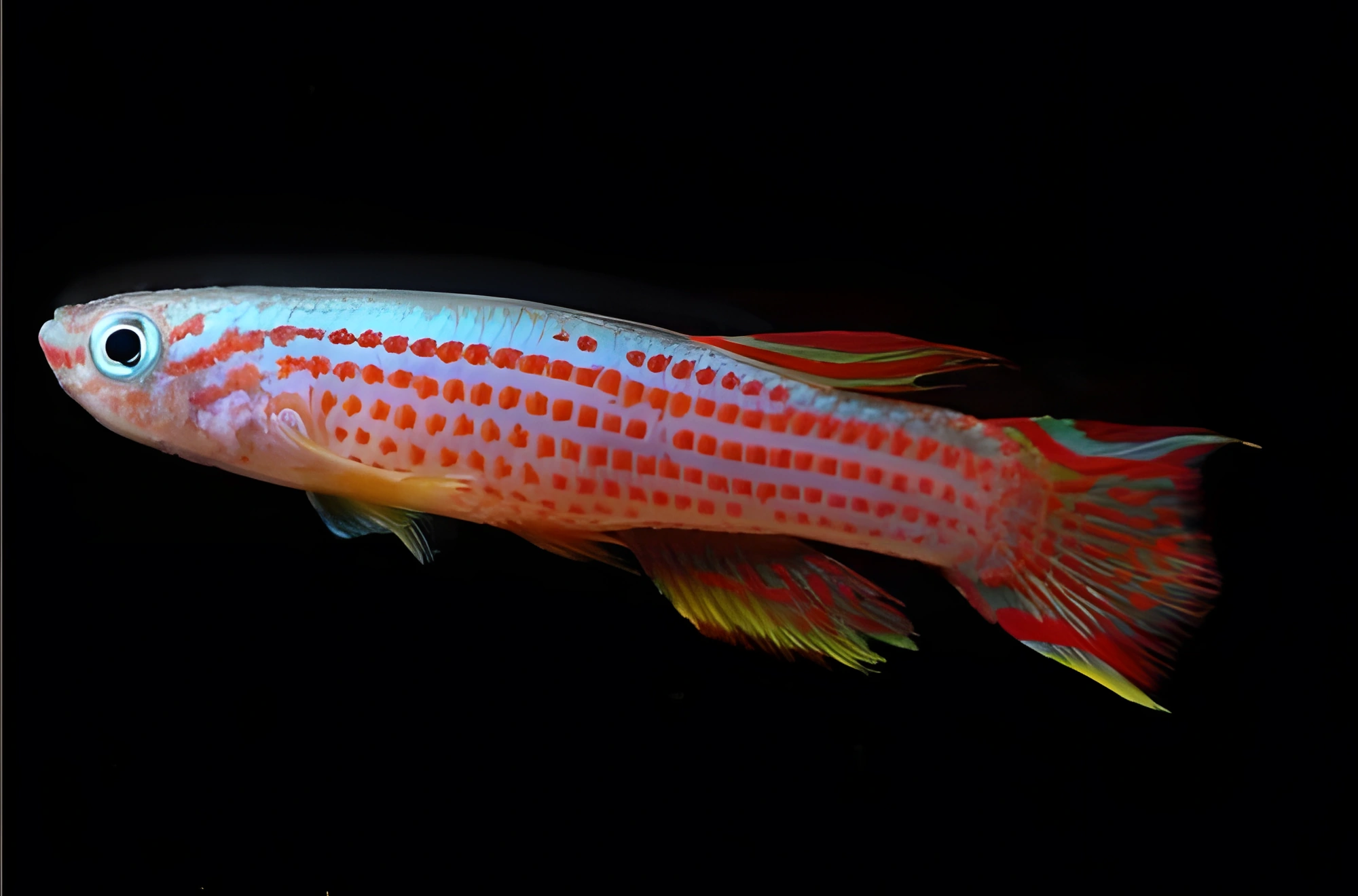
Adults do not exceed 5 cm in length. This species exhibits pronounced sexual dimorphism: males are distinguished by brighter coloration, while females appear dull, without a distinct pattern on their bodies. The primary color is reddish, and their broad, flowing fins are adorned with a yellow background featuring characteristic speckles and a wide red border.
Habitat
Its natural habitat is located in the western part of Gabon, in the lower basin of the Ogooué River and its tributaries. This fish inhabits swampy floodplains and small streams characteristic of the area, where a high density of aquatic vegetation creates ideal conditions.
Behavior and Compatibility
This is a peaceful and shy species that can be kept in a community tank, but the selection of tank mates requires great caution. They are compatible only with fish of similar or smaller size and temperament.
Care and Maintenance
A suitable aquarium setup involves recreating its natural biotope. The substrate should consist of fine, silty sand. Areas of dense vegetation should be combined with open spaces containing shelters such as snags, roots, and tree branches. Floating plants are recommended to diffuse light and create shaded zones. A standard set of equipment, including heating, lighting, aeration, and filtration systems, is sufficient. When installing the filter, it should be positioned so that the outgoing water flow breaks against an obstacle, thereby reducing the internal current, as Aphyosemion gabunense prefers calm, still waters. Acceptable water parameters are quite broad: pH should be within slightly acidic values, and dGH from soft to medium hardness. For filling the aquarium and subsequent partial water changes, dechlorinated tap water is suitable in most cases, provided its hardness is not too high. More detailed information on pH and dGH values, as well as methods for altering them, can be found in the “Hydrochemical Composition of Water” section. Aquarium maintenance includes weekly water changes of 10–15% of the volume, as well as regular cleaning of the substrate from organic detritus and the glass from algae.
Diet
In aquarium conditions, these fish readily adapt to various dry foods, especially if they contain the necessary protein components. To maintain optimal health and dietary diversity, it is recommended to include live or frozen foods, such as Daphnia and bloodworms, at least twice a week.
Breeding and Reproduction
For breeding, it is recommended to use a separate tank to ensure the safety of the offspring from parents and other aquarium inhabitants. A small container of about 10 liters will suffice for this purpose. Equipment needs are minimal: a simple sponge air-driven filter, a heater, and a light. A few large plants can be used as decor, but substrate is not recommended to simplify subsequent maintenance. A fine-mesh net can be placed on the bottom, through which the eggs can fall. This design is necessary to protect the eggs, as the parents tend to eat them. The selected pair of adult fish is placed in the spawning tank. Maintaining water temperature between 21–24°C with neutral pH values, as well as daily feeding with live or frozen meaty foods, serves as a breeding stimulus. It is essential to clean the substrate from food remnants and organic waste (excrement) as often as possible, as water quickly becomes polluted in a confined space. The female lays eggs in batches of 10–20 daily for two weeks. Each batch of eggs should be carefully removed from the aquarium (which is why no substrate is used) and placed in a separate container, such as a tray with high sides, with a water level of only 1–2 cm, adding 1–3 drops of methylene blue (depending on the volume). This will prevent fungal infections. Important: the tray must be kept in a dark, warm place, as the eggs are extremely sensitive to light. The incubation period lasts from 18 to 22 days. Fry also emerge in batches, not all at once. Newly hatched fry are transferred to the spawning tank, where their parents should no longer be present. After two days, feeding can begin, using microscopic organisms such as Artemia nauplii and Paramecium. In the second week of life, they can transition to live or frozen foods like Artemia, Daphnia, and others. As during spawning, pay special attention to water cleanliness. In the absence of an effective filtration system, it is necessary to regularly clean the spawning tank and change part of the water with fresh, at least every few days.
Diseases
The Gabon Killifish is sensitive to water quality and the accumulation of organic waste, which can provoke bacterial infections and fungal lesions, especially if the skin is damaged. The fish are susceptible to Oodinium disease and other parasitic diseases typical of killifish. Prevention includes regular water changes, maintaining stable environmental parameters, and using quality food. It is important to avoid sudden fluctuations in temperature and pH, as stress significantly reduces the immunity of the fish.
How to choose
When purchasing, choose active fish with clean fins and no visible spots or film on their bodies. Healthy individuals should show interest in food and have no signs of emaciation or sunken bellies. It is recommended to avoid specimens that stay at the water surface, appear apathetic, or have damaged fins. It is advisable to acquire fish from reputable breeders, as individuals from a general aquarium in a store may carry infections due to transport stress and poor keeping conditions.
Frequently asked questions
The essentials: size, tank volume, water parameters and care
How big does Gabon Killifish get?
An adult reaches 5 cm in length. Plan the tank around the maximum size: the fish quickly outgrows a cramped setup.
What size aquarium does Gabon Killifish need?
The minimum recommended volume is 40 L. A smaller tank speeds up nitrate build-up and raises stress levels.
What water parameters does Gabon Killifish need?
Temperature 22–25 °C, pH 6.5–7.2, hardness 5–15 dGH. Stability matters more than exact values: sudden swings are harder on the fish than a small deviation from the ideal.
How long does Gabon Killifish live?
Around 3 years when kept properly. Lifespan depends directly on tank volume, water quality and a varied diet.
Is Gabon Killifish aggressive?
Temperament: peaceful (regular). Keep this in mind when choosing tank mates.
How many Gabon Killifish should be kept together?
Recommended setup: pair (male/female). Ignoring this is a common cause of stress and disease.
What does Gabon Killifish eat?
Diet type: any (universal). Feed small portions that are finished within a couple of minutes — overfeeding does more harm than underfeeding.
What is the scientific name of Gabon Killifish?
The scientific name of the species is Aphyosemion gabunense, family Nothobranchiidae. It also appears in the literature as: Aphyosemion boehmi, Aphyosemion marginatum.