Temperature20 – 24 °C
Natural range
- Florida area
- North Carolina area
Livebearers
Other scientific names: Girardinus formosus
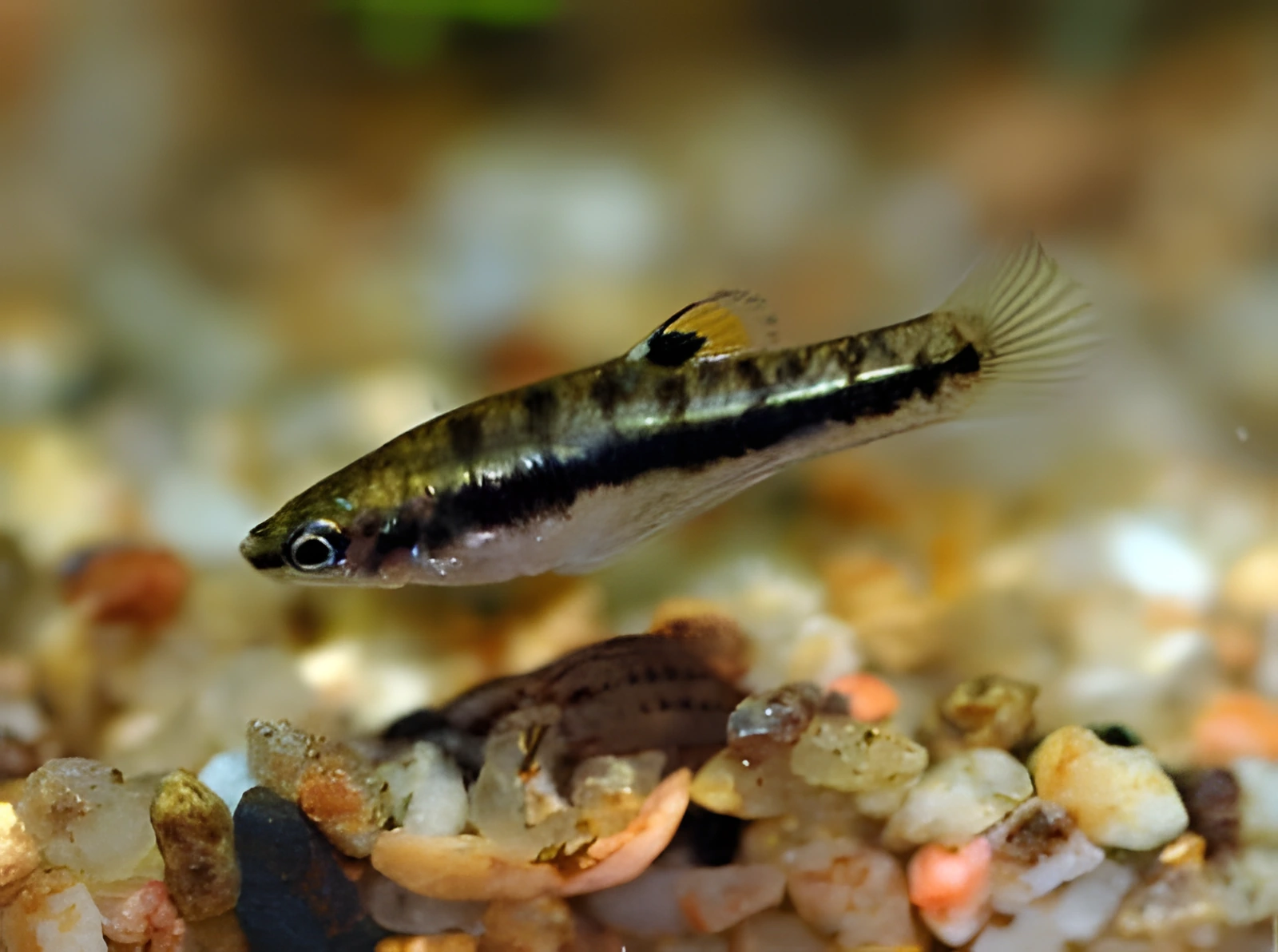
Formosa, scientifically known as Heterandria formosa, belongs to the family Poeciliidae. This fish is striking for its miniature size and grace, reaching a modest 3 cm in length. In addition to its size, it is remarkably resilient and undemanding. Even a small group of these creatures can comfortably inhabit an aquarium of just three liters.
- Required aquarium volume
- 40 L
- Size in aquarium
- 3 cm
- Temperature
- 20 – 24 °C
- Temperament
- Peaceful (regular)
Parameters
Water pHNeutral (7) – Slightly alkaline (8)
Water dHMedium hardness (10) – Very hard (20)
Water salinityno salt (freshwater)
Size in aquarium3 cm
Lifespan3 years
TemperamentPeaceful (regular)
Toward small fishnot a predator
Required aquarium volume40 L
Lightingmoderate (regular)
Substrateany (no restrictions)
Water flowweak
FeedingSpecial (for labyrinth fish / special needs)
CareSchooling (usually from 5–6 individuals and more)
Description
This tiny fish is extremely small. Males are noticeably slimmer and smaller than females, by about one and a half times. Females, on the other hand, appear plumper, with rounded bellies. Their coloration is predominantly light, with a slight yellowish tint. A distinctive brown stripe runs along their entire body from head to tail.
Habitat
Its natural habitat is marshy waters in North America, in lands now belonging to the states of Florida and North Carolina. The fish is undemanding regarding its keeping conditions.
Behavior and Compatibility
This peaceful, schooling, and timid fish, due to its tiny size, is ideal for keeping in a separate species-only aquarium. They prefer to live in a community of their own kind, and the introduction of other small fish is only permissible if these fish are also very small. Formosa, unfortunately, often falls victim to aggression even from species generally considered peaceful.
Care and Maintenance
Setting up an aquarium for these fish does not require much effort. If there are enough rooted and floating plants that take on the functions of water purification and oxygenation, then a filter, heater (the fish tolerates temperatures down to 15°C well), and aerator can be omitted. The aquarium design should include various shelters created from natural or artificial decorative elements.
Diet
This omnivorous species readily accepts a variety of foods: dry mixes, as well as fresh, frozen, or live foods such as bloodworms, daphnia, or artemia. It is important to ensure that the particle size of the offered food is small enough for Formosa to easily swallow them. It is recommended to remove all uneaten food remnants to prevent contamination of the aquarium water. Try Aqvium aquarium fish flakes. This product has already become a bestseller on Ozon, receiving a high rating of 4.9. The flakes are suitable for many types of aquarium fish, and their production complies with new European Union standards (EU 2018/848). The composition contains essential vitamins A, C, D3, E, and Omega 3-6. Available for purchase on Ozon.
Breeding and Reproduction
Breeding is only possible in warm water, so the use of a heater will be very useful here. Spawning can begin at any moment, and new generations can appear year-round. A peculiarity of this species is that fertilized eggs develop inside the female's body, and the fry are born fully formed. This adaptation is an effective evolutionary strategy for protecting offspring. However, parents do not show care for their offspring and may even eat the fry, so it is recommended to immediately move the young to a separate tank. They should be fed microscopic food, such as Artemia nauplii.
Diseases
Diseases are extremely rare in this species. Outbreaks of disease are only possible under extremely unfavorable environmental conditions, through contact with infected individuals, or as a result of injuries. More detailed information on symptoms and treatment methods can be found in the "Aquarium Fish Diseases" section.
How to choose
When choosing Formosa, pay attention to the overall activity of the fish: healthy individuals should be active and show interest in their surroundings. Avoid specimens with signs of emaciation, sunken bellies, or scale damage. It is important to carefully inspect the fins for the absence of plaque, ulcers, or signs of rot, as any deviations from the norm may indicate bacterial infections or the effects of transport stress.
- Assess the cleanliness of the water in the store's aquarium, as poor keeping conditions often lead to hidden diseases.
- Ensure that the fish do not show signs of apathy and do not constantly stay at the surface or in the corners of the aquarium.
- Check for visible parasites on the body, such as white spots or patches, which may indicate the presence of infestations.
Frequently asked questions
The essentials: size, tank volume, water parameters and care
How big does Formosa get?
An adult reaches 3 cm in length. Plan the tank around the maximum size: the fish quickly outgrows a cramped setup.
What size aquarium does Formosa need?
The minimum recommended volume is 40 L. A smaller tank speeds up nitrate build-up and raises stress levels.
What water parameters does Formosa need?
Temperature 20–24 °C, pH 7–8, hardness 10–20 dGH. Stability matters more than exact values: sudden swings are harder on the fish than a small deviation from the ideal.
How long does Formosa live?
Around 3 years when kept properly. Lifespan depends directly on tank volume, water quality and a varied diet.
Is Formosa aggressive?
Temperament: peaceful (regular). Keep this in mind when choosing tank mates.
How many Formosa should be kept together?
Recommended setup: schooling (usually from 5–6 individuals and more). Ignoring this is a common cause of stress and disease.
What does Formosa eat?
Diet type: special (for labyrinth fish / special needs). Feed small portions that are finished within a couple of minutes — overfeeding does more harm than underfeeding.
What is the scientific name of Formosa?
The scientific name of the species is Heterandria formosa, family Poeciliidae. It also appears in the literature as: Girardinus formosus.