Temperature20 – 28 °C
Natural range
- Meta River
- Orinoco River Basin
- Colombia area
- Venezuela area
CharacinsConservation status: Least concern LC
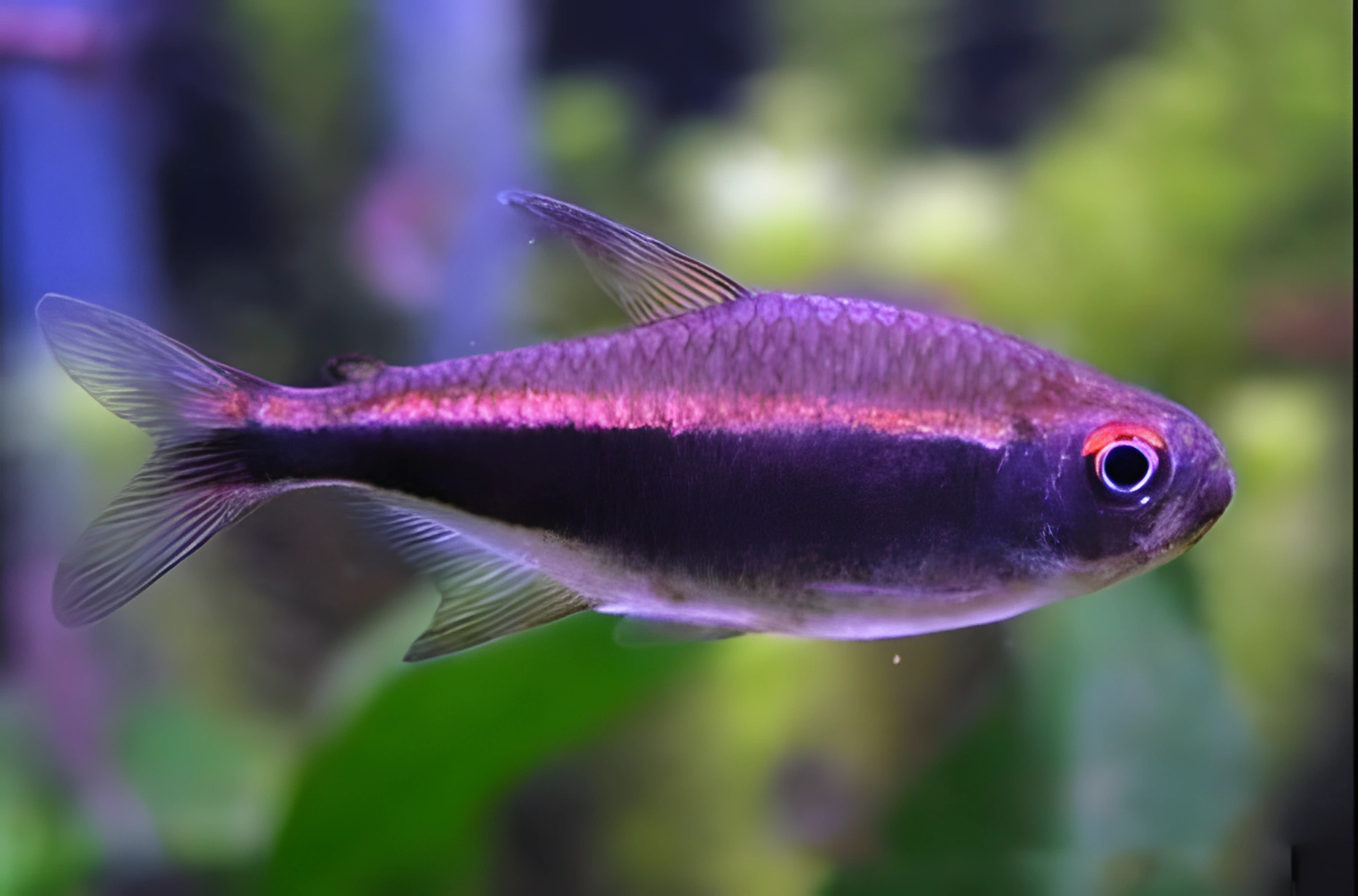
The Meta Tetra, also known as the Purple Tetra, bears the scientific name Hyphessobrycon metae and belongs to the family Characidae. This small, agile fish, appearing in the aquarium in a school, can become a wonderful addition to any freshwater aquarium. Its keeping and breeding are not difficult, and its compatibility with many other species makes it an excellent choice.
- Required aquarium volume
- 80 L
- Size in aquarium
- 4 cm
- Temperature
- 20 – 28 °C
- Temperament
- Peaceful (regular)
Parameters
Water pHAcidic (4) – Neutral (7)
Water dHVery soft (1) – Medium hardness (10)
Water salinityno salt (freshwater)
Size in aquarium4 cm
Lifespan4 years
TemperamentPeaceful (regular)
Toward small fishnot a predator
Required aquarium volume80 L
Lightingdimmed or moderate
Substratesandy (regular, light)
Water flowweak
FeedingSmall / appropriate size / pieces
CareGroup (8–10 individuals)
Description
Adult specimens of this fish reach up to 4 cm in length. Noticing differences between males and females is quite difficult due to weakly expressed sexual dimorphism. The fish's body is colored in dark tones, while the belly is light. The scales have a high level of light refraction, which allows the fish's coloration to change depending on the lighting, displaying iridescent blue, silvery, or purple hues.
Habitat
Its origin is associated with the middle basin of the Orinoco River in South America, covering the territories of Colombia and Venezuela. It is especially common in the Meta River — one of the largest tributaries of the Orinoco. These fish inhabit a variety of biotopes: from streams with crystal-clear water and sandy bottoms to swampy areas and backwaters, where an abundance of fallen leaves and snags gives the water a rich brown tint. During the rainy season, Purple Tetras penetrate temporarily flooded areas of the tropical forest. Below are brief details about this species.
Behavior and Compatibility
This peaceful schooling fish forms large aggregations of hundreds of individuals in nature. In a home aquarium, it is recommended to maintain a group of at least 8–10 fish. With fewer numbers, they may exhibit increased timidity. They get along well with other non-aggressive species of comparable size.
Care and Maintenance
For comfortable keeping of a school of 8–10 fish, the minimum aquarium volume should be from 80 liters. The decor is not critically important, as the Purple Tetra has excellent adaptability to various conditions. Nevertheless, creating an environment that resembles their natural habitat is considered preferable. In subdued light, among thickets of plants and snags, these fish look most harmonious. Experienced aquarists often add leaves from certain trees to the water, which release tannins upon decomposition. This helps recreate the chemical composition of the water, similar to natural bodies of water. The basis for successful keeping is maintaining a balanced and stable ecosystem. It is important to maintain high water quality, controlling the permissible range of hydrochemical parameters and temperature, and preventing the accumulation of nitrogen cycle products (ammonia, nitrites, nitrates) to dangerous levels. Stability of the habitat is achieved by using specialized equipment (filters, heaters, etc.) and regular aquarium maintenance procedures.
Diet
Being an omnivorous species, these fish readily accept the vast majority of popular foods intended for aquarium inhabitants. The daily diet can successfully consist of dry foods, such as flakes or granules. However, to enrich the diet and stimulate appetite, live or frozen foods are highly recommended, for example, brine shrimp, daphnia, or bloodworms.
Breeding and Reproduction
The breeding process of this fish is typical for most Characins. When the mating season begins, females scatter eggs among aquatic vegetation, after which males fertilize them. Parental instincts are not developed in them, so adult individuals can consume their own offspring. To preserve the offspring, eggs or already hatched fry should be moved to a separate tank with identical water conditions, where they will be kept until they reach a sufficient size.
Diseases
Specific diseases that affect only this particular fish species have not been identified. When kept in suitable conditions, including high water quality, a balanced diet, and peaceful tank mates, health issues usually do not arise. The most common cause of illness is a deterioration of living conditions, which weakens the immune system and makes the fish susceptible to infections that are always present in their environment. Upon noticing initial signs of sickness (such as lethargy, emaciation, refusal to eat, or clamped fins), it is crucial to immediately check the basic water parameters. Often, restoring acceptable living conditions will lead to self-recovery, but if the fish is too weak or has suffered visible damage, medicinal treatment may be required. For more details on symptoms and treatment methods, consult the section “Diseases of Aquarium Fish.”
How to choose
When purchasing Purple Tetras, prioritize individuals that actively swim in a school and display the species' natural coloration. Avoid fish with signs of emaciation, fin damage, body film, or unnatural behavior, such as apathy or attempts to stay separate from the group. Given that specimens caught in the wild are often sold, they can be sensitive to transport and changes in water parameters, so it is important to ensure that the fish have undergone an adaptation period in the store and have confidently started accepting food.
Frequently asked questions
The essentials: size, tank volume, water parameters and care
How big does Purple Tetra get?
An adult reaches 4 cm in length. Plan the tank around the maximum size: the fish quickly outgrows a cramped setup.
What size aquarium does Purple Tetra need?
The minimum recommended volume is 80 L. A smaller tank speeds up nitrate build-up and raises stress levels.
What water parameters does Purple Tetra need?
Temperature 20–28 °C, pH 4–7, hardness 1–10 dGH. Stability matters more than exact values: sudden swings are harder on the fish than a small deviation from the ideal.
How long does Purple Tetra live?
Around 4 years when kept properly. Lifespan depends directly on tank volume, water quality and a varied diet.
Is Purple Tetra aggressive?
Temperament: peaceful (regular). Keep this in mind when choosing tank mates.
How many Purple Tetra should be kept together?
Recommended setup: group (8–10 individuals). Ignoring this is a common cause of stress and disease.
What does Purple Tetra eat?
Diet type: small / appropriate size / pieces. Feed small portions that are finished within a couple of minutes — overfeeding does more harm than underfeeding.
What is the scientific name of Purple Tetra?
The scientific name of the species is Hyphessobrycon metae, family Characidae.