Temperature22 – 32 °C
Natural range
- Karnataka area
- India area
CichlidsConservation status: Endangered EN
Etroplus Canara, scientifically known as Etroplus canarensis, belongs to the family Cichlidae. This fish was named after the region of its discovery – South Canara, located in the Indian state of Karnataka. This species represents one of the few and rare Asian cichlids. In modern aquaristics, it has become widely available due to active breeding on fish farms in Southeast Asia. Etroplus Canara is considered undemanding and easy to keep, coexisting well with many common aquarium fish species. Thus, it can be confidently recommended to beginner aquarists.
- Required aquarium volume
- 250 L
- Size in aquarium
- 10 – 11 cm
- Temperature
- 22 – 32 °C
- Temperament
- Peaceful (regular)
Parameters
Water pHSlightly acidic (6) – Neutral (7.5)
Water dHVery soft (1) – Medium hardness (10)
Water salinityno salt (freshwater)
Size in aquarium10 – 11 cm
Lifespan8 years
TemperamentPeaceful (regular)
Toward small fishnot a predator
Required aquarium volume250 L
Lightingdimmed
Substrategravel (regular)
Water flowweak or moderate
FeedingAny (universal)
CareGroup (8–10 individuals)
Description
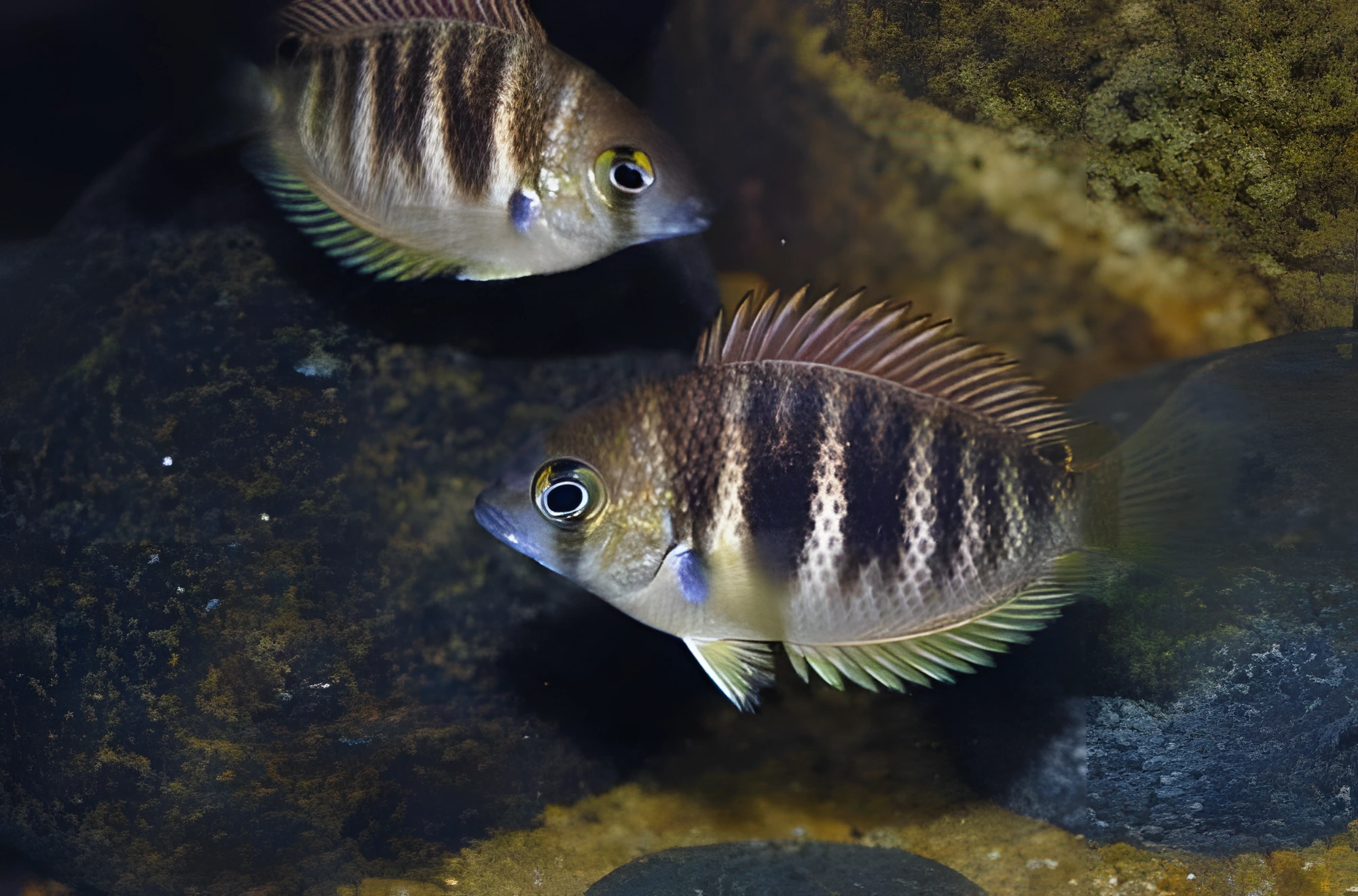
Adults reach a maximum length of 10–11 cm. The fish's body is disc-shaped or oval, high, and strongly compressed laterally. The main coloration is grayish-brown, with numerous vertical dark stripes. Sexual dimorphism in this species is insignificant, so males and females are practically indistinguishable externally.
Habitat
The native habitat of this species is a limited region of Asia, located in southwestern India, in the state of Karnataka. Etroplus Canara inhabits the Netravati River system and its main tributary, the Kumaradhara. The natural habitats of this fish are subject to regular seasonal changes caused by annual monsoons. The fish can successfully live in clean, clear waters with slow currents, as well as in more turbid conditions where the water flow rate can vary. In natural conditions, other fish popular with aquarists, such as Maheola Barb, Malabar Danio, Indian Glassy Perch, Striped Rasbora, and many others, coexist with Etroplus Canara.
Behavior and Compatibility
Etroplus Canara is a peaceful and calm fish, but only if kept in a school of at least 8 individuals. With fewer numbers, weaker members of the group may be persecuted by dominant individuals. These fish are calm towards other aquarium inhabitants and are well compatible with many non-aggressive freshwater species.
Care and Maintenance
For a school of 8–10 individuals, the optimal aquarium volume starts from 250 liters. The internal decor should mimic a natural riverbed environment: a substrate of gravel and sand, mixed with several large boulders and many snags. The presence of live aquatic plants is not mandatory, but if desired, undemanding species such as Anubias, various mosses, and ferns, for example, Microsorum pteropus or Malayan water fern, can be planted. Etroplus Canara requires clean, oxygen-rich water, which should be slightly acidic and have low carbonate hardness. It is important to maintain stable water parameters, avoiding sharp fluctuations in temperature and hydrochemical indicators, and to control the concentration of nitrogen cycle products. To meet these conditions, the aquarium should be equipped with necessary devices (filter, aerator, heater, etc.), and regularly maintained. This includes weekly water changes of 30–50% of the volume with fresh water, removal of organic waste (food remnants, excrement), and preventive equipment checks.
Diet
This species has no special dietary requirements, and in a home aquarium, the fish readily accept most foods intended for aquarium inhabitants. The daily diet can be formed by combining dry flakes and granules with live or frozen foods, such as Artemia, Daphnia, or bloodworms.
Breeding and Reproduction
Under favorable conditions and with adherence to certain requirements, breeding this species is quite feasible. In the natural environment, spawning occurs from December to January, when abundant monsoon rains cause river water levels to rise and provide an excess of nutrients. In an aquarium, similar changes can be recreated by cooling the water by several degrees for several days. Fish reach sexual maturity at two years of age. During spawning, they form temporary pairs, and during this period, their coloration darkens, and characteristic stripes appear on their heads. Eggs are usually attached to a smooth surface, such as a stone or snag. The male and female jointly guard the clutch until the fry hatch. After the offspring appear, it is recommended to transfer them to a separate aquarium with similar water conditions to protect them from possible predation by adult individuals.
Diseases
The main cause of diseases in fish is most often unfavorable keeping conditions. If environmental parameters go beyond acceptable limits, the fish's immune system is suppressed, making it vulnerable to various infections constantly present in the environment. At the first suspicion of illness, it is necessary to immediately check the water parameters and ensure there are no dangerous concentrations of nitrogen cycle products. Restoring optimal conditions often contributes to self-healing. However, in some cases, medication may be required. More detailed information on symptoms and treatment methods can be found in the “Aquarium Fish Diseases” section.
How to choose
When purchasing, choose active individuals with clean fins and no visible body damage. It is important to ensure that the fish do not show signs of emaciation or apathy, as this species is sensitive to water quality and stress during transportation. Avoid specimens with sunken bellies or unnatural behavior, such as constantly hovering near the surface.
Since Etroplus Canara are schooling fish, it is recommended to acquire a group of 8–10 individuals simultaneously to reduce intraspecific aggression and facilitate adaptation in the new aquarium. Before purchasing, check with the seller about the keeping conditions, as healthy fish should be in clean, well-aerated water without signs of organic accumulation.
Frequently asked questions
The essentials: size, tank volume, water parameters and care
How big does Etroplus Canara get?
An adult reaches 10–11 cm in length. Plan the tank around the maximum size: the fish quickly outgrows a cramped setup.
What size aquarium does Etroplus Canara need?
The minimum recommended volume is 250 L. A smaller tank speeds up nitrate build-up and raises stress levels.
What water parameters does Etroplus Canara need?
Temperature 22–32 °C, pH 6–7.5, hardness 1–10 dGH. Stability matters more than exact values: sudden swings are harder on the fish than a small deviation from the ideal.
How long does Etroplus Canara live?
Around 8 years when kept properly. Lifespan depends directly on tank volume, water quality and a varied diet.
Is Etroplus Canara aggressive?
Temperament: peaceful (regular). Keep this in mind when choosing tank mates.
How many Etroplus Canara should be kept together?
Recommended setup: group (8–10 individuals). Ignoring this is a common cause of stress and disease.
What does Etroplus Canara eat?
Diet type: any (universal). Feed small portions that are finished within a couple of minutes — overfeeding does more harm than underfeeding.
What is the scientific name of Etroplus Canara?
The scientific name of the species is Etroplus canarensis, family Cichlids (Cichlidae).