Temperature22 – 26 °C
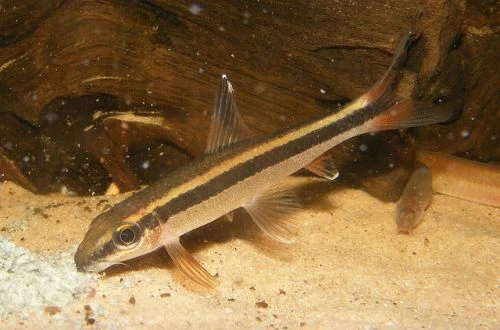
Other scientific names: Barbus kalopterus, Epalzeorhynchus callopterus, Epalzeorhynchus kallopterus
The Red-Finned Epalzeorhynchos, scientifically known as Epalzeorhynchos kalopterum, belongs to the carp family (Cyprinidae) and is often referred to as the Flying Fox. This active fish, while not boasting original coloration, is valued by aquarists for its unpretentiousness and high endurance, contributing to its popularity in the aquarium trade.
The fish has a slender and elongated body, ending in a pointed head. Four thread-like barbels are located around its mouth, which the Epalzeorhynchos uses to feel the substrate in search of small prey. Its coloration is predominantly golden, complemented by a dark back. A broad dark stripe runs along the entire body from the mouth to the tail. Above it, a narrower, luminous orange-red stripe can be seen.
The natural habitat of this species is in Southeast Asia, including southern Thailand and Peninsular Malaysia, as well as the islands of Borneo, Sumatra and Java. Flying Foxes prefer areas of small rivers and streams with sandy or rocky shoals. During the rainy season, when river valleys and tropical forests are flooded, the fish migrate to new territories, actively searching for food.
This species is relatively peaceful, especially when compared to its close relative, the Green Labeo. Young individuals prefer to stay near secluded spots. Adult fish, on the other hand, lead a solitary lifestyle. They exhibit territorial behavior, occupying a specific area at the bottom of the aquarium and attacking uninvited guests. Particular aggression is shown towards members of their own species and fish similar in coloration and body shape. It is permissible to keep them in a single aquarium or in the company of some hardy cyprinids that inhabit the middle or upper water layers. Other bottom-dwelling, and especially territorial, species are not recommended for cohabitation.
These fish are undemanding in their care. They will need a spacious aquarium with a minimum of decorative elements; a few boulders and snags will suffice. Any plants can be chosen, placing them along the side and back walls of the aquarium to provide enough free swimming space. Water preparation is minimal: the fish prefer a neutral pH level, which usually corresponds to tap water parameters. It is sufficient to collect the necessary volume of water and let it stand for a day to allow residual chlorine, used in water treatment plants for disinfection, to dissipate. A certain difficulty may arise with very hard water (high dH); in this case, specialized kits for correcting its parameters, including reagents and tests (e.g., litmus paper or solutions in vials), will be required. A home method to reduce water hardness is to boil it and let it cool, which promotes the precipitation of salts along with scale. Essential aquarium equipment includes a filter, aerator, heater, and lighting system.
In natural conditions, these fish feed on algae and small vegetation growing on rocks and snags, as well as the small insects and crustaceans that inhabit these growths. They are often mistakenly described in literature as exclusively herbivorous. However, for a complete diet, meat components must be present. It is recommended to combine high-quality plant-based dry foods (such as flakes or granules) with live, frozen, or freeze-dried foods (bloodworms, daphnia, brine shrimp). Pieces of vegetables and fruits will serve as an excellent dietary supplement: cucumber, peeled zucchini, lettuce leaves, spinach, or apples. These pieces can be conveniently secured with a rubber band, for example, to a stone, snag, or other decorative element. To prevent water contamination, they must be replaced every two days.
Breeding in home aquariums is extremely unlikely, as it requires considering many factors and having a very large aquarium where the fish could coexist, meeting each other only during the spawning period.
Health problems in these fish are extremely rare in a balanced aquarium. The main causes of ailments are usually unsuitable living conditions or poor-quality nutrition. Most often, the latter leads to diseases, as aquarists often, trusting erroneous data, keep Epalzeorhynchos exclusively on a plant-based diet.
When choosing a Red-Finned Epalzeorhynchos, it is important to carefully inspect the fish for damage, ulcers, or signs of fungal infections. A healthy specimen should be active, have a clear stripe pattern, and clean fins without signs of frayed edges. Avoid fish with sunken bellies or signs of emaciation, as this may indicate chronic diseases or improper feeding at the store. Consider the high intraspecific aggression of the species: it is not recommended to acquire a group of individuals unless you plan to keep them in a very spacious aquarium with many hiding places. Also, be careful with identification: this species is often confused with the Siamese Algae Eater, so make sure you are acquiring Epalzeorhynchos kalopterum, guided by the characteristic orange-red edging above the black stripe and the coloration of the fins.
The essentials: size, tank volume, water parameters and care
An adult reaches 14 cm in length. Plan the tank around the maximum size: the fish quickly outgrows a cramped setup.
The recommended volume is 200 L. A smaller tank speeds up nitrate build-up and raises stress levels.
Temperature 22–26 °C, pH 6.5–7, hardness 5–8 dGH. Stability matters more than exact values: sudden swings are harder on the fish than a small deviation from the ideal.
Around 10 years when kept properly. Lifespan depends directly on tank volume, water quality and a varied diet.
Temperament: territorial (often aggressive). Keep this in mind when choosing tank mates.
Recommended setup: solitary. Ignoring this is a common cause of stress and disease.
Diet type: plant-based with meat additives. Feed small portions that are finished within a couple of minutes — overfeeding does more harm than underfeeding.
The scientific name of the species is Epalzeorhynchos kalopterum, family Cyprinids (Cyprinidae). It also appears in the literature as: Barbus kalopterus, Epalzeorhynchus callopterus, Epalzeorhynchus kallopterus.
Matched by family, categories and overlapping keeping conditions
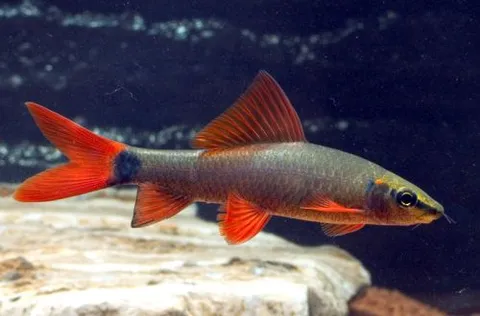
Epalzeorhynchos frenatum
The striking fish with the scientific name Epalzeorhynchos frenatum, known as the Green Labeo, belongs to the family Cyprinidae. Its distinguishing feature is its vibrant green body coloration, which contrasts…
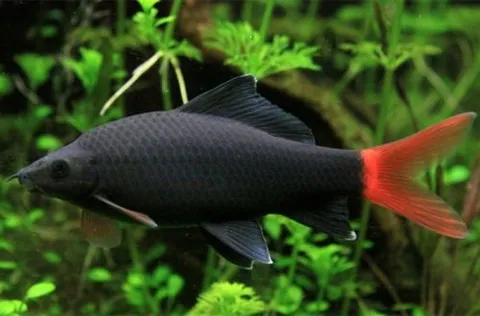
Epalzeorhynchos bicolor
Labeo Bicolor, also known as the Red-tailed Black Shark, is classified as Epalzeorhynchos bicolor and belongs to the family Cyprinidae. This attractive fish, known for its unpretentiousness and unique appearance, draws…
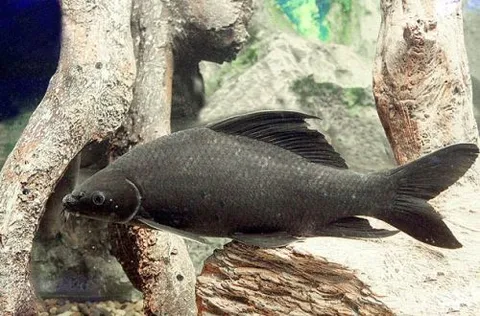
Labeo chrysophekadion
Labeo chrysophekadion, also known as the Black Labeo, belongs to the family Cyprinidae. Due to its impressive size and complex temperament, this species is quite demanding and not recommended for aquarium beginners.
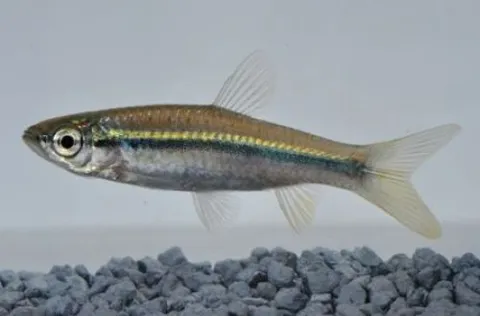
Rasbora daniconius
The Striped Rasbora, or Indian Rasbora (scientific name Rasbora daniconius), is a member of the Cyprinidae family. Although this species is not distinguished by its bright coloration among its relatives, it can still…