Temperature20 – 24 °C
Natural range
- Río de la Plata estuary area
- Uruguay area
CharacinsConservation status: Least concern LC
Other scientific names: Bergia altipinnis, Chalcinopelecus argentinus, Pseudocorynopoma argentinus, Pseudocorynopoma doriai
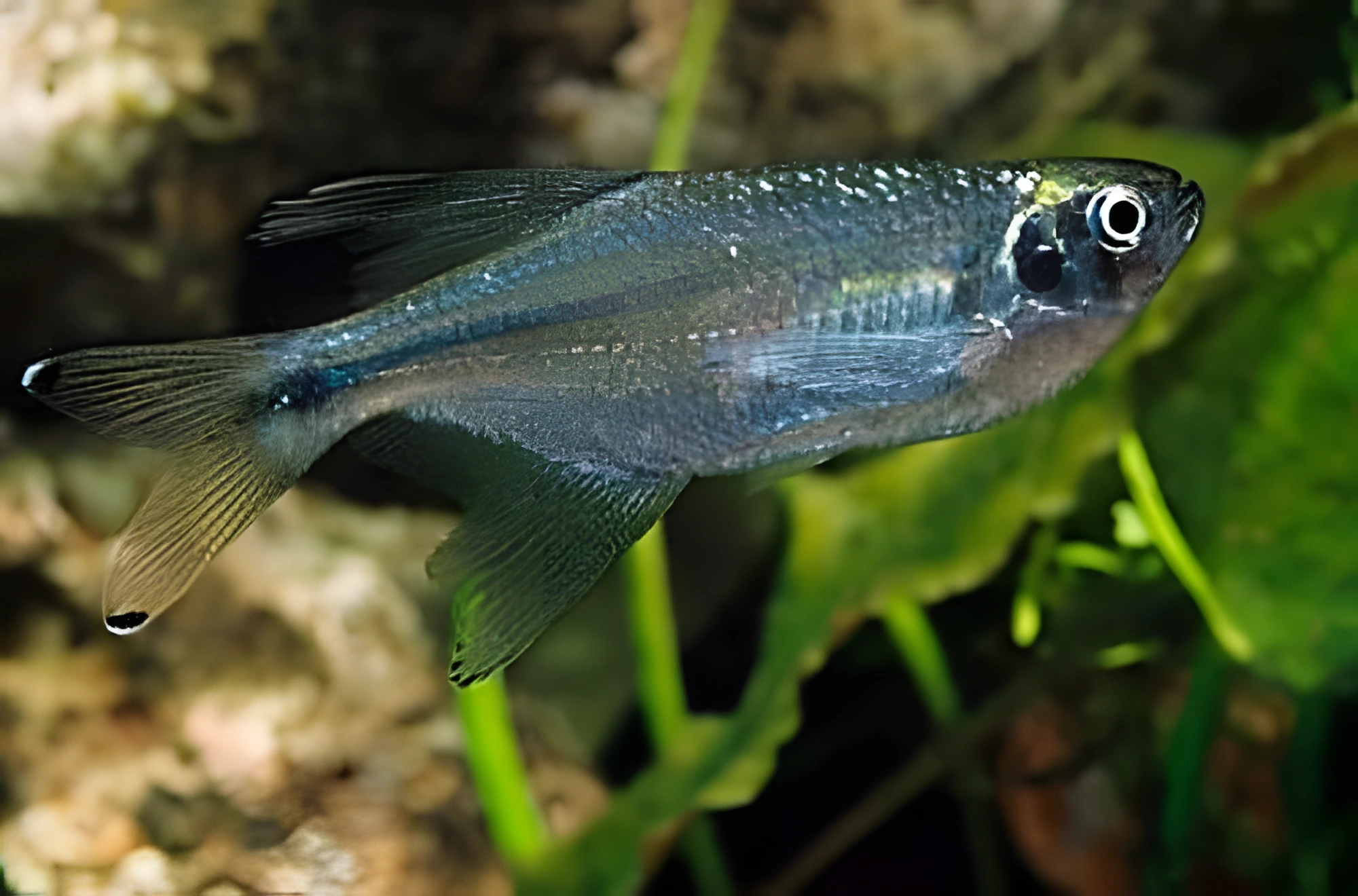
The scientific name Pseudocorynopoma doriae indicates the Dragon Tetra's belonging to the Characidae family. This species is not often found in home aquariums outside the American continent, mainly due to its modest coloration. Despite its "dragon" name, the fish cannot boast a vibrant appearance. Its unique feature is its prominent anal and dorsal fins, which, when spread, can vaguely resemble outstretched wings.
- Required aquarium volume
- 100 L
- Size in aquarium
- 7 cm
- Temperature
- 20 – 24 °C
- Temperament
- Peaceful (regular)
Parameters
Water pHSlightly acidic (6) – Neutral (7.5)
Water dHVery soft (1) – Hard (16)
Water salinityno salt (freshwater)
Size in aquarium7 cm
Lifespan5 years
TemperamentPeaceful (regular)
Toward small fishnot a predator
Required aquarium volume100 L
Lightingdimmed or moderate
Substrateany (no restrictions)
Water flowweak
FeedingSmall / appropriate size / pieces
CareSmall group (5–6 individuals)
Description
The Dragon Tetra has an elongated, laterally compressed, silvery body with a characteristic sheen. The species has large eyes and a large, upward-pointing mouth. The main background coloration varies from brownish to silvery-white, with a light horizontal stripe running along the body. The fins are yellowish-orange and semi-transparent. Sexual dimorphism is clearly expressed: males have significantly larger and longer fins than females, which is especially noticeable during the spawning period. In aquarium conditions, the fish reach a size of about 7–8 cm.
Habitat
This fish is native to South America. The main part of its population inhabits the La Plata estuary region, Uruguay. This vast estuary is formed by the confluence of the Uruguay and Paraná rivers, whose waters flow into the Atlantic Ocean. Due to its proximity to the ocean, the water here can be slightly brackish, and its turbidity is variable.
Behavior and Compatibility
This species is active and swift. It is recommended to keep them in a group of at least 5–6 individuals, as the fish prefer the company of their kin. There are no intraspecific conflicts among them. During the breeding period, males may compete for the attention of females, but this does not lead to serious skirmishes. During courtship, males perform a kind of dance, lowering their heads and circling around their chosen female. Dragon Tetras are compatible with most other aquarium fish species of comparable size. However, caution should be exercised when choosing tank mates among slow-moving fish, for whom the constant activity of the Dragon Tetra can become an excessive stress factor.
Care and Maintenance
The Dragon Tetra is an excellent swimmer and requires significant open space for swimming, especially in the upper water layers. Therefore, the aquarium should be long rather than tall. It is desirable to keep a school of 5–6 individuals, which will require an aquarium of at least 100 liters. Since these fish are prone to jumping, a reliable lid is essential. The tank's decor can be chosen according to personal taste, but floating plants on the surface are undesirable as they will hinder the fish's free movement. Decorative elements in the lower tier of the aquarium are selected by the aquarist at their discretion. Due to the mixing with marine waters in the La Plata region, especially during storms, these fish have adapted to pH values exceeding neutral. This makes them undemanding regarding water hydrochemistry. If the fish was bred in captivity rather than caught in the wild, it is likely already accustomed to standard dry and frozen foods used by breeders. The diet can be enriched with live foods such as brine shrimp, bloodworms, large daphnia, and other invertebrates.
Diet
If the fish were bred in artificial conditions rather than caught in the wild, they are likely already accustomed by breeders to consuming traditional dry and frozen foods. To diversify their daily diet, live brine shrimp, bloodworms, large daphnia, and other invertebrates can be offered. These are active and swift fish that prefer to live in a community of their own kind, so it is advisable to acquire at least 5–6 individuals. Intraspecific conflicts are absent among them. During the breeding period, males may compete for the attention of females, but this rivalry does not escalate into skirmishes. Male courtship is expressed in "dances" during which they lower their heads and circle around the female. They get along well with most other fish species of comparable size. Nevertheless, caution should be exercised when keeping them with slow-moving species, for whom the extremely active Dragon Tetra can become a source of constant disturbance.
Breeding and Reproduction
The breeding process features an unusual strategy: the male fertilizes the female internally by introducing spermatophores near her anal opening. After this, the female lays her eggs on the underside of broad plant leaves. For spawning, a separate aquarium of 10–25 liters without substrate is used, ensuring good aeration and lighting. The incubation period is about 20–36 hours. After hatching, the larvae remain motionless for a few days, then begin to swim freely and feed on infusoria or specialized fry food.
Diseases
The species has moderate resistance to diseases when kept under proper conditions. The most common diseases are those caused by deteriorating water quality, such as bacterial infections or fungal infections from injuries. Sensitivity to water composition and organic accumulation requires weekly water changes and effective filtration. Prevention includes maintaining stable environmental parameters and quarantining new individuals.
How to choose
When purchasing, choose active fish with clean fins and no visible body damage. Healthy individuals should have a pronounced scale sheen and show interest in food. Avoid specimens with signs of lethargy, clamped fins, or unnatural behavior, such as constantly staying at the water surface or on the bottom. It is recommended to acquire a group of 8–10 individuals to ensure comfortable social behavior.
Frequently asked questions
The essentials: size, tank volume, water parameters and care
How big does Dragon Tetra get?
An adult reaches 7 cm in length. Plan the tank around the maximum size: the fish quickly outgrows a cramped setup.
What size aquarium does Dragon Tetra need?
The minimum recommended volume is 100 L. A smaller tank speeds up nitrate build-up and raises stress levels.
What water parameters does Dragon Tetra need?
Temperature 20–24 °C, pH 6–7.5, hardness 1–16 dGH. Stability matters more than exact values: sudden swings are harder on the fish than a small deviation from the ideal.
How long does Dragon Tetra live?
Around 5 years when kept properly. Lifespan depends directly on tank volume, water quality and a varied diet.
Is Dragon Tetra aggressive?
Temperament: peaceful (regular). Keep this in mind when choosing tank mates.
How many Dragon Tetra should be kept together?
Recommended setup: small group (5–6 individuals). Ignoring this is a common cause of stress and disease.
What does Dragon Tetra eat?
Diet type: small / appropriate size / pieces. Feed small portions that are finished within a couple of minutes — overfeeding does more harm than underfeeding.
What is the scientific name of Dragon Tetra?
The scientific name of the species is Pseudocorynopoma doriae, family Characidae. It also appears in the literature as: Bergia altipinnis, Chalcinopelecus argentinus, Pseudocorynopoma argentinus.