Temperature24 – 28 °C
Natural range
- Amazon River Basin
- Peru area
- Brazil area
CatfishConservation status: Least concern LC
Other scientific names: Callichthys adspersus, Decapogon adspersus, Decapogon verissimi
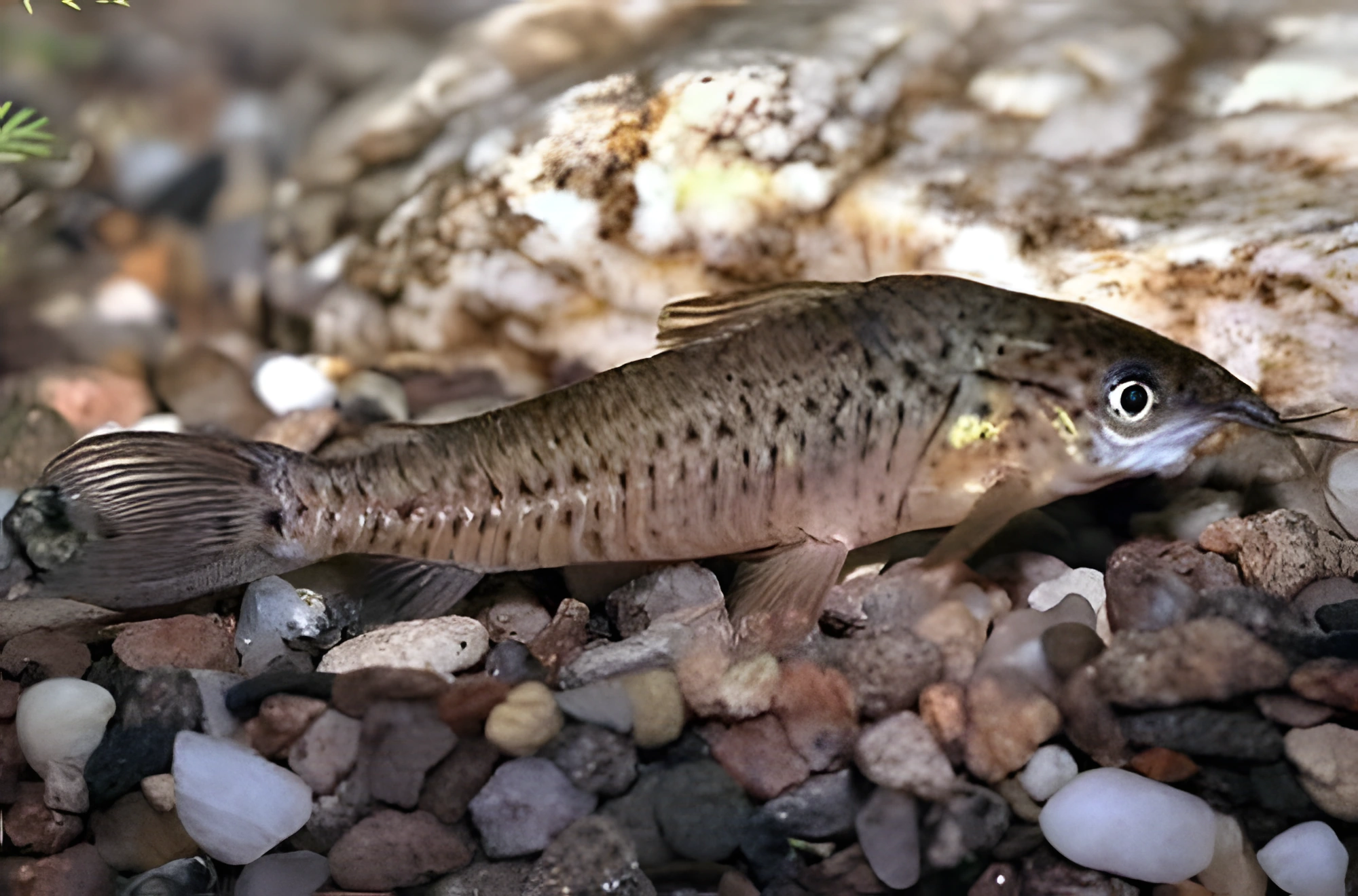
The Long-whiskered Dianema, also known as Bronze Dianema (scientific name Dianema longibarbis), belongs to the family Callichthyidae – armored or callichthyid catfishes. This species is perfectly suited for keeping in an aquarium with other peaceful South American fish. Characterized by its hardiness and ease of care, it can be safely recommended to beginner aquarists.
- Required aquarium volume
- 100 L
- Size in aquarium
- 10 cm
- Temperature
- 24 – 28 °C
- Temperament
- Peaceful (regular)
Parameters
Water pHSlightly acidic (5.5) – Neutral (7.5)
Water dHVery soft (1) – Very hard (20)
Water salinityno salt (freshwater)
Size in aquarium10 cm
Lifespan10 years
TemperamentPeaceful (regular)
Toward small fishnot a predator
Required aquarium volume100 L
Lightingdimmed
Substratesandy (regular, light)
Water flowweak or moderate
FeedingAny (universal)
CareBoth solitary and in group (flexible)
Description
Adult fish of this species reach a length of approximately 10 cm. Their body is covered with a granular pattern consisting of numerous black speckles on a dark gray or light gray background. A distinctive feature is the long, antenna-like barbels on their head. Sexual dimorphism is weakly expressed, making sex determination quite a difficult task.
Habitat
This species is widely distributed in the Amazon River system, encompassing the territories of modern-day Peru and Brazil. Dianema prefers habitats in tributaries of large rivers, as well as in floodplain lakes and ponds, especially where there are many shelters and the water flows slowly.
Behavior and Compatibility
This fish is distinguished by its peaceful and calm disposition, safe even for the smallest aquarium inhabitants. It coexists perfectly with representatives of Amazonian fauna, including tetras, South American cichlids, and Corydoras catfishes. No conflicts are observed within this species, so the Long-whiskered Dianema can be kept individually or in a group of its kind. It should be noted that in a group, it displays greater activity.
Care and Maintenance
An aquarium of 100 liters is quite sufficient for a small group of these catfishes. For decoration, you can use a soft sandy substrate, live plants (both rooted and floating), as well as various shelters: snags, roots or tree branches, and other decorative elements. Optimal water parameters are characterized by slightly acidic pH with a wide range of hardness. Often, simply letting the water stand for 24 hours before adding it to the aquarium is enough. In general, this catfish is very undemanding and can adapt well to different conditions, so when cohabiting with other fish, the conditions are primarily set up to meet the needs of its tankmates. Aquarium care includes regular cleaning of the substrate from organic pollution and weekly partial water changes (10–15% of the total volume) with fresh water.
Diet
The Bronze Dianema has no particular food preferences and readily accepts most common dry, frozen, and live foods. It is important that the food sinks to the bottom, however, over time, adult specimens may start to take food from the water surface.
Breeding and Reproduction
Breeding offspring in home conditions, while possible, is associated with certain difficulties. The main problem is replicating natural conditions, as these catfishes spawn at the beginning of the rainy season, which occurs in summer. However, geographically, the summer period in South America occurs at different times: north of the equator it is June–August, and south of the equator it is December–February. The closer an individual is to its wild ancestors (second, third, or fourth generation bred in captivity), the more sensitive it is to external conditions. General recommendations for stimulating spawning in Long-whiskered Dianema include a gradual change in water parameters by adding very soft, cool water over several days and enriching the diet with live food. The water temperature should be lowered to 23–24°C and maintained until spawning is complete. A sign of impending spawning is a noticeably enlarged abdomen of the female, swollen with eggs. As soon as you notice the eggs, they should be immediately moved to a separate tank with identical conditions to protect them from being eaten by other fish, including their own parents.
Diseases
The main cause of most diseases in Leaf Fish is unsuitable keeping conditions and poor-quality nutrition. If initial symptoms are observed, it is first necessary to check water parameters and the concentration of dangerous substances such as ammonia, nitrites, and nitrates. If the indicators deviate from the norm, they should be brought back into order, and only then should treatment begin. More detailed information on symptoms and treatment methods can be found in the "Aquarium Fish Diseases" section.
How to choose
When choosing a Long-whiskered Dianema, pay attention to the fish's overall activity: healthy specimens should be active and show interest in searching for food. Inspect the skin for any ulcers, white film, unnatural spots, or fin damage, which may indicate bacterial or fungal infections. Avoid purchasing fish with severely sunken bellies or signs of emaciation, as this often indicates internal parasites or a prolonged lack of quality nutrition. Ensure the fish's eyes are clear and its breathing is even, without signs of a rapid gill rate.
Frequently asked questions
The essentials: size, tank volume, water parameters and care
How big does Long-whiskered Dianema get?
An adult reaches 10 cm in length. Plan the tank around the maximum size: the fish quickly outgrows a cramped setup.
What size aquarium does Long-whiskered Dianema need?
The minimum recommended volume is 100 L. A smaller tank speeds up nitrate build-up and raises stress levels.
What water parameters does Long-whiskered Dianema need?
Temperature 24–28 °C, pH 5.5–7.5, hardness 1–20 dGH. Stability matters more than exact values: sudden swings are harder on the fish than a small deviation from the ideal.
How long does Long-whiskered Dianema live?
Around 10 years when kept properly. Lifespan depends directly on tank volume, water quality and a varied diet.
Is Long-whiskered Dianema aggressive?
Temperament: peaceful (regular). Keep this in mind when choosing tank mates.
How many Long-whiskered Dianema should be kept together?
Recommended setup: both solitary and in group (flexible). Ignoring this is a common cause of stress and disease.
What does Long-whiskered Dianema eat?
Diet type: any (universal). Feed small portions that are finished within a couple of minutes — overfeeding does more harm than underfeeding.
What is the scientific name of Long-whiskered Dianema?
The scientific name of the species is Dianema longibarbis, family Callichthyidae (Callichthyid or Armored Catfishes). It also appears in the literature as: Callichthys adspersus, Decapogon adspersus, Decapogon verissimi.