Temperature22 – 26 °C
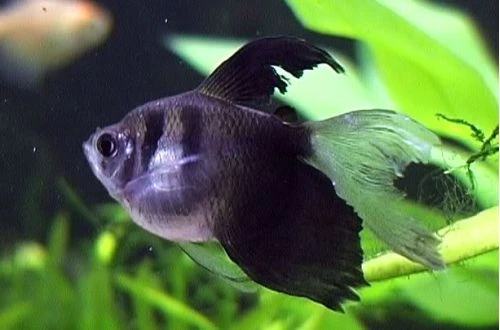
Other scientific names: Gymnocothymbus ternetzii, Tetragonopterus ternetzi
Gymnocorymbus ternetzi, more commonly known as the Long-finned Black Skirt Tetra, belongs to the Acestrorhamphidae family. This fish represents one of the morphological variations of the Black Skirt Tetra, distinguished by its elongated, flowing fins. Despite its artificial origin, this form is characterized by good hardiness, making it a suitable choice even for aquarists without extensive experience.
The fish has a high body, flattened laterally. The fins are significantly larger compared to the original species and can reach a length comparable to the fish's own size. The body coloration and caudal fin are usually silvery, while the anal and dorsal fins are black, giving the fish an overall dark hue. Over time, the fins may acquire a gray tint. Two vertical bands are clearly visible on the body, which are a characteristic feature of this species.
This species is not found in the natural environment, as it was artificially bred from the Black Skirt Tetra. The first successful results of selective breeding were achieved in Europe. Today, there are many diverse forms of this fish supplied to aquarium stores worldwide.
This species is active and relatively peaceful. It is important to keep them in schools of at least 6 individuals. With such a number, all their attention will be focused on interaction within the group, whereas a smaller number of individuals can provoke aggression towards other species. Coexistence is permissible with fish of similar or slightly larger size. However, it should be remembered that some varieties are well-known for their "interest" in fish with elongated fins, and Tetras can, unfortunately, become their victims in the same aquarium.
Thanks to their modest size, Long-finned Tetras can feel comfortable in aquariums with a volume of 60 L or more. To maintain consistently high water quality, an effective filtration system and regular partial water changes (25–50%) every two weeks are necessary. Lighting should be subdued, so low-power lamps are preferable. Essential equipment also includes a heater and an air pump. When decorating the aquarium, it is best to choose low-growing plants, planting them in groups along the side walls to leave enough open swimming space. Sandy substrate is recommended. Various artificial structures, such as castles, sunken ships, chests, as well as natural elements like bogwood, roots, or snags, can serve as shelters and decorative elements.
These fish readily accept all varieties of both dry commercial and live foods. An ideal diet for them includes high-quality flakes or granules, which should be offered up to three times a day.
The Long-finned Black Skirt Tetra breeds easily in a home aquarium, with an enriched daily diet of meaty foods serving as a stimulus for spawning. Since these fish do not exhibit parental care for their offspring, a separate tank should be used for breeding. The spawning aquarium typically has a volume of 30–40 L. The recommended equipment includes a lighting system, a simple air-driven filter, and a heater. The decor must include low-growing leafy plants (artificial ones are acceptable), and the substrate should consist of coarse gravel about 1 cm in diameter. When an increase in the abdominal volume of one or more females becomes noticeable, this indicates approaching spawning. The female(s) or one female should be transferred to the spawning aquarium, and the male should be added the next day. Until egg laying, continued intensive feeding of the future parents with meaty products is necessary; this period can last up to a week or less, depending on individual gestation times. The female lays eggs in one or more places, after which the male fertilizes them. After spawning, the parents are returned to the main aquarium. Fry appear within a few days and soon begin to move freely. They should be fed micro-food or Artemia, and the lighting should be continuous, as fry have difficulty finding food in the dark.
This species is highly hardy but extremely sensitive to water temperatures below the recommended level. In such conditions, problems with external coverings begin: fungus may appear, as well as infections by protozoa.
When selecting individuals, pay attention to the fish's activity: healthy tetras are active, stay in a school, and do not show signs of apathy. It is important to carefully inspect the body for the absence of spots, ulcers, film, or fin damage, as veiltail forms are particularly susceptible to infections when stressed. Avoid buying fish with signs of emaciation or an unnaturally swollen abdomen. — choose individuals from aquariums where there are no dead fish; — assess the integrity of the fins, excluding specimens with signs of fraying or nipping; — check the coloration: in healthy fish, it is clear, without pale spots indicating poor keeping conditions.
The essentials: size, tank volume, water parameters and care
An adult reaches 6 cm in length. Plan the tank around the maximum size: the fish quickly outgrows a cramped setup.
The recommended volume is 60 L. A smaller tank speeds up nitrate build-up and raises stress levels.
Temperature 22–26 °C, pH 6–8, hardness 5–19 dGH. Stability matters more than exact values: sudden swings are harder on the fish than a small deviation from the ideal.
Around 7 years when kept properly. Lifespan depends directly on tank volume, water quality and a varied diet.
Temperament: peaceful, but may bite fins. Keep this in mind when choosing tank mates.
Recommended setup: schooling (usually from 5–6 individuals and more). Ignoring this is a common cause of stress and disease.
Diet type: any (universal). Feed small portions that are finished within a couple of minutes — overfeeding does more harm than underfeeding.
The scientific name of the species is Gymnocorymbus ternetzi, family Acestrorhamphidae. It also appears in the literature as: Gymnocothymbus ternetzii, Tetragonopterus ternetzi.
Matched by family, categories and overlapping keeping conditions
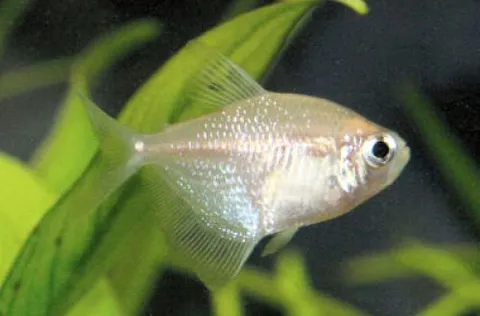
Gymnocorymbus ternetzi
The White Tetra, scientifically known as Gymnocorymbus ternetzi, is part of the Acestrorhamphidae family. This widely available and very popular fish is a selective breeding form, artificially bred from the Black Tetra.…
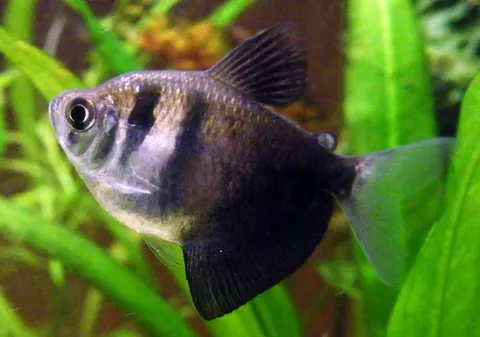
Gymnocorymbus ternetzi
The Black Tetra, also known as the Black Skirt Tetra or Black Widow Tetra, has the scientific name Gymnocorymbus ternetzi and belongs to the Acestrorhamphidae family. This fish is an excellent choice for beginner…
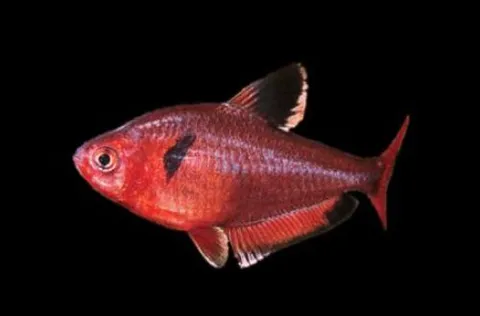
Megalamphodus eques
Megalamphodus eques, known as the Callistus or Minor Tetra, belongs to the family Acestrorhamphidae. This beautiful ornamental fish, with its bright and expressive coloration, can adorn any aquarium, even if it's just a…
Hyphessobrycon pulchripinnis
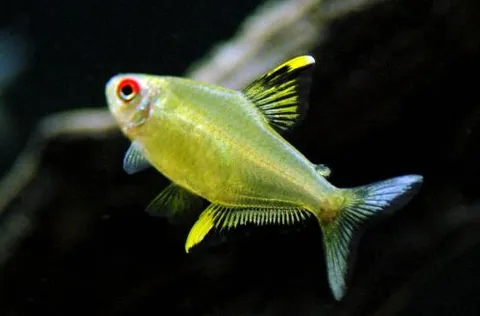
The Lemon Tetra, or Hyphessobrycon pulchripinnis, is a representative of the Acestrorhamphidae family. This fish attracts attention with both its appearance and behavior. Its coloration, ranging from yellow to lemon,…