Temperature22 – 26 °C
Natural range
- Congo River Basin
- Lower Congo River
- Upper Lualaba River
- Democratic Republic of the Congo area
CharacinsConservation status: Least concern LC
Other scientific names: Distichodus leptorhynchus, Distichodus lussusso
Distichodus lusosso, scientifically known as Distichodus lusosso, belongs to the family Distichodontidae. Its native habitat is equatorial Africa, where it is found in Cameroon, the Republic of the Congo, and the Democratic Republic of the Congo. This fish inhabits large river systems, often found in the main river channels, preferring areas with abundant aquatic vegetation.
- Required aquarium volume
- 250 L
- Size in aquarium
- 38 cm
- Temperature
- 22 – 26 °C
- Temperament
- Semi-peaceful (including aggression during spawning / intraspecific conflicts)
Parameters
Water pHNeutral (6.5) – Neutral (7.5)
Water dHVery soft (2) – Very hard (20)
Water salinityno salt (freshwater)
Size in aquarium38 cm
Lifespan10 years
TemperamentSemi-peaceful (including aggression during spawning / intraspecific conflicts)
Toward small fishnot a predator
Required aquarium volume250 L
Lightingdimmed or moderate
Substrateany (no restrictions)
Water flowmoderate
FeedingPlant-based (algae, vegetables)
CareBoth solitary and in group (flexible)
Description
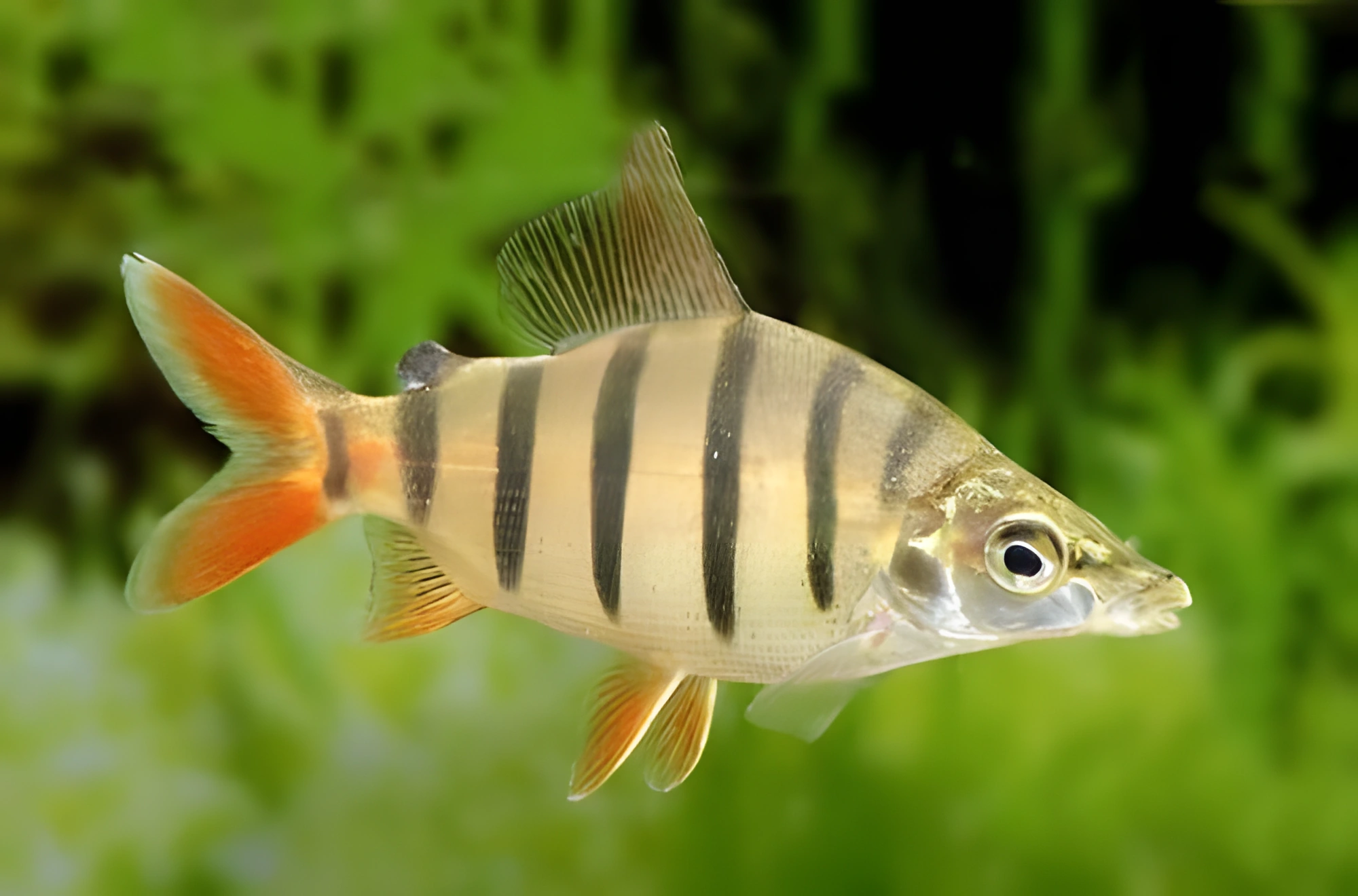
In its youth, this fish resembles the Long-nosed Distichodus, displaying a vibrant red-orange coloration complemented by black stripes. The main difference between the two species lies in the number of these stripes: Distichodus lusosso has 7–8, while its relative has only 6. As it matures, the coloration fades, and adult specimens take on a more subdued appearance, with dominant shades becoming gray or greenish-brown.
Habitat
The species inhabits Africa, in the Congo River basin, including the lower reaches of the river and the upper reaches of the Lualaba River. These fish prefer tropical freshwater bodies with slow currents, sandy or gravel substrates, where they dwell in the mid-water to bottom layers. In nature, water parameters correspond to a tropical climate with temperatures of 22–26 degrees Celsius.
Behavior and Compatibility
Growing to quite impressive sizes, adult Distichodus lusosso can pose a threat to smaller tank mates. Their behavior in an aquarium is often unpredictable. In their natural environment, distichodus typically live in large groups, but in confined spaces, they sometimes begin to show aggression towards each other. This is why for keeping in a small tank, it is recommended to limit to a single specimen of this species, housing it with several large catfishes, African characins, or other suitable fish.
Care and Maintenance
For comfortable living, a single Distichodus lusosso will require an aquarium of 250 to 300 liters. The decor can be chosen at your discretion, but it will look most natural against a sandy or rocky substrate, complemented by snags and thickets of plants. When choosing vegetation, preference should be given to hardy, undemanding species such as Anubias, Bolbitis ferns, or Java fern. Plants with soft and delicate leaves are likely to be damaged or eaten. Maintenance of this fish is straightforward if the necessary hydrochemical composition of the water is maintained and the aquarium is regularly cleaned. Its ability to adapt to a wide range of pH and dGH values significantly simplifies the water preparation process. Being an omnivorous species, this fish readily accepts most popular dry, frozen, and live foods. It is very important to include a large number of plant components in the diet, for example, blanched spinach or lettuce leaves can be offered.
Diet
Being an omnivorous species, this aquarium inhabitant readily accepts almost all popular dry, frozen, and live foods. It is extremely important to ensure a sufficient amount of plant components in its diet. Blanched spinach or lettuce leaves can be used as suitable additives.
Breeding and Reproduction
At present, there is no reliable information on the successful breeding of this species in home aquariums. Literature mentions that large volumes of water and frequent changes to cooler water may be required to stimulate spawning, but the process remains extremely complex and undocumented. In nature, the fish are egg-layers, and the eggs are usually scattered over the substrate.
Diseases
No specific species-specific diseases have been identified. Like other river fish, the species is sensitive to high nitrate levels in the water, which can lead to reduced immunity and the development of bacterial infections. Prevention includes maintaining high water quality, effective filtration, and regular water changes. Fish are susceptible to stress under improper keeping conditions or overcrowding.
How to choose
When purchasing, choose active specimens with clean fins, even scales, and no visible damage to the body. It is important to consider that the fish grows to significant sizes (about 38–40 cm), so it is necessary to ensure in advance that an aquarium of appropriate volume is available. In the store, observe their behavior: healthy specimens show curiosity about their surroundings and do not appear emaciated.
Frequently asked questions
The essentials: size, tank volume, water parameters and care
How big does Distichodus lusosso get?
An adult reaches 38 cm in length. Plan the tank around the maximum size: the fish quickly outgrows a cramped setup.
What size aquarium does Distichodus lusosso need?
The minimum recommended volume is 250 L. A smaller tank speeds up nitrate build-up and raises stress levels.
What water parameters does Distichodus lusosso need?
Temperature 22–26 °C, pH 6.5–7.5, hardness 2–20 dGH. Stability matters more than exact values: sudden swings are harder on the fish than a small deviation from the ideal.
How long does Distichodus lusosso live?
Around 10 years when kept properly. Lifespan depends directly on tank volume, water quality and a varied diet.
Is Distichodus lusosso aggressive?
Temperament: semi-peaceful (including aggression during spawning / intraspecific conflicts). Keep this in mind when choosing tank mates.
How many Distichodus lusosso should be kept together?
Recommended setup: both solitary and in group (flexible). Ignoring this is a common cause of stress and disease.
What does Distichodus lusosso eat?
Diet type: plant-based (algae, vegetables). Feed small portions that are finished within a couple of minutes — overfeeding does more harm than underfeeding.
What is the scientific name of Distichodus lusosso?
The scientific name of the species is Distichodus lusosso, family Distichodontidae. It also appears in the literature as: Distichodus leptorhynchus, Distichodus lussusso.