Temperature23 – 27 °C
Natural range
- Congo River Basin
- Republic of the Congo area
- Democratic Republic of the Congo area
CharacinsConservation status: Least concern LC
Other scientific names: Distichodura affine, Distichodus abbreviatus
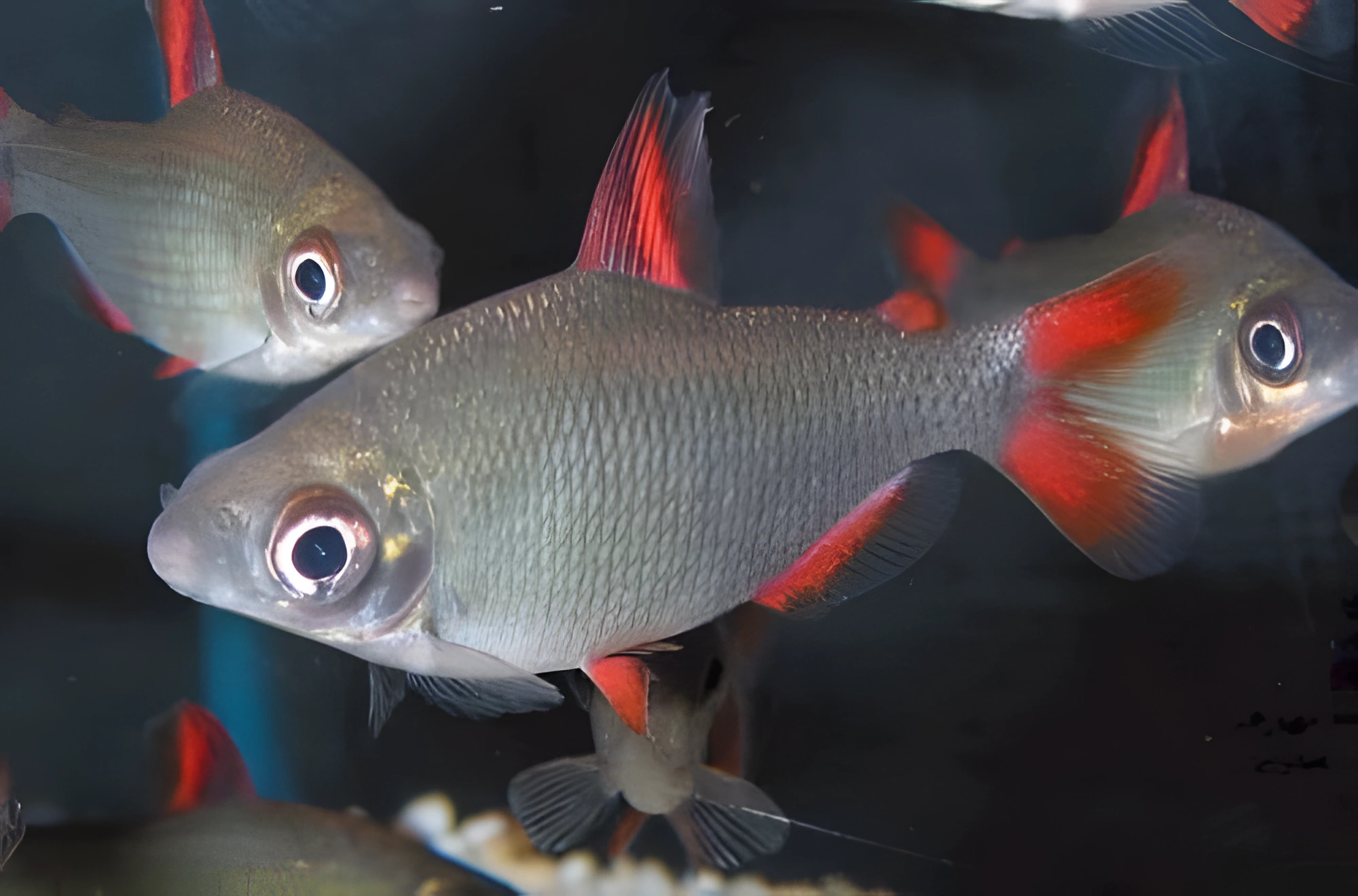
The Red-finned Distichodus, known scientifically as Distichodus affinis, belongs to the family Distichodontidae. These are peaceful, large-sized fish that are not particularly decorative and are perceived more as common. They are often added to community aquariums, thanks to their ability to successfully adapt to various keeping conditions.
- Required aquarium volume
- 110 L
- Size in aquarium
- 20 cm
- Temperature
- 23 – 27 °C
- Temperament
- Peaceful (regular)
Parameters
Water pHSlightly acidic (6) – Slightly alkaline (8)
Water dHSoft (5) – Very hard (20)
Water salinityno salt (freshwater)
Size in aquarium20 cm
Lifespan8 years
TemperamentPeaceful (regular)
Toward small fishnot a predator
Required aquarium volume110 L
Lightingmoderate (regular)
Substratecoarse sand / gravel / pebbles
Water flowweak or moderate
FeedingPlant-based with meat additives
CareBoth solitary and in group (flexible)
Description
Adults can reach 20 cm (8 inches) in length, although in aquarium conditions their size is often somewhat smaller. There are several species of Distichodus that are very similar to each other, having a silvery body coloration and red fins. Their main differences lie only in the sizes of the dorsal and anal fins. Since it is extremely difficult for a non-professional to distinguish these varieties, they are usually sold under the single name "Red-finned Distichodus."
Habitat
These fish are native to the African continent. Their extensive distribution covers numerous water bodies in the lower and central Congo River basin, in territories that today correspond to the Republic of the Congo and the Democratic Republic of the Congo.
Behavior and Compatibility
The Red-finned Distichodus is a peaceful and non-aggressive fish, but its potential size limits the range of compatible species. It can be kept with catfish, some American cichlids, as well as other characins that are similar in size and temperament. In an aquarium, this fish can live either alone or in a small group; if conditions permit (then a very large aquarium would be needed), keeping them in a large school is also possible.
Care and Maintenance
For keeping, a spacious aquarium of at least 110 liters (30 gallons) is required for one or two individuals. Rock fragments, driftwood, and a substrate of coarse sand or fine gravel can be used as decorative elements. When choosing live plants, it is important to consider the "gastronomic" inclinations of the Distichodus – probably only Anubias and Bolbitis will remain relatively intact, while other plant species will likely be eaten. Optimal conditions include moderate to weak water flow with average lighting. The comfortable temperature range is within 23–27°C (73–81°F). pH and dGH parameters are not strictly critical, allowing for quite wide values. Aquarium equipment is selected taking these conditions into account and usually includes filtration and aeration systems, a heater, and several lights integrated into the lid. With a properly selected set of equipment, care is reduced to regular cleaning of the substrate from organic waste and weekly or bi-weekly water changes of 10–15% of the volume with fresh water.
Diet
Fish readily accept most common aquarium foods — whether dry, fresh, or frozen. An important condition is the inclusion of plant components in the diet, which should make up approximately half of all food consumed. For example, spirulina flakes, blanched peas, and pieces of the white part of spinach or lettuce leaves can be offered. It should be noted that these fish tend to eat live ornamental plants in the aquarium.
Breeding and Reproduction
To date, there is no confirmed information on successful breeding cases of Red-finned Distichodus in home aquariums. These fish are bred for commercial purposes, mainly in Eastern Europe, or, much less frequently, caught from natural waters.
Diseases
The Red-finned Distichodus has a fairly strong immune system when kept under proper conditions. The main health problems in this species usually arise due to poor water quality, accumulation of organic waste, or stress caused by unsuitable environmental parameters.
Key recommendations for disease prevention:
- ensuring effective filtration and regular partial water changes to maintain stable parameters;
- adhering to a balanced diet with the mandatory inclusion of plant components, which helps maintain overall body tone;
- avoiding overpopulation of the aquarium, as overcrowding provokes territorial conflicts and skin damage, through which secondary infections can penetrate.
The species is sensitive to sharp fluctuations in water chemistry. If signs of parasitic or bacterial invasions appear, such as changes in behavior, a film on the body, or fin damage, it is necessary to check water parameters and adjust conditions, as fish may react negatively to some aggressive medications.
How to choose
When purchasing, select active individuals with clean fins and no visible skin damage. The fish should show interest in food and not exhibit signs of emaciation or unnatural behavior, such as apathy or constantly staying at the water surface. It is recommended to avoid specimens showing signs of stress from transportation, and to clarify the keeping conditions at the store, as adaptation to new water parameters can be difficult for weakened individuals.
Frequently asked questions
The essentials: size, tank volume, water parameters and care
How big does Red-finned Distichodus get?
An adult reaches 20 cm in length. Plan the tank around the maximum size: the fish quickly outgrows a cramped setup.
What size aquarium does Red-finned Distichodus need?
The minimum recommended volume is 110 L. A smaller tank speeds up nitrate build-up and raises stress levels.
What water parameters does Red-finned Distichodus need?
Temperature 23–27 °C, pH 6–8, hardness 5–20 dGH. Stability matters more than exact values: sudden swings are harder on the fish than a small deviation from the ideal.
How long does Red-finned Distichodus live?
Around 8 years when kept properly. Lifespan depends directly on tank volume, water quality and a varied diet.
Is Red-finned Distichodus aggressive?
Temperament: peaceful (regular). Keep this in mind when choosing tank mates.
How many Red-finned Distichodus should be kept together?
Recommended setup: both solitary and in group (flexible). Ignoring this is a common cause of stress and disease.
What does Red-finned Distichodus eat?
Diet type: plant-based with meat additives. Feed small portions that are finished within a couple of minutes — overfeeding does more harm than underfeeding.
What is the scientific name of Red-finned Distichodus?
The scientific name of the species is Distichodus affinis, family Distichodontidae. It also appears in the literature as: Distichodura affine, Distichodus abbreviatus.